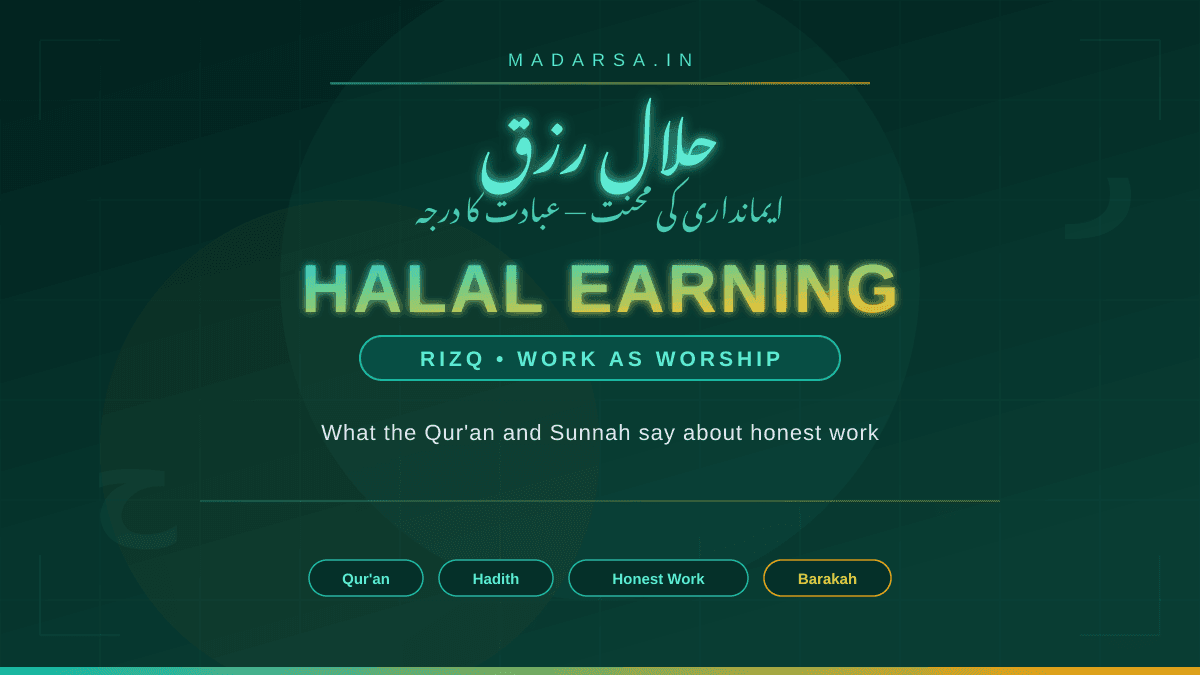
Halal Earning (Rizq) in Islam: Why Honest Work Is an Act of Worship
اسلام میں حلال رزق: ایمانداری کی محنت عبادت کیوں ہے
Imranul Haque Noor
An Engineer, an all time Learner and a Learning enabler.
🕌 Halal Earning (Rizq) in Islam: Why Honest Work Is an Act of Worship
What the Qur'an and authentic hadith actually say about earning a living — and how an ordinary job, done honestly, becomes ibadah.
اردو ترجمہ — Urdu Translation
بہت سے لوگ سمجھتے ہیں کہ دین (Religion) ایک طرف ہے اور روزی کمانا دوسری طرف — گویا نوکری یا کاروبار عبادت سے وقت چرا لیتا ہے۔ اسلام کی نظر اس کے بالکل الٹ ہے: حلال طریقے سے، ایمانداری کے ساتھ کمائی گئی روزی خود عبادت کا درجہ رکھتی ہے۔ اس مضمون میں ہم قرآن کی آیات اور صحیح احادیث کی روشنی میں دیکھیں گے کہ حلال رزق (Halal Rizq) کیا ہے، کام کب عبادت بنتا ہے، اور اپنی روزمرہ نوکری یا کاروبار کو عبادت بنانے کے عملی قدم کیا ہیں۔ ہر حصے کے نیچے مکمل اردو ترجمہ موجود ہے۔
💼 Two tailors, one difference
Two tailors, same bazaar, same machines, same rates. Salim quietly swaps in cheaper lining and calls every fabric "premium". Rafi tells customers exactly what the cloth is, points out when a cheaper option will serve them fine, and delivers on the date he promised. Five years on, Salim still chases walk-ins; Rafi's customers send their brothers, colleagues, and wedding orders to him without being asked.
This is an imagined story, but the pattern is one you have seen in your own street. What Islam adds is a claim that goes far beyond good business sense: Rafi's stitching itself is worship. Not the prayer he offers after work — the honest work itself, done with the right intention, carries reward.
That claim is not a motivational poster. It sits on explicit texts of the Qur'an and Sunnah. Let's look at them.
اردو ترجمہ — Urdu Translation
سلیم اور رافع دونوں درزی ہیں، ایک ہی بازار میں، ایک جیسے ریٹ۔ سلیم چپکے سے سستا استر لگا دیتا ہے اور ہر کپڑے کو "پریمیم" بتاتا ہے۔ رافع گاہک کو صاف صاف بتاتا ہے کہ کپڑا کیسا ہے، سستا آپشن کافی ہو تو خود مشورہ دیتا ہے، اور وعدے کی تاریخ پر کام دیتا ہے۔ پانچ سال بعد سلیم آج بھی نئے گاہک ڈھونڈتا ہے، جب کہ رافع کے گاہک خود اپنے بھائیوں اور دفتر والوں کو اس کے پاس بھیجتے ہیں۔
یہ ایک فرضی کہانی ہے، مگر اسلام اس میں ایک بڑی بات جوڑتا ہے: رافع کی سلائی خود عبادت ہے۔ صرف کام کے بعد کی نماز نہیں — درست نیت کے ساتھ کی گئی ایماندارانہ محنت پر بھی اجر ہے۔ یہ کوئی جذباتی نعرہ نہیں بلکہ قرآن و سنت (Qur'an and Sunnah) کے واضح نصوص پر مبنی بات ہے۔
📖 What the Qur'an actually says about earning
The Qur'an does not treat earning as a lower, worldly activity that merely funds the "real" religious life. It repeatedly ties work, lawful food, and movement through the earth directly to Allah's provision:
🕋 After the prayer, go and earn — Surah al-Jumu'ah 62:10
Immediately after commanding the Friday prayer, the Qur'an says: "And when the prayer has been concluded, disperse within the land and seek from the bounty of Allah." Trade and salah sit in the same verse pair — one does not cancel the other.
🌍 The earth was made walkable for you — Surah al-Mulk 67:15
"It is He who made the earth tame for you — so walk among its slopes and eat of His provision." Effort is built into the design: rizq is His, but the walking is yours.
🍽️ Halal and tayyib — Surah al-Baqarah 2:168
"O mankind, eat from whatever is on earth that is lawful and good." Two filters, not one: halal (lawful source) and tayyib (pure, wholesome). Both apply to income before they apply to food.
And on the earning side of the ledger, the Prophet ﷺ made the dignity of manual work impossible to miss:
Sahih al-Bukhari 2072: "Nobody has ever eaten a better meal than that which one has earned by working with one's own hands. The Prophet of Allah, Dawud, used to eat from the earnings of his manual labour."
اردو ترجمہ — Urdu Translation
قرآن کمائی کو کوئی کم درجے کا دنیاوی کام نہیں سمجھتا۔ سورۃ الجمعہ (آیت ۱۰) میں جمعہ کی نماز کے حکم کے فوراً بعد فرمایا گیا: "پھر جب نماز پوری ہو جائے تو زمین میں پھیل جاؤ اور اللہ کا فضل تلاش کرو" — یعنی نماز اور تجارت ایک ہی آیت کے سلسلے میں ہیں۔ سورۃ الملک (آیت ۱۵) میں ہے کہ اللہ نے زمین کو تمہارے لیے نرم و ہموار بنایا، "پس اس کے راستوں میں چلو اور اس کے رزق میں سے کھاؤ"۔ اور سورۃ البقرہ (آیت ۱۶۸) دو شرطیں لگاتی ہے: حلال (Lawful) اور طیب (Pure) — یہ دونوں شرطیں کھانے سے پہلے کمائی پر لاگو ہوتی ہیں۔
صحیح بخاری (حدیث ۲۰۷۲) میں نبی کریم ﷺ نے فرمایا کہ کسی نے اس سے بہتر کھانا کبھی نہیں کھایا جو اپنے ہاتھ کی کمائی سے ہو، اور اللہ کے نبی داؤد علیہ السلام اپنے ہاتھ کی کمائی سے کھاتے تھے۔
🤲 When does work become worship? Four conditions
Not every hour at a desk is automatically rewarded. The tradition is precise about what turns effort into ibadah. The famous first hadith of Sahih al-Bukhari — "Actions are but by intentions" (Bukhari 1) — is the master key, and three more conditions follow from other authentic texts:
🎯 1. The intention (niyyah)
Working to feed your family, stay off dependence, and keep your earnings clean is itself a religious motive. The same job with the intention of pure show-off or of out-doing others for pride carries a different weight. Intention costs nothing and changes everything.
✅ 2. A halal source
The field itself must be lawful. Earnings from interest-based lending (riba — prohibited in Surah al-Baqarah 2:275), gambling, deception, or selling what Islam prohibits do not become clean through hard work or generosity afterwards.
⚖️ 3. Honesty inside the work
The Prophet ﷺ said about a seller hiding defects: "Whoever cheats us is not one of us" (Sahih Muslim 102). Honest weights, honest descriptions, honest hours billed — the honesty is the worship, not a garnish on top of it.
🤝 4. Giving people their rights
That includes workers: "Give the worker his wages before his sweat dries" (Sunan Ibn Majah 2443). If you employ anyone — even one helper — paying fully and on time is part of your own earning being clean.
اردو ترجمہ — Urdu Translation
ہر نوکری خود بخود عبادت نہیں بن جاتی۔ صحیح بخاری کی پہلی حدیث ہے: "اعمال کا دارومدار نیتوں پر ہے" — یہی اصل کنجی ہے۔ اس کے ساتھ چار شرطیں ہیں:
- نیت (Intention): گھر والوں کا خرچ اٹھانا، کسی کے آگے ہاتھ نہ پھیلانا اور کمائی پاک رکھنا — یہ نیت خود دینی عمل ہے۔
- حلال ذریعہ (Halal Source): کام کا میدان خود جائز ہو۔ سود (Interest/Riba) — جسے سورۃ البقرہ آیت ۲۷۵ میں حرام کیا گیا — جوا یا دھوکے کی کمائی محنت سے پاک نہیں ہوتی۔
- کام کے اندر دیانت (Honesty): نبی کریم ﷺ نے عیب چھپانے والے بیچنے والے سے فرمایا: "جو ہمیں دھوکہ دے وہ ہم میں سے نہیں" (صحیح مسلم ۱۰۲)۔
- لوگوں کے حقوق (People's Rights): "مزدور کو اس کا پسینہ خشک ہونے سے پہلے اس کی مزدوری دو" (سنن ابن ماجہ ۲۴۴۳)۔
🛠️ The Prophets and the Companions worked with their hands
If earning were beneath spiritual people, the people Islam holds highest would not have done it. They did — visibly, and by name in the authentic sources:
🔨 Dawud (David) عليه السلام
Sahih al-Bukhari 2072 states plainly that the Prophet Dawud ate from the earnings of his own manual labour — a king who did not need to work, and worked anyway.
🐑 Muhammad ﷺ — shepherd, then trader
"Allah did not send any prophet but that he shepherded sheep", the Prophet ﷺ said, adding that he himself tended them for the people of Makkah for a few qirats (Sahih al-Bukhari 2262). Before prophethood he also traded, and his reputation for honesty — al-Amin, the trustworthy — was earned in the market, not the mosque.
📦 The honest merchant's rank
"The truthful, trustworthy merchant will be with the Prophets, the truthful, and the martyrs" (Jami' at-Tirmidhi 1209). Notice the condition doing all the work in that sentence: truthful and trustworthy.
When Abdur-Rahman ibn Awf migrated to Madinah with nothing, his host Sa'd ibn ar-Rabi' offered to split his own wealth with him. Abdur-Rahman declined the shortcut with a du'a for his host — and asked one question instead: where is the market? He started trading with his own effort and became one of the wealthiest of the Companions, famous for both his wealth and his charity.
اردو ترجمہ — Urdu Translation
اگر کمائی روحانی لوگوں کے شایانِ شان نہ ہوتی تو اسلام کی سب سے بلند ہستیاں یہ کام نہ کرتیں۔ صحیح بخاری (۲۰۷۲) میں ہے کہ داؤد علیہ السلام اپنے ہاتھ کی کمائی کھاتے تھے — ایک بادشاہ جسے کام کی ضرورت نہ تھی، پھر بھی کام کرتے تھے۔ نبی کریم ﷺ نے فرمایا: "اللہ نے کوئی نبی نہیں بھیجا مگر اس نے بکریاں چرائیں" اور خود بتایا کہ آپ ﷺ چند قیراط کے بدلے مکہ والوں کی بکریاں چراتے تھے (صحیح بخاری ۲۲۶۲)۔ نبوت سے پہلے آپ ﷺ نے تجارت بھی کی اور "الامین" (The Trustworthy) کا لقب بازار ہی میں کمایا۔
جامع ترمذی (۱۲۰۹) میں ہے: "سچا اور امانت دار تاجر انبیاء، صدیقین اور شہداء کے ساتھ ہوگا۔" اور صحیح بخاری (۲۰۴۸) میں عبدالرحمٰن بن عوف رضی اللہ عنہ کا واقعہ ہے: مدینہ ہجرت کر کے آئے تو میزبان نے اپنا آدھا مال پیش کیا، مگر انہوں نے دعا دے کر معذرت کی اور صرف ایک سوال پوچھا: بازار کہاں ہے؟ اپنی محنت سے تجارت شروع کی اور صحابہ کے مال دار ترین افراد میں شمار ہوئے۔
⚖️ Halal, doubtful, haram — knowing the difference
The Prophet ﷺ gave the working framework in one hadith: "The halal is clear and the haram is clear, and between them are doubtful matters which many people do not know" (Sahih al-Bukhari 52). Whoever avoids the doubtful, he said, protects their religion and honour. Applied to income, that gives three zones:
| Zone | What it typically looks like | What to do |
|---|---|---|
| Clearly halal | An honest salary, trade with truthful descriptions, farming, tailoring, teaching, freelancing delivered as promised | Work it with gratitude and excellence — this is the worship zone |
| Doubtful (mushtabih) | Roles where lawful and unlawful revenue mix, unclear commissions, incentives that quietly reward exaggeration | Pause and ask a qualified scholar about your specific case; where possible, move toward clarity |
| Clearly haram | Interest-based earnings (riba), bribery, gambling, cheating in quality or measure, selling what Islam prohibits | Avoid it — and if you are in it, plan a realistic exit rather than despair |
A bigger number can still be a loss
Surah al-Baqarah 2:275 draws the line without ambiguity: "Allah has permitted trade and forbidden riba (interest)." In this framework, income that arrives through a prohibited door is not a clever win with a religious tax on it — it is itself the loss, whatever the amount says.
Important: this article is general education, not a fatwa. Real jobs are full of specifics — contracts, sectors, mixed revenue. For your own situation, ask a qualified scholar you trust, with the details in front of them.
اردو ترجمہ — Urdu Translation
نبی کریم ﷺ نے ایک ہی حدیث میں پورا اصول دے دیا: "حلال واضح ہے اور حرام واضح ہے، اور ان دونوں کے درمیان مشتبہ (Doubtful) چیزیں ہیں جنہیں بہت سے لوگ نہیں جانتے" (صحیح بخاری ۵۲)۔ جو مشتبہ چیزوں سے بچا، اس نے اپنا دین اور اپنی عزت بچا لی۔ آمدنی پر اس کا اطلاق تین درجوں میں ہوتا ہے:
- صاف حلال: ایماندارانہ تنخواہ، سچی تجارت، کھیتی، سلائی، تدریس، وعدے کے مطابق فری لانسنگ (Freelancing) — یہی عبادت والا خانہ ہے۔
- مشتبہ: جہاں جائز اور ناجائز آمدنی ملی جلی ہو، کمیشن غیر واضح ہوں — اپنی مخصوص صورتِ حال کسی مستند عالم کے سامنے رکھیں۔
- صاف حرام: سود، رشوت، جوا، ناپ تول یا معیار میں دھوکہ — ان سے بچیں، اور اگر پھنسے ہوئے ہیں تو مایوسی کے بجائے نکلنے کا حقیقت پسندانہ منصوبہ بنائیں۔
سورۃ البقرہ (آیت ۲۷۵) کا فیصلہ دوٹوک ہے: "اللہ نے تجارت کو حلال کیا اور سود کو حرام۔" یاد رہے: یہ مضمون عمومی تعلیم ہے، فتویٰ (Fatwa) نہیں — اپنی نوکری کے مخصوص حالات کسی قابلِ اعتماد عالم سے پوچھیں۔
🛤️ Six steps to make your job an act of worship
None of this requires changing your job title. It requires changing what travels with the job:
Renew the intention each morning
Before you leave for work or open the laptop, one silent sentence: I am going to earn halal for my family and to keep my hands clean of what is forbidden. Thirty seconds — and by the hadith of intentions (Bukhari 1), the day's ledger changes.
Audit your income source once, honestly
Write down where the money actually comes from. Clearly halal? Alhamdulillah, proceed. A doubtful corner? That is a question for a scholar, not a reason for anxiety or denial.
Do the work with ihsan (excellence)
Sloppy work sold as good work is a quiet form of deception. Learning your craft properly — a course, a mentor, deliberate practice — is not just career advice; it is what makes your product honest.
Keep money matters transparent
Quote real prices, disclose real defects, bill real hours, pay wages and suppliers on time (Ibn Majah 2443). If a deal needs a mumbled sentence to survive, it should not survive.
Guard the red lines under pressure
The test is never on easy days. Bribes offered when a file is stuck, exaggeration when a sale is close, borrowed time on the employer's clock — these small doors are where clean earnings usually leak.
Give a slice back
Sadaqah from earnings is the tradition's built-in purifier and gratitude in action. It does not have to be large; it has to be regular.
اردو ترجمہ — Urdu Translation
ان میں سے کسی قدم کے لیے نوکری بدلنے کی ضرورت نہیں — بدلنا وہ ہے جو نوکری کے ساتھ ساتھ چلتا ہے:
- ہر صبح نیت تازہ کریں: کام پر نکلنے سے پہلے دل میں ایک جملہ: میں اپنے گھر والوں کے لیے حلال کمانے جا رہا ہوں۔
- اپنی آمدنی کا ذریعہ ایک بار ایمانداری سے جانچیں: صاف حلال ہے تو الحمدللہ؛ کوئی مشتبہ پہلو ہے تو یہ عالم سے پوچھنے کا سوال ہے، پریشانی یا انکار کی بات نہیں۔
- احسان (Excellence) کے ساتھ کام کریں: خراب کام کو اچھا بتا کر بیچنا بھی ایک خاموش دھوکہ ہے۔ اپنا ہنر (Skill) ٹھیک سے سیکھنا کیریئر کا مشورہ ہی نہیں، دیانت کی شرط ہے۔
- پیسے کے معاملات شفاف رکھیں: اصل قیمت بتائیں، عیب ظاہر کریں، مزدوری وقت پر دیں۔
- دباؤ میں حد نہ توڑیں: امتحان آسان دنوں میں نہیں ہوتا — رشوت، مبالغہ اور دفتر کے وقت کی چوری ہی وہ چھوٹے دروازے ہیں جہاں سے پاک کمائی رِستی ہے۔
- کمائی میں سے کچھ واپس دیں: صدقہ (Charity) بڑا ہونا ضروری نہیں، باقاعدہ ہونا ضروری ہے۔
🌱 What barakah actually means (and doesn't)
Barakah ≠ a bigger number
Barakah is the tradition's word for divine increase and sufficiency inside what you have — money that covers more than its amount suggests, time that stretches, a small income that carries a calm home. Two families can earn the same figure and live in different universes.
The connection between clean income and one's standing before Allah is drawn explicitly in Sahih Muslim 1015: Allah is pure and accepts only what is pure — and the hadith then describes a traveller raising his hands in du'a while his food, drink, and clothing are from haram, asking how such a person's prayer can be answered. Clean earning, in other words, is not a side topic of religious life; it sits underneath the du'a itself.
One caution: barakah is not a business hack. Honesty practised as a get-rich technique is just marketing. The tradition's promise is sufficiency and purity — sometimes alongside wealth, as with Abdur-Rahman ibn Awf, and sometimes alongside a modest, contented life.
اردو ترجمہ — Urdu Translation
برکت (Barakah) کا مطلب بڑا عدد نہیں۔ برکت اس چیز کا نام ہے جو آپ کے پاس موجود رزق کے اندر اترتی ہے — وہ آمدنی جو اپنی مقدار سے زیادہ کام آ جائے، وہ وقت جو پھیل جائے، وہ چھوٹی تنخواہ جس کے ساتھ گھر میں سکون ہو۔ دو گھرانے ایک جتنا کما کر بالکل الگ دنیاؤں میں رہ سکتے ہیں۔
پاک کمائی اور اللہ کے حضور مقام کا تعلق صحیح مسلم (۱۰۱۵) میں صاف بیان ہوا ہے: اللہ پاک ہے اور صرف پاک چیز قبول کرتا ہے — پھر حدیث میں اس مسافر کا ذکر ہے جو ہاتھ اٹھا کر دعا کرتا ہے حالانکہ اس کا کھانا، پینا اور لباس حرام کا ہے — تو اس کی دعا کیسے قبول ہو؟ گویا حلال کمائی دین کا کوئی ضمنی موضوع نہیں، خود دعا کی بنیاد ہے۔
ایک احتیاط: برکت کوئی کاروباری نسخہ (Business Hack) نہیں۔ امیر بننے کی تکنیک کے طور پر اپنائی گئی ایمانداری محض مارکیٹنگ ہے۔ وعدہ کفایت اور پاکیزگی کا ہے — کبھی دولت کے ساتھ، جیسے عبدالرحمٰن بن عوف رضی اللہ عنہ، اور کبھی سادہ مگر مطمئن زندگی کے ساتھ۔
🚀 Start where you stand
You do not need a new job to begin — you need tomorrow morning's intention, one honest look at your income source, and a decision to do your work well enough that selling it honestly is easy. And since skill is the engine of halal earning, sharpening one is itself a step on this path: if you're starting from zero with computers, the free Basic Computer & Digital Skills course on Madarsa is a practical place to begin — bilingual, beginner-friendly, and built for exactly this journey.
Bismillah — start today.
اردو ترجمہ — Urdu Translation
شروع کرنے کے لیے نئی نوکری نہیں چاہیے — کل صبح کی نیت چاہیے، اپنی آمدنی کے ذریعے پر ایک ایماندار نظر، اور یہ فیصلہ کہ کام اتنا اچھا کریں گے کہ اسے سچ بول کر بیچنا آسان ہو۔ اور چونکہ ہنر (Skill) ہی حلال کمائی کا انجن ہے، کوئی ہنر سیکھنا خود اس راستے کا قدم ہے — اگر آپ کمپیوٹر میں بالکل نئے ہیں تو مدرسہ کا مفت کورس بیسک کمپیوٹر اینڈ ڈیجیٹل اسکلز (Basic Computer and Digital Skills) عملی آغاز ہے: دو زبانوں میں، بالکل ابتدائی سطح سے۔ بسم اللہ — آج ہی شروع کیجیے۔
📚 Sources
- Qur'an — Surah al-Jumu'ah 62:10, Surah al-Mulk 67:15, Surah al-Baqarah 2:168, Surah al-Baqarah 2:275
- Sahih al-Bukhari — hadith 1 (intentions), hadith 52 (halal and haram are clear), hadith 2048 (Abdur-Rahman ibn Awf and the market), hadith 2072 (eating from one's own hands; Dawud عليه السلام), hadith 2262 (every prophet shepherded sheep)
- Sahih Muslim — hadith 102 (whoever cheats us), hadith 1015 (Allah accepts only the pure)
- Jami' at-Tirmidhi — hadith 1209 (the truthful, trustworthy merchant)
- Sunan Ibn Majah — hadith 2443 (the worker's wages)
Enjoyed this article?
Subscribe to our newsletter for more articles, tutorials, and insights delivered straight to your inbox.
Related Posts
The Adab of Seeking Ilm — A Student's Etiquette from the Qur'an and Sunnah
"Learn adab before you learn knowledge." This guide traces a student's etiquette to its sources — the Qur'an's scenes of learners (Musa and Khidr, Luqman, the angels), the graded hadith on intention, gentleness, asking, and gratitude — then translates the seven classical adab into today's live classes, comment threads, and AI tools.
Imranul Haque Noor
Nov 13, 2026