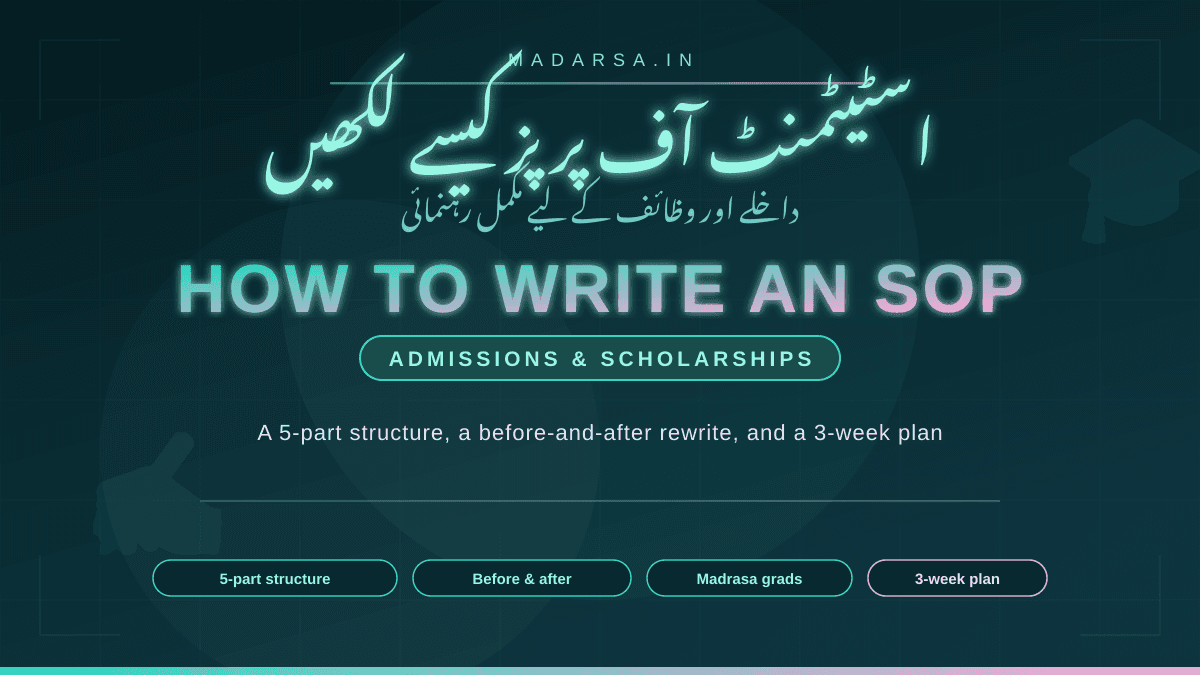
How to Write a Statement of Purpose (SOP) for Admissions and Scholarships
داخلے اور وظائف کے لیے اسٹیٹمنٹ آف پرپز (SOP) کیسے لکھیں
Imranul Haque Noor
An Engineer, an all time Learner and a Learning enabler.
✍️ How to Write a Statement of Purpose (SOP) for Admissions and Scholarships
A five-part structure, a real before-and-after, and a three-week plan — so your SOP sounds like you, not like a template.
اردو ترجمہ — Urdu Translation
اسٹیٹمنٹ آف پرپز (Statement of Purpose) یا ایس او پی (SOP) ایک مختصر تحریر ہے جس میں آپ بتاتے ہیں کہ آپ کون ہیں، آپ نے اب تک کیا کیا ہے، آپ یہی کورس یا وظیفہ (Scholarship) کیوں چاہتے ہیں، اور آگے کہاں جانا چاہتے ہیں۔
اس مضمون میں آپ کو پانچ حصوں کا ڈھانچہ، ایک کمزور اور مضبوط پیراگراف کی مثال، عام غلطیاں، اور تین ہفتوں کا عملی منصوبہ ملے گا — تاکہ آپ کا ایس او پی کسی ٹیمپلیٹ (Template) کی نقل نہیں بلکہ آپ کی اپنی آواز لگے۔
🎯 What an SOP actually is (and why committees care)
Your marksheets tell a committee what you scored. Your SOP tells them why you, why this, and why now. When many applicants have similar grades, the statement is often where a reader decides whether you have a clear direction — or are just applying everywhere.
Different places use different names. Universities abroad say statement of purpose or personal statement; German programs often say motivation letter; scholarships usually ask essay questions. The core skill is the same: a focused, honest story backed by evidence.
🧭 Direction
Shows you know where you are heading — not just that you want a seat.
🧾 Evidence
Every claim ("I love research") is backed by something you actually did.
🤝 Fit
Proves you studied this program or funder and match what it looks for.
اردو ترجمہ — Urdu Translation
آپ کی مارک شیٹ (Marksheet) بتاتی ہے کہ آپ کے کتنے نمبر آئے؛ ایس او پی بتاتا ہے کہ آپ ہی کیوں، یہی کورس کیوں، اور ابھی کیوں۔ جب بہت سے امیدواروں کے نمبر ملتے جلتے ہوں تو اکثر یہی تحریر طے کرتی ہے کہ آپ کی سمت واضح ہے یا آپ بس ہر جگہ درخواست ڈال رہے ہیں۔
نام الگ الگ ہوتے ہیں: بیرونِ ملک یونیورسٹیاں اسٹیٹمنٹ آف پرپز یا پرسنل اسٹیٹمنٹ (Personal Statement) کہتی ہیں، جرمنی کے پروگرام اکثر موٹیویشن لیٹر (Motivation Letter) کہتے ہیں، اور وظائف عموماً مضمون کے سوالات (Essay Questions) دیتے ہیں۔ بنیادی ہنر ایک ہی ہے: ثبوت کے ساتھ ایک مرکوز اور سچی کہانی۔
- سمت (Direction): دکھائیں کہ آپ کو معلوم ہے آپ کہاں جا رہے ہیں۔
- ثبوت (Evidence): ہر دعوے کے پیچھے کوئی ایسا کام ہو جو آپ نے واقعی کیا۔
- مطابقت (Fit): ثابت کریں کہ آپ نے اسی پروگرام یا ادارے کو پڑھا ہے۔
📏 The shape of a good SOP — at a glance
There is no single official format, so always obey the specific instructions — word limits, character limits and questions differ by university and scholarship. For example, the UK's UCAS undergraduate personal statement moved to a three-question format for 2026 entry. Where no format is given, these rules of thumb work well:
اردو ترجمہ — Urdu Translation
ایس او پی کا کوئی ایک سرکاری فارمیٹ (Format) نہیں ہوتا، اس لیے ہمیشہ متعلقہ ادارے کی ہدایات مانیں — الفاظ کی حد، حروف کی حد اور سوالات ہر یونیورسٹی اور وظیفے میں الگ ہوتے ہیں۔ مثال کے طور پر برطانیہ کے یو کاس (UCAS) نے 2026 کے داخلوں کے لیے انڈرگریجویٹ پرسنل اسٹیٹمنٹ کو تین سوالوں والے فارمیٹ میں بدل دیا ہے۔
جہاں کوئی فارمیٹ نہ دیا گیا ہو، وہاں یہ اندازے کام آتے ہیں: عموماً ایک سے دو صفحے، پانچ حصے، کم از کم تین ڈرافٹ (Draft)، جمع کرنے سے پہلے دو بھروسے مند پڑھنے والے، ہر پروگرام کے لیے الگ ایس او پی، اور کسی نمونے یا اے آئی (AI) سے نقل کی ہوئی ایک بھی سطر نہیں۔
اوپر کا چارٹ ایک ہزار الفاظ کے ایس او پی کا تجویز کردہ بجٹ دکھاتا ہے: ابتدائیہ دس فیصد، تعلیمی پس منظر پچیس، تجربہ اور ثبوت پچیس، یہ پروگرام کیوں پچیس، اور اہداف و اختتام پندرہ فیصد۔ یہ صرف ایک رہنما اصول ہے، قانون نہیں۔
🧱 The five-part structure
Think of your SOP as a short journey: where you started → what you built → where you want to go → why this place is the bridge.
Opening hook (≈10%)
Start with a specific moment, question or problem that pulled you toward this field — not "Since childhood I have been passionate…". One or two concrete sentences are enough.
Academic background (≈25%)
Your studies, including madrasa education if relevant — Arabic, logic (mantiq), memorisation and discipline are real skills. Name subjects, projects or results that connect to the program.
Experience & proof (≈25%)
Teaching, volunteering, a job, a small project, a family responsibility you handled. For each: what you did, what changed, what you learned.
Why this program / scholarship (≈25%)
Name specific courses, faculty research areas, or the funder's stated mission — and explain how each one fits your plan. This is the section most applicants make generic.
Goals & closing (≈15%)
A realistic short-term goal (right after the degree) and a longer-term one (5–10 years). Close by tying back to your opening moment — no grand slogans.
اردو ترجمہ — Urdu Translation
اپنے ایس او پی کو ایک مختصر سفر سمجھیں: آپ کہاں سے چلے ← آپ نے کیا بنایا ← آپ کہاں جانا چاہتے ہیں ← یہ ادارہ پُل کیسے بنے گا۔
- ۱۔ ابتدائیہ (Opening Hook) — تقریباً دس فیصد: کسی خاص لمحے، سوال یا مسئلے سے شروع کریں جس نے آپ کو اس میدان کی طرف کھینچا — "بچپن سے مجھے شوق تھا…" سے نہیں۔
- ۲۔ تعلیمی پس منظر (Academic Background) — تقریباً پچیس فیصد: آپ کی تعلیم، بشمول مدرسے کی تعلیم اگر متعلقہ ہو — عربی، منطق، حفظ اور نظم و ضبط حقیقی صلاحیتیں ہیں۔ وہ مضامین یا نتائج بتائیں جو اس پروگرام سے جڑتے ہیں۔
- ۳۔ تجربہ اور ثبوت (Experience & Proof) — تقریباً پچیس فیصد: تدریس، رضاکارانہ کام، نوکری، کوئی چھوٹا پروجیکٹ (Project)۔ ہر ایک کے لیے: آپ نے کیا کیا، کیا بدلا، کیا سیکھا۔
- ۴۔ یہی پروگرام کیوں (Why This Program) — تقریباً پچیس فیصد: مخصوص کورسز، اساتذہ کے تحقیقی شعبے یا وظیفہ دینے والے ادارے کا مشن نام لے کر بتائیں اور ہر ایک کو اپنے منصوبے سے جوڑیں۔
- ۵۔ اہداف اور اختتام (Goals & Closing) — تقریباً پندرہ فیصد: ایک حقیقت پسندانہ قلیل مدتی ہدف اور ایک طویل مدتی ہدف۔ آخر میں اپنے ابتدائی لمحے کی طرف لوٹیں — بڑے نعروں کے بغیر۔
🔁 Before and after: one paragraph, rewritten
Here is an illustrative example (not a real applicant) of how a generic paragraph becomes a strong one.
❌ Weak — generic and unprovable
"I am a hardworking and passionate student. I have always wanted to serve society. Your esteemed university is one of the best in the world and I am sure it will help me achieve my dreams."
"For two years after completing my alimiyat, I taught Arabic to thirty children in our mohalla on weekends. I noticed that the children who struggled most were not slow — they had never been taught how to read Urdu fluently first. That question pulled me toward education research. Your M.A. Education's module on early literacy, and its fieldwork component in community schools, is exactly where I want to test it."
💡 The "so what?" test: after every sentence, ask "so what?" If the sentence doesn't show a skill, a reason or a fit, cut it or replace it with a concrete detail.
اردو ترجمہ — Urdu Translation
نیچے ایک فرضی مثال ہے (کوئی حقیقی امیدوار نہیں) کہ ایک عام پیراگراف کو مضبوط کیسے بنایا جائے۔
❌ کمزور: "میں ایک محنتی اور پُرجوش طالب علم ہوں۔ میں ہمیشہ سے معاشرے کی خدمت کرنا چاہتا ہوں۔ آپ کی معزز یونیورسٹی دنیا کی بہترین یونیورسٹیوں میں سے ہے اور مجھے یقین ہے کہ یہ میرے خواب پورے کرنے میں مدد کرے گی۔"
✅ مضبوط: "عالمیت مکمل کرنے کے بعد دو سال تک میں نے ہفتے کے آخری دنوں میں اپنے محلے کے تیس بچوں کو عربی پڑھائی۔ میں نے دیکھا کہ سب سے زیادہ مشکل میں پڑنے والے بچے کند ذہن نہیں تھے — انہیں پہلے روانی سے اردو پڑھنا ہی نہیں سکھایا گیا تھا۔ اسی سوال نے مجھے تعلیمی تحقیق کی طرف کھینچا۔ آپ کے ایم اے ایجوکیشن (M.A. Education) میں ابتدائی خواندگی (Early Literacy) کا ماڈیول اور کمیونٹی اسکولوں میں فیلڈ ورک (Fieldwork) بالکل وہ جگہ ہے جہاں میں اسے پرکھنا چاہتا ہوں۔"
💡 "تو کیا؟" ٹیسٹ (So What Test): ہر جملے کے بعد خود سے پوچھیں "تو کیا؟" اگر جملہ کوئی صلاحیت، وجہ یا مطابقت نہیں دکھاتا تو اسے کاٹ دیں یا کسی ٹھوس تفصیل سے بدل دیں۔
🎓 SOP vs personal statement vs scholarship essay
These documents overlap, but their centre of gravity differs. Read the prompt carefully and lean in the right direction.
| Document | Main focus | Typical ask | Lean towards |
|---|---|---|---|
| Statement of Purpose | Academic & career plan | Why this program, what you'll study, your goals | Future direction + fit |
| Personal Statement | You as a person | Motivation, experiences, character | Your story + growth |
| Motivation Letter | Short, formal motivation | Why this course / institution | Concise reasons + evidence |
| Scholarship Essay | Funder's mission | Leadership, need, impact, giving back | Impact + alignment with funder |
🏛️ For admissions
Weight the academic story: subjects, projects, research interests, and how the curriculum serves your next step.
🌍 For scholarships
Weight the impact story: what you will do with the opportunity, and why it matches what the funder exists to support.
اردو ترجمہ — Urdu Translation
یہ دستاویزات ایک دوسرے سے ملتی جلتی ہیں، مگر ان کا مرکز الگ ہے۔ سوال غور سے پڑھیں اور صحیح سمت میں جھکیں۔
- اسٹیٹمنٹ آف پرپز (SOP): تعلیمی اور پیشہ ورانہ منصوبہ — یہ پروگرام کیوں، کیا پڑھیں گے، اہداف کیا ہیں۔
- پرسنل اسٹیٹمنٹ (Personal Statement): آپ بطور انسان — محرک، تجربات، کردار۔
- موٹیویشن لیٹر (Motivation Letter): مختصر اور رسمی — یہ کورس یا ادارہ کیوں۔
- وظیفے کا مضمون (Scholarship Essay): وظیفہ دینے والے ادارے کا مشن — قیادت، ضرورت، اثر، اور معاشرے کو واپس دینا۔
داخلے کے لیے تعلیمی کہانی پر زور دیں؛ وظیفے کے لیے اثر کی کہانی پر — آپ اس موقع سے کیا کریں گے اور یہ ادارے کے مقصد سے کیسے میل کھاتا ہے۔
🕌 For madrasa graduates: turn your background into strength
Many madrasa-educated applicants hide their background or apologise for it. Don't. Framed honestly, it shows skills committees value — just translate them into language a reader outside the madrasa world understands.
📖 Hifz & long study hours
Evidence of discipline, memory and consistency over years — say how many years and what routine you kept.
🗣️ Arabic, Persian, Urdu
Multilingual reading of classical texts is a real asset for languages, history, Islamic studies, translation and area-studies programs.
⚖️ Mantiq & debate
Training in logic and structured argument maps onto critical thinking — give one example of using it.
👥 Teaching & community work
Leading prayers, teaching children, organising events: concrete leadership with real responsibility.
⚠️ Explain gaps and equivalence briefly and factually — e.g. how your degree was recognised for eligibility — instead of hoping nobody notices. One calm sentence beats a defensive paragraph.
اردو ترجمہ — Urdu Translation
بہت سے مدرسے سے پڑھے امیدوار اپنا پس منظر چھپاتے ہیں یا اس پر معذرت کرتے ہیں۔ ایسا نہ کریں۔ ایمانداری سے پیش کیا جائے تو یہ وہ صلاحیتیں دکھاتا ہے جن کی کمیٹیاں قدر کرتی ہیں — بس انہیں ایسی زبان میں بیان کریں جو مدرسے سے باہر کا قاری سمجھ سکے۔
- حفظ اور طویل مطالعہ: برسوں کے نظم و ضبط، حافظے اور مستقل مزاجی کا ثبوت — بتائیں کتنے سال اور کیا معمول رہا۔
- عربی، فارسی، اردو: کلاسیکی متون پڑھنے کی کثیر لسانی صلاحیت زبانوں، تاریخ، اسلامیات، ترجمے اور ایریا اسٹڈیز (Area Studies) کے لیے قیمتی ہے۔
- منطق اور مناظرہ: منطق اور منظم دلیل کی تربیت تنقیدی سوچ (Critical Thinking) سے جڑتی ہے — اس کی ایک مثال دیں۔
- تدریس اور سماجی کام: امامت، بچوں کو پڑھانا، پروگرام منعقد کرنا — حقیقی ذمہ داری والی قیادت۔
⚠️ وقفے (Gap) اور سند کی مساوات (Equivalence) مختصر اور حقائق کے ساتھ بیان کریں — مثلاً آپ کی ڈگری اہلیت کے لیے کیسے تسلیم ہوئی — یہ امید نہ رکھیں کہ کوئی دھیان نہیں دے گا۔ ایک پُرسکون جملہ ایک دفاعی پیراگراف سے بہتر ہے۔
🚫 Mistakes that quietly sink an SOP
📋 Copying a sample
Reviewers read many SOPs and recognise recycled lines; universities may also run similarity checks. Samples are for structure, never sentences.
🤖 Letting AI write it
Many institutions now restrict or ask you to declare AI-generated content. Using AI to brainstorm or check grammar is different from submitting its words — check each program's policy.
🏷️ Wrong university name
Reusing one SOP and forgetting to change the name or program is common — and is an easy reason to be dismissed.
🎈 Big claims, no proof
"Passionate", "hardworking", "dedicated" mean little alone. Show the action that proves it.
📜 Life story from birth
Committees want the relevant thread, not your full biography. Keep only what explains your direction.
😔 Sob story without growth
Hardship can matter, especially for need-based awards — but focus on what you did about it and learned.
اردو ترجمہ — Urdu Translation
- نمونے کی نقل (Copying a Sample): جانچنے والے بہت سے ایس او پی پڑھتے ہیں اور دہرائی ہوئی سطریں پہچان لیتے ہیں؛ یونیورسٹیاں مشابہت کی جانچ (Similarity Check) بھی کر سکتی ہیں۔ نمونے صرف ڈھانچے کے لیے ہیں، جملوں کے لیے نہیں۔
- اے آئی سے لکھوانا: بہت سے ادارے اب اے آئی سے لکھی تحریر پر پابندی لگاتے ہیں یا اس کا اعلان مانگتے ہیں۔ خیالات جمع کرنے یا گرامر (Grammar) جانچنے میں مدد لینا الگ بات ہے، اس کے الفاظ جمع کرنا الگ — ہر پروگرام کی پالیسی (Policy) دیکھیں۔
- یونیورسٹی کا غلط نام: ایک ہی ایس او پی دوبارہ استعمال کرتے ہوئے نام یا پروگرام بدلنا بھول جانا عام غلطی ہے — اور مسترد ہونے کی آسان وجہ۔
- بڑے دعوے، ثبوت نہیں: "پُرجوش"، "محنتی" جیسے الفاظ اکیلے کچھ نہیں کہتے۔ وہ عمل دکھائیں جو انہیں ثابت کرے۔
- پیدائش سے پوری داستان: کمیٹی کو متعلقہ دھاگا چاہیے، پوری سوانح نہیں۔
- ترقی کے بغیر دکھ بھری کہانی: مشکلات اہم ہو سکتی ہیں، خاص طور پر ضرورت کی بنیاد پر وظائف (Need-based Awards) میں — مگر زور اس پر دیں کہ آپ نے کیا کیا اور کیا سیکھا۔
🗓️ A three-week plan from blank page to submit
Days 1–3: Research
Read the program page, course list, faculty interests and the scholarship's eligibility and mission. Save 3–5 specific details you can mention.
Days 4–5: Brain-dump
On paper, list every study, job, project, teaching moment and challenge. Don't judge — just collect stories and numbers.
Day 6: Outline
Pick one opening moment and 2–3 strongest stories. Slot them into the five parts.
Days 7–10: First draft
Write fast without editing. It will be rough — that is normal. Then cut anything that fails the "so what?" test.
Days 11–16: Feedback & revise
Share with two readers — ideally a teacher and someone outside your field. Ask: "What do you remember? Where were you bored?" Revise 2–3 times.
Days 17–21: Final polish
Check the word limit, names, spelling and formatting. Read it aloud. Submit a day or two early — portals often slow down near deadlines.
📝 Writing in English is hard? That's okay.
Committees value clear, simple English over fancy vocabulary. Short sentences, active verbs and concrete details read better than long, decorated ones. Draft your ideas in Urdu first if it helps, then write them in English yourself.
اردو ترجمہ — Urdu Translation
- دن ۱ تا ۳ — تحقیق (Research): پروگرام کا صفحہ، کورسز کی فہرست، اساتذہ کی دلچسپیاں اور وظیفے کی اہلیت (Eligibility) اور مشن پڑھیں۔ تین سے پانچ مخصوص باتیں نوٹ کریں جن کا ذکر کر سکیں۔
- دن ۴ تا ۵ — خیالات اُتاریں (Brain-dump): کاغذ پر ہر پڑھائی، نوکری، پروجیکٹ، تدریس کا لمحہ اور چیلنج لکھیں۔ فیصلہ نہ کریں — بس کہانیاں اور اعداد جمع کریں۔
- دن ۶ — خاکہ (Outline): ایک ابتدائی لمحہ اور دو تین مضبوط ترین کہانیاں چنیں اور انہیں پانچ حصوں میں رکھیں۔
- دن ۷ تا ۱۰ — پہلا ڈرافٹ: بغیر ترمیم کے تیزی سے لکھیں۔ کچا ہوگا — یہ معمول ہے۔ پھر جو جملہ "تو کیا؟" ٹیسٹ میں ناکام ہو، کاٹ دیں۔
- دن ۱۱ تا ۱۶ — رائے اور نظرثانی (Feedback): دو لوگوں کو دکھائیں — بہتر ہو ایک استاد اور ایک آپ کے شعبے سے باہر کا شخص۔ پوچھیں: "آپ کو کیا یاد رہا؟ کہاں بوریت ہوئی؟" دو تین بار نظرثانی کریں۔
- دن ۱۷ تا ۲۱ — آخری نکھار: الفاظ کی حد، نام، ہجے اور فارمیٹنگ (Formatting) جانچیں۔ بلند آواز سے پڑھیں۔ ایک دو دن پہلے جمع کریں — آخری دنوں میں پورٹل (Portal) اکثر سست ہو جاتے ہیں۔
📝 انگریزی میں لکھنا مشکل ہے؟ کوئی بات نہیں۔ کمیٹیاں بھاری الفاظ سے زیادہ صاف اور سادہ انگریزی کو پسند کرتی ہیں۔ چھوٹے جملے، فعال افعال اور ٹھوس تفصیلات بہتر پڑھی جاتی ہیں۔ اگر مددگار ہو تو پہلے اپنے خیالات اردو میں لکھیں، پھر خود انگریزی میں لکھیں۔
✅ Final checklist before you hit submit
☑️ Answers the actual prompt
Every question asked is answered, in the order asked if there are several.
☑️ Within the limit
Word or character count checked in the format the portal counts.
☑️ Names are right
University, program and scholarship names spelled correctly — and they match this application.
☑️ Sounds like you
A teacher or friend who knows you would recognise your voice in it.
🤲 Bismillah — start your brain-dump today. A rough page now is worth more than a perfect page imagined the night before the deadline. Results are never guaranteed, but a clear, honest SOP gives your application its best chance.
اردو ترجمہ — Urdu Translation
- ☑️ اصل سوال کا جواب: ہر پوچھا گیا سوال جواب پایا ہو، اور اگر کئی سوال ہوں تو اسی ترتیب میں۔
- ☑️ حد کے اندر: الفاظ یا حروف کی گنتی اسی طریقے سے جانچی ہو جس سے پورٹل گنتا ہے۔
- ☑️ نام درست: یونیورسٹی، پروگرام اور وظیفے کے نام صحیح ہجے کے ساتھ — اور اسی درخواست سے میل کھاتے ہوں۔
- ☑️ آپ کی آواز: آپ کو جاننے والا کوئی استاد یا دوست اس میں آپ کا انداز پہچان لے۔
🤲 بسم اللہ — آج ہی اپنے خیالات کاغذ پر اُتارنا شروع کریں۔ ابھی کا ایک کچا صفحہ آخری رات کے تصوراتی مکمل صفحے سے زیادہ قیمتی ہے۔ نتیجے کی کوئی ضمانت نہیں، مگر ایک واضح اور سچا ایس او پی آپ کی درخواست کو بہترین موقع دیتا ہے۔
📚 Build the English to write it well
If writing clear English sentences is what holds you back, Madarsa's English Mastery series for Urdu speakers builds grammar, sentence structure and fluency step by step — useful for SOPs, emails and interviews alike. You can also browse more guides on the Madarsa blog.
اردو ترجمہ — Urdu Translation
اگر صاف انگریزی جملے لکھنا آپ کی رکاوٹ ہے تو مدرسہ (Madarsa) کی اردو بولنے والوں کے لیے انگلش ماسٹری سیریز قدم بہ قدم گرامر، جملوں کی بناوٹ اور روانی سکھاتی ہے — جو ایس او پی، ای میل اور انٹرویو سب میں کام آتی ہے۔
📚 Sources & further reading
- UCAS — Writing your personal statement (including the three-question format for 2026 entry).
- Purdue Online Writing Lab — Writing the personal statement.
- DAAD (German Academic Exchange Service) — daad.de, for studying in Germany and motivation-letter requirements on individual program pages.
- The before-and-after paragraph in this guide is an illustrative example written for teaching, not a real applicant's statement.
Enjoyed this article?
Subscribe to our newsletter for more articles, tutorials, and insights delivered straight to your inbox.