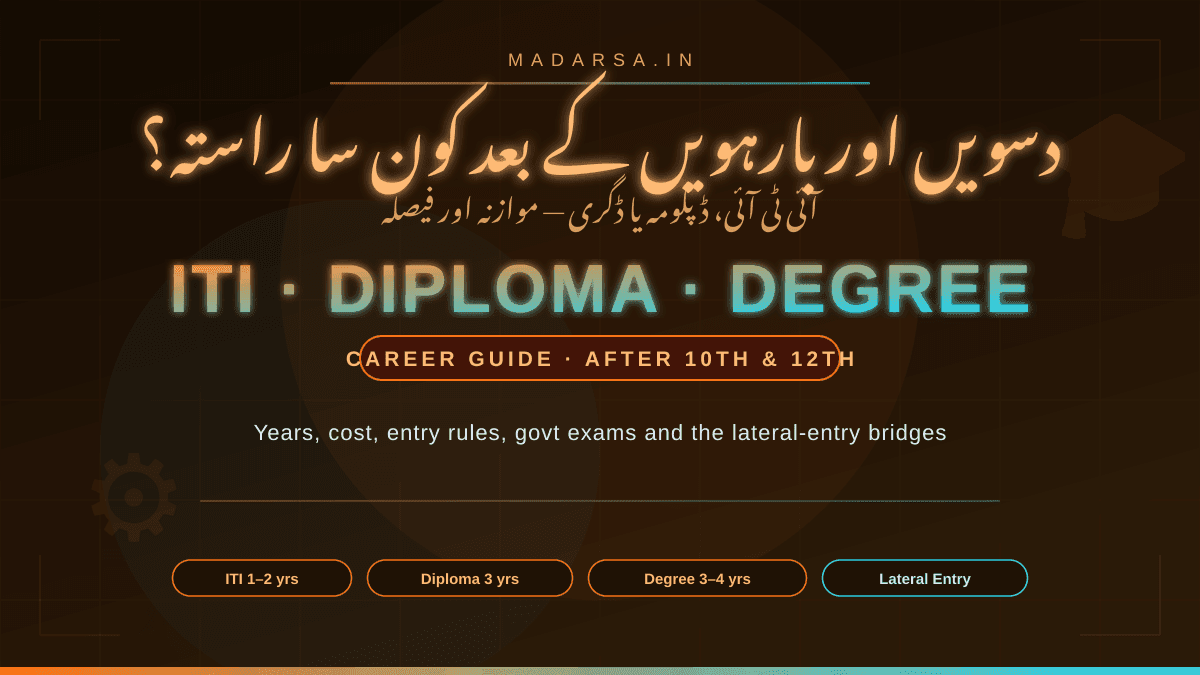
ITI, Diploma or Degree After 10th and 12th: Which Path Suits You?
دسویں اور بارہویں کے بعد آئی ٹی آئی، ڈپلومہ یا ڈگری — کون سا راستہ آپ کے لیے؟

Imranul Haque Noor
An Engineer, an all time Learner and a Learning enabler.
🧭 ITI, Diploma or Degree After 10th and 12th: Which Path Suits You?
Three doors open after school. None of them is a dead end — but each one costs a different amount of time and money and leads somewhere different. Here is how to choose with your eyes open.
اردو ترجمہ — Urdu Translation
دسویں یا بارہویں کے بعد تین راستے کھلتے ہیں: آئی ٹی آئی (ITI)، ڈپلومہ (Diploma) اور ڈگری (Degree)۔ ان میں سے کوئی بھی بند گلی نہیں ہے — مگر ہر راستے پر وقت اور پیسہ الگ لگتا ہے اور ہر ایک الگ منزل تک لے جاتا ہے۔ یہ مضمون آپ کو تینوں کی اصل حقیقت، آپس کا موازنہ، فیصلے کے پانچ سوال، اور یہ بتاتا ہے کہ ایک راستہ چننے کے بعد بھی باقی دروازے کیسے کھلے رہتے ہیں۔
یہ رہنمائی ہے، فتویٰ نہیں — آپ کے گھر کے حالات، آپ کی دلچسپی اور آپ کی ریاست کے قواعد آخری فیصلہ طے کریں گے۔
💡 Two brothers, two good choices
Arif finished Class 10 and his father's brass workshop needed help within a year. He joined the government ITI for Electrician, did his two years, then an apprenticeship with a local contractor. By the time his school friends were in their second year of college, Arif was wiring new houses and earning. His younger brother Sameer liked maths and did not need to earn immediately. He took the polytechnic diploma in Civil Engineering after Class 10, then used lateral entry to join the second year of a B.Tech. Six years after Class 10, Sameer had a degree; Arif had five years of work behind him and his own small team. Neither chose wrong — they chose according to their situation.
This is the whole argument of this article in one story. The question is not which path is best. The question is which path fits your time, your money, your interest, and your long-term goal.
اردو ترجمہ — Urdu Translation
عارف اور سمیر، مراد آباد کے دو بھائی۔ عارف نے دسویں کی اور والد کے پیتل کے کارخانے کو سال بھر میں مدد چاہیے تھی۔ اس نے سرکاری آئی ٹی آئی میں الیکٹریشن (Electrician) کا دو سالہ کورس کیا، پھر ایک مقامی ٹھیکیدار کے ساتھ اپرنٹس شپ (Apprenticeship)۔ جب اس کے اسکول کے دوست کالج کے دوسرے سال میں تھے، عارف نئے مکانوں کی وائرنگ کر کے کما رہا تھا۔ چھوٹا بھائی سمیر ریاضی پسند کرتا تھا اور اسے فوراً کمانے کی ضرورت نہیں تھی۔ اس نے دسویں کے بعد سول انجینئرنگ کا پولی ٹیکنک ڈپلومہ کیا، پھر لیٹرل انٹری (Lateral Entry) سے بی ٹیک کے دوسرے سال میں داخلہ لیا۔ دسویں کے چھ سال بعد سمیر کے پاس ڈگری تھی اور عارف کے پاس پانچ سال کا کام اور اپنی چھوٹی سی ٹیم۔ دونوں میں سے کسی نے غلط فیصلہ نہیں کیا — دونوں نے اپنے حالات کے مطابق فیصلہ کیا۔
اصل سوال یہ نہیں کہ کون سا راستہ بہترین ہے۔ اصل سوال یہ ہے کہ کون سا راستہ آپ کے وقت، پیسے، دلچسپی اور لمبے ہدف کے مطابق ہے۔
🗺️ The three doors, in one picture
After Class 10 you can enter an ITI (Industrial Training Institute) for a trade skill, a polytechnic diploma for a technician-level qualification, or continue to Class 11–12 and then a degree. The dashed lines matter as much as the boxes: there are lateral-entry bridges that let you move from one track to the next without starting over.
اردو ترجمہ — Urdu Translation
دسویں کے بعد آپ تین میں سے کسی ایک دروازے میں داخل ہو سکتے ہیں: ہنر سیکھنے کے لیے آئی ٹی آئی (Industrial Training Institute)، ٹیکنیشن سطح کی سند کے لیے پولی ٹیکنک ڈپلومہ (Polytechnic Diploma)، یا گیارہویں بارہویں کر کے ڈگری۔ تصویر میں نقطوں والی لکیریں ڈبوں جتنی ہی اہم ہیں: یہ لیٹرل انٹری کے پل ہیں جن سے آپ ایک راستے سے دوسرے میں بغیر دوبارہ شروع کیے جا سکتے ہیں۔
اعداد یاد رکھیں: آئی ٹی آئی ایک سے دو سال، ڈپلومہ تین سال، ڈگری تین سے چار سال۔ زیادہ تر آئی ٹی آئی ٹریڈز کے لیے آٹھویں یا دسویں پاس اور کم از کم چودہ سال عمر چاہیے۔
🔧 ITI — the fastest route to a skill that pays
ITIs run under the Directorate General of Training (DGT) in the Ministry of Skill Development and Entrepreneurship. You pick one trade and learn it mostly with your hands: a workshop, real tools, real faults to fix. At the end you sit the All India Trade Test and receive a National Trade Certificate (NTC), which is recognised across India for government and private jobs that ask for that trade.
🎯 Who can join
Most engineering trades ask for Class 10 pass; several trades accept Class 8 pass. Minimum age is 14. There is usually no upper age limit, so a 25-year-old who left school early can still enrol.
⏳ How long
One or two years depending on the trade. Electrician, Fitter, Turner and Machinist are typically two years; trades like Welder, Plumber, COPA and Sewing Technology are typically one year.
🧰 Popular trades
Electrician, Fitter, Welder, Mechanic Motor Vehicle, Draughtsman, Plumber, Refrigeration & AC, COPA (Computer Operator & Programming Assistant), Stenographer, Dress Making, Electronics Mechanic. Each trade has an official syllabus on the DGT site.
💸 What it costs
Government ITIs charge very low fees — typically a few hundred to a few thousand rupees a year, varying by state. Private ITIs charge many times more. Always check that a private ITI is affiliated to NCVT or the state council before paying.
🏭 What comes after
The classic next step is an apprenticeship under the Apprentices Act 1961 — paid, on-the-job training with a real company, found through apprenticeshipindia.gov.in. After it you get a National Apprenticeship Certificate, which many PSUs and railways value.
🚪 Doors it opens
Technician and skilled-worker posts in railways, PSUs, defence establishments and state electricity boards; private industry; self-employment (electricians, AC mechanics and welders are hired daily); and Gulf jobs, where trade certificates and experience are checked.
Stipend reality check: apprenticeship stipends have a government-prescribed minimum — for ITI (NTC) holders it was set at ₹7,700 per month in the 2019 revision of the Apprenticeship Rules. Companies may pay more; they may not legally pay less. Verify the current figure on the apprenticeship portal before you sign.
Honest downside: an ITI certificate alone is not a university degree. Posts that say "graduate" are closed to you unless you climb further (see the ladder section). The work can be physical, and in the early years income depends heavily on how good you actually are with your hands.
اردو ترجمہ — Urdu Translation
آئی ٹی آئی وزارتِ ہنر مندی کے ادارے ڈی جی ٹی (Directorate General of Training) کے تحت چلتے ہیں۔ آپ ایک ٹریڈ (Trade) چنتے ہیں اور اسے زیادہ تر ہاتھ سے سیکھتے ہیں: ورکشاپ، اصلی اوزار، اصلی خرابیاں۔ آخر میں آل انڈیا ٹریڈ ٹیسٹ دے کر نیشنل ٹریڈ سرٹیفکیٹ (NTC) ملتا ہے جو پورے ہندوستان میں تسلیم شدہ ہے۔
- کون داخلہ لے سکتا ہے: زیادہ تر انجینئرنگ ٹریڈز کے لیے دسویں پاس، کئی ٹریڈز کے لیے آٹھویں پاس۔ کم از کم عمر چودہ سال، عموماً زیادہ سے زیادہ عمر کی کوئی حد نہیں۔
- مدت: ایک یا دو سال۔ الیکٹریشن، فٹر، ٹرنر، مشینسٹ عام طور پر دو سال؛ ویلڈر، پلمبر، کوپا (COPA) اور سلائی ٹیکنالوجی عام طور پر ایک سال۔
- مشہور ٹریڈز: الیکٹریشن، فٹر، ویلڈر، مکینک موٹر وہیکل، ڈرافٹس مین، پلمبر، ریفریجریشن اینڈ اے سی، کوپا (کمپیوٹر آپریٹر)، اسٹینوگرافر، ڈریس میکنگ، الیکٹرانکس مکینک۔
- خرچ: سرکاری آئی ٹی آئی کی فیس بہت کم ہے — ریاست کے حساب سے سالانہ چند سو سے چند ہزار روپے۔ نجی آئی ٹی آئی کئی گنا زیادہ لیتے ہیں۔ پیسہ دینے سے پہلے دیکھیں کہ ادارہ این سی وی ٹی (NCVT) سے ملحق ہے یا نہیں۔
- اس کے بعد: اپرنٹس شپ (Apprenticeship) — اپرنٹسز ایکٹ 1961 کے تحت کمپنی میں تنخواہ کے ساتھ تربیت، apprenticeshipindia.gov.in پر تلاش کریں۔ 2019 کے قواعد کے مطابق این ٹی سی ہولڈر کے لیے کم از کم وظیفہ ₹7,700 ماہانہ مقرر ہوا؛ کمپنی زیادہ دے سکتی ہے، کم نہیں۔ تازہ رقم پورٹل پر دیکھیں۔
- کون سے دروازے کھلتے ہیں: ریلوے، سرکاری کمپنیوں (PSU)، دفاعی اداروں اور بجلی بورڈ میں ٹیکنیشن کی اسامیاں؛ نجی صنعت؛ اپنا کام؛ اور خلیجی ممالک کی نوکریاں۔
ایمان دار بات: آئی ٹی آئی سرٹیفکیٹ یونیورسٹی ڈگری نہیں ہے۔ جن اسامیوں میں "گریجویٹ" لکھا ہو وہ آپ کے لیے بند رہیں گی جب تک آپ آگے نہ بڑھیں۔ کام جسمانی ہو سکتا ہے اور شروع کے سالوں میں آمدنی اس پر منحصر ہے کہ آپ کا ہاتھ واقعی کتنا صاف ہے۔
📐 Diploma — the technician's degree
A polytechnic diploma is a three-year technical programme after Class 10, approved by the AICTE and examined by your state's Board of Technical Education. It sits between ITI and B.Tech: more theory, drawing and design than ITI, less than a degree. Diploma holders are the junior engineers and supervisors of Indian industry.
🎯 Who can join
Class 10 pass, usually with Science and Mathematics; most states run an entrance test or admit on Class 10 marks. Many states also admit Class 12 (science or vocational) and two-year ITI holders directly into the second year.
📚 Main branches
Civil, Mechanical, Electrical, Electronics & Communication, Computer Science, Automobile, Chemical. Non-engineering diplomas also exist — pharmacy (D.Pharm, after 12th science), hotel management, fashion design, teacher training (D.El.Ed, after 12th).
💸 What it costs
Government polytechnics are affordable — typically a few thousand rupees a year, with fee waivers for several categories in many states. Private polytechnics charge substantially more; compare the total three-year cost, not just year one.
🏛️ Government exams it unlocks
SSC Junior Engineer and RRB Junior Engineer list an engineering diploma as a qualifying degree. State PWD, irrigation, electricity and municipal bodies recruit JEs from diploma holders regularly.
🪜 The B.Tech bridge
Diploma holders can enter the second year of B.Tech / B.E. through lateral entry (LEET and similar state exams). You lose nothing: three years diploma plus three years degree equals the usual six years from Class 10.
⚠️ Honest downside
Three years is a real commitment with little income during it. If you are weak in mathematics, the first year is hard. And a diploma from an unapproved private institute is worth very little — check AICTE approval first.
اردو ترجمہ — Urdu Translation
پولی ٹیکنک ڈپلومہ دسویں کے بعد تین سالہ تکنیکی پروگرام ہے جسے اے آئی سی ٹی ای (AICTE) منظور کرتی ہے اور آپ کی ریاست کا بورڈ آف ٹیکنیکل ایجوکیشن امتحان لیتا ہے۔ یہ آئی ٹی آئی اور بی ٹیک کے بیچ میں ہے: آئی ٹی آئی سے زیادہ تھیوری، ڈرائنگ اور ڈیزائن، ڈگری سے کم۔ ڈپلومہ ہولڈر ہندوستانی صنعت کے جونیئر انجینئر اور سپروائزر ہیں۔
- کون داخلہ لے سکتا ہے: دسویں پاس، عموماً سائنس اور ریاضی کے ساتھ؛ زیادہ تر ریاستیں داخلہ ٹیسٹ لیتی ہیں یا دسویں کے نمبروں پر داخلہ دیتی ہیں۔ کئی ریاستیں بارہویں (سائنس یا ووکیشنل) اور دو سالہ آئی ٹی آئی والوں کو سیدھے دوسرے سال میں داخلہ دیتی ہیں۔
- بڑی شاخیں: سول، مکینیکل، الیکٹریکل، الیکٹرانکس، کمپیوٹر سائنس، آٹو موبائل، کیمیکل۔ غیر انجینئرنگ ڈپلومے بھی ہیں — فارمیسی (D.Pharm، بارہویں سائنس کے بعد)، ہوٹل مینجمنٹ، فیشن ڈیزائن، استاد کی تربیت (D.El.Ed، بارہویں کے بعد)۔
- خرچ: سرکاری پولی ٹیکنک سستے ہیں — عموماً سالانہ چند ہزار روپے، کئی زمروں کے لیے فیس معافی۔ نجی ادارے کافی زیادہ لیتے ہیں؛ تین سال کا کل خرچ دیکھیں۔
- سرکاری امتحان: ایس ایس سی جونیئر انجینئر (SSC JE) اور آر آر بی جونیئر انجینئر (RRB JE) میں انجینئرنگ ڈپلومہ اہلیت ہے۔ ریاستی پی ڈبلیو ڈی، آبپاشی، بجلی اور میونسپل ادارے بھی ڈپلومہ ہولڈرز سے جے ای بھرتی کرتے ہیں۔
- بی ٹیک کا پل: ڈپلومہ کے بعد لیٹرل انٹری سے بی ٹیک کے دوسرے سال میں داخلہ — تین سال ڈپلومہ اور تین سال ڈگری، یعنی وہی چھ سال۔
- ایمان دار بات: تین سال میں آمدنی تقریباً نہیں ہوتی۔ ریاضی کمزور ہو تو پہلا سال مشکل ہے۔ اور غیر منظور شدہ نجی ادارے کا ڈپلومہ تقریباً بے قیمت ہے — پہلے AICTE کی منظوری دیکھیں۔
🎓 Degree — the key to the widest set of doors
A bachelor's degree — BA, BSc, BCom, BBA, BCA, B.Tech, B.Voc and others — needs Class 12 first. It is the longest path and, for most families, the most expensive one. It is also the only path that opens officer-level government exams (UPSC Civil Services, SSC CGL, state PCS, bank PO), postgraduate study, and most corporate graduate hiring.
🎯 Who can join
Class 12 from any recognised board — including NIOS, which is a regular, recognised route if you missed or left school. Entrance tests apply for professional degrees (JEE for engineering, NEET for medicine, CUET for many central universities).
⏳ How long
Three years for BA / BSc / BCom; four for B.Tech. Under NEP 2020, many universities now run four-year undergraduate programmes with multiple exit points — a certificate after year one, a diploma after year two, a degree after year three.
🛠️ B.Voc — the skill degree
Bachelor of Vocation is a three-year UGC-recognised degree built around a trade or industry skill, with exit options each year. It is designed for exactly the student who likes hands-on work but still wants a degree on paper.
🏠 Open and distance
If you must earn while you study, IGNOU and state open universities offer recognised degrees at low cost. Many apprentices and ITI graduates finish a BA this way while working.
🏛️ Exams it unlocks
UPSC, SSC CGL, state PCS, bank PO and clerk, teaching (with B.Ed), and nearly every 'graduate' private posting. No shortcut exists for these — the degree is a hard requirement.
⚠️ Honest downside
A general degree with no skill attached often leads to a long job search — India has many graduates and fewer graduate jobs. Pair it with a real skill: Excel, accounts, coding, a language, data. The degree opens the door; the skill gets you hired.
اردو ترجمہ — Urdu Translation
بیچلر ڈگری — بی اے، بی ایس سی، بی کام، بی بی اے، بی سی اے، بی ٹیک، بی ووک وغیرہ — کے لیے پہلے بارہویں ضروری ہے۔ یہ سب سے لمبا اور زیادہ تر گھرانوں کے لیے سب سے مہنگا راستہ ہے۔ مگر یہی واحد راستہ ہے جو افسر سطح کے سرکاری امتحانات (UPSC، SSC CGL، ریاستی PCS، بینک PO)، اعلیٰ تعلیم اور زیادہ تر کارپوریٹ گریجویٹ بھرتی کے دروازے کھولتا ہے۔
- کون داخلہ لے سکتا ہے: کسی بھی تسلیم شدہ بورڈ سے بارہویں — این آئی او ایس (NIOS) بھی شامل ہے، جو اسکول چھوٹ جانے پر باقاعدہ راستہ ہے۔ پیشہ ورانہ ڈگریوں کے لیے داخلہ ٹیسٹ: انجینئرنگ کے لیے JEE، میڈیکل کے لیے NEET، کئی مرکزی یونیورسٹیوں کے لیے CUET۔
- مدت: بی اے، بی ایس سی، بی کام تین سال؛ بی ٹیک چار سال۔ نئی تعلیمی پالیسی (NEP 2020) کے تحت کئی یونیورسٹیاں چار سالہ پروگرام چلاتی ہیں جن میں ہر سال نکلنے کا راستہ ہے — پہلے سال سرٹیفکیٹ، دوسرے سال ڈپلومہ، تیسرے سال ڈگری۔
- بی ووک (B.Voc): یو جی سی کی تسلیم شدہ تین سالہ ہنر پر مبنی ڈگری، ہر سال نکلنے کا اختیار — اس طالب علم کے لیے جو ہاتھ کا کام پسند کرتا ہے مگر کاغذ پر ڈگری بھی چاہتا ہے۔
- فاصلاتی تعلیم: کمانے کے ساتھ پڑھنا ہو تو اگنو (IGNOU) اور ریاستی اوپن یونیورسٹیاں کم خرچ پر تسلیم شدہ ڈگری دیتی ہیں۔ کئی آئی ٹی آئی فارغین کام کرتے ہوئے اسی طرح بی اے مکمل کرتے ہیں۔
- ایمان دار بات: بغیر کسی ہنر کے عام ڈگری اکثر لمبی بے روزگاری کی طرف لے جاتی ہے۔ ڈگری کے ساتھ کوئی حقیقی مہارت جوڑیں: ایکسل، اکاؤنٹس، کوڈنگ، زبان، ڈیٹا۔ ڈگری دروازہ کھولتی ہے؛ ہنر نوکری دلاتا ہے۔
⏱️ Time to first qualification
Count years from Class 10, because that is where the three roads split. The chart is not a ranking — a shorter bar means earlier earning and a longer bar means more doors later. Both are legitimate things to want.
اردو ترجمہ — Urdu Translation
سال دسویں سے گنیں کیونکہ وہیں تینوں راستے الگ ہوتے ہیں۔ یہ چارٹ درجہ بندی نہیں ہے — چھوٹی لکیر کا مطلب جلدی کمائی، لمبی لکیر کا مطلب بعد میں زیادہ دروازے۔ دونوں چاہنا جائز ہے۔ ایک سالہ آئی ٹی آئی: ایک سال؛ دو سالہ آئی ٹی آئی: دو سال؛ پولی ٹیکنک ڈپلومہ: تین سال؛ بارہویں اور عام ڈگری: پانچ سال؛ بارہویں اور بی ٹیک: چھ سال۔
⚖️ Side by side
| Question | ITI | Diploma | Degree |
|---|---|---|---|
| Entry | Class 8 or 10, age 14+ | Class 10 (usually with Science & Maths) | Class 12 (+ entrance for professional courses) |
| Duration | 1–2 years | 3 years | 3–4 years (after 2 years of Class 11–12) |
| Learning style | Mostly hands-on, workshop | Mix of theory, drawing, lab | Mostly theory, projects, exams |
| Cost at a government institute | Lowest | Low | Low to medium (private: high) |
| Typical first role | Technician, skilled worker, apprentice | Junior engineer, supervisor, lab technician | Officer-track exams, graduate jobs, further study |
| Government exams | Technician and trade posts (railways, PSUs, defence) | SSC JE, RRB JE, state JE | UPSC, SSC CGL, PCS, bank PO |
| Self-employment | Strong (electrician, AC, welding, tailoring) | Moderate (contracting, small workshops) | Depends entirely on the skill you add |
| Where it leads next | Apprenticeship, 2nd-year diploma (lateral), NIOS Class 12 | 2nd-year B.Tech (lateral), JE posts | Postgraduate, professional exams |
| Best fit when | You must earn within 1–2 years and like practical work | You like technical work and can invest 3 years | You want officer exams, higher study, or a profession |
اردو ترجمہ — Urdu Translation
موازنہ ایک نظر میں: داخلہ — آئی ٹی آئی: آٹھویں یا دسویں، عمر 14+؛ ڈپلومہ: دسویں (عموماً سائنس و ریاضی)؛ ڈگری: بارہویں۔ مدت — ایک تا دو سال، تین سال، تین تا چار سال۔ پڑھائی کا انداز — زیادہ تر عملی؛ تھیوری اور لیب کا ملاپ؛ زیادہ تر تھیوری۔ پہلا کردار — ٹیکنیشن یا اپرنٹس؛ جونیئر انجینئر یا سپروائزر؛ افسر سطح کے امتحان یا گریجویٹ نوکری۔ سرکاری امتحان — ٹریڈ اسامیاں؛ SSC JE اور RRB JE؛ UPSC، SSC CGL، بینک PO۔ اپنا کام — آئی ٹی آئی میں مضبوط، ڈپلومہ میں درمیانہ، ڈگری میں ہنر پر منحصر۔ اگلا قدم — اپرنٹس شپ یا ڈپلومہ کا دوسرا سال؛ بی ٹیک کا دوسرا سال؛ ماسٹرز یا پیشہ ورانہ امتحان۔
🧭 Six questions that decide it
Do not start with "which is better". Start with these, in order, and write the answers down.
How soon must I earn?
If the honest answer is within two years, ITI (plus apprenticeship) is the realistic door. If the family can carry you for three years, diploma is open. If five to six years is possible, degree is open.
Do I like working with my hands?
Spend one afternoon in an ITI workshop or a polytechnic lab before deciding. Some people come alive with a multimeter; others want a whiteboard. Neither is superior — but choosing against your nature is expensive.
How is my mathematics?
Diploma and B.Tech lean heavily on maths in year one. Weak maths is fixable — but fix it before enrolling, not during. Many ITI trades need only practical arithmetic.
What is the long-term goal?
If you can already see yourself in a UPSC or bank PO hall, you need a degree — plan backwards from it. If you see your own workshop or a Gulf technician job, ITI plus experience is a straighter line.
What can the family actually afford?
Add up fees, travel, hostel and the income you give up. A government ITI near home may cost almost nothing; a private B.Tech far away can cost several lakhs. Write both numbers down and look at them together.
Which choice keeps the most doors open for me?
Not for someone else — for you. An ITI holder who later does NIOS Class 12 and an open-university BA has lost no door. A student who drifts through a general degree with no skill has, in practice, closed several.
A simple rule of thumb
Choose the shortest path that still points toward your long-term goal. Then use the ladder below so that the path never becomes a ceiling.
اردو ترجمہ — Urdu Translation
"کون سا بہتر ہے" سے شروع نہ کریں۔ ان چھ سوالوں سے ترتیب وار شروع کریں اور جواب لکھیں:
- مجھے کتنی جلدی کمانا ہے؟ اگر ایمان دار جواب "دو سال کے اندر" ہے تو آئی ٹی آئی اور اپرنٹس شپ حقیقی دروازہ ہے۔ اگر گھر تین سال سہارا دے سکتا ہے تو ڈپلومہ کھلا ہے۔ اگر پانچ چھ سال ممکن ہیں تو ڈگری کھلی ہے۔
- کیا مجھے ہاتھ سے کام پسند ہے؟ فیصلے سے پہلے ایک دوپہر آئی ٹی آئی کی ورکشاپ یا پولی ٹیکنک کی لیب میں گزاریں۔ اپنی فطرت کے خلاف انتخاب مہنگا پڑتا ہے۔
- میری ریاضی کیسی ہے؟ ڈپلومہ اور بی ٹیک کا پہلا سال ریاضی پر ٹکا ہے۔ کمزور ریاضی ٹھیک ہو سکتی ہے — مگر داخلے سے پہلے، داخلے کے دوران نہیں۔
- لمبا ہدف کیا ہے؟ اگر آپ خود کو یو پی ایس سی یا بینک پی او کے ہال میں دیکھتے ہیں تو ڈگری چاہیے — وہاں سے الٹا منصوبہ بنائیں۔ اگر اپنی ورکشاپ یا خلیج کی ٹیکنیشن نوکری دیکھتے ہیں تو آئی ٹی آئی اور تجربہ سیدھی لکیر ہے۔
- گھر واقعی کتنا خرچ اٹھا سکتا ہے؟ فیس، آنا جانا، ہاسٹل اور چھوڑی ہوئی آمدنی سب جوڑیں۔ گھر کے قریب سرکاری آئی ٹی آئی تقریباً مفت ہو سکتا ہے؛ دور کا نجی بی ٹیک کئی لاکھ۔
- کون سا انتخاب میرے لیے زیادہ دروازے کھلے رکھتا ہے؟ جو آئی ٹی آئی والا بعد میں NIOS سے بارہویں اور اوپن یونیورسٹی سے بی اے کر لے، اس کا کوئی دروازہ بند نہیں ہوا۔ جو بغیر ہنر کے عام ڈگری میں بہتا رہا، اس کے عملاً کئی دروازے بند ہو گئے۔
آسان اصول: سب سے چھوٹا راستہ چنیں جو پھر بھی آپ کے لمبے ہدف کی طرف جاتا ہو۔ پھر نیچے دی ہوئی سیڑھی استعمال کریں تاکہ راستہ کبھی چھت نہ بنے۔
🪜 The ladder — no door is final
This is the part most students are never told. The Indian system has bridges built into it, and knowing them removes most of the fear from this decision.
1️⃣ ITI → Diploma (2nd year)
Many state technical boards admit two-year ITI pass-outs directly into the second year of a related diploma through lateral entry. Check your state polytechnic admission brochure for the exact trades and seats.
2️⃣ ITI → Class 10 / 12 equivalence
The Ministry of Skill Development has notified equivalence of ITI certificates with Class 10 or 12 for further study and employment, subject to conditions such as passing language subjects through NIOS. Rules have changed more than once — confirm the current scheme with NIOS or DGT before relying on it.
3️⃣ Diploma → B.Tech (2nd year)
The best-known bridge. Lateral Entry Entrance Tests in most states admit diploma holders straight into the second year of engineering. Total time to a degree stays about six years from Class 10.
4️⃣ Anyone → Class 12 via NIOS
The National Institute of Open Schooling is a recognised national board. If you went the ITI route and later want a degree, NIOS Class 12 is the normal door — exams twice a year, Urdu available as a subject.
5️⃣ Working → degree by distance
IGNOU and state open universities let you earn a recognised BA, BCom or BCA while you work. The combination 'ITI + apprenticeship + distance degree' is one of the most under-rated routes in the country.
6️⃣ NEP multiple exit
In four-year programmes under NEP 2020 you can step out with a certificate or diploma and re-enter later. Ask the specific university whether it has implemented this — not all have.
The honest caveat: bridges exist on paper everywhere but seats are limited and rules differ by state and year. Before you count on a lateral-entry route, read the current admission brochure of the actual institute you intend to join.
اردو ترجمہ — Urdu Translation
یہ وہ حصہ ہے جو زیادہ تر طلبہ کو کبھی نہیں بتایا جاتا۔ ہندوستانی نظام میں پل بنے ہوئے ہیں، اور انہیں جان لینے سے اس فیصلے کا زیادہ تر خوف ختم ہو جاتا ہے:
- آئی ٹی آئی سے ڈپلومہ (دوسرا سال): کئی ریاستی تکنیکی بورڈ دو سالہ آئی ٹی آئی پاس کو متعلقہ ڈپلومہ کے دوسرے سال میں براہِ راست داخلہ دیتے ہیں۔ اپنی ریاست کے پولی ٹیکنک داخلہ بروشر میں ٹریڈز اور نشستیں دیکھیں۔
- آئی ٹی آئی سے دسویں/بارہویں کی مساوات: وزارتِ ہنر مندی نے آئی ٹی آئی سرٹیفکیٹ کو آگے کی تعلیم اور نوکری کے لیے دسویں یا بارہویں کے برابر قرار دینے کا نوٹیفکیشن جاری کیا ہے، شرائط کے ساتھ — جیسے NIOS سے زبان کے مضامین پاس کرنا۔ قواعد کئی بار بدلے ہیں؛ بھروسہ کرنے سے پہلے NIOS یا DGT سے موجودہ اسکیم کی تصدیق کریں۔
- ڈپلومہ سے بی ٹیک (دوسرا سال): سب سے مشہور پل۔ زیادہ تر ریاستوں میں لیٹرل انٹری ٹیسٹ ڈپلومہ ہولڈرز کو سیدھے انجینئرنگ کے دوسرے سال میں داخلہ دیتا ہے۔
- کوئی بھی، NIOS سے بارہویں: این آئی او ایس تسلیم شدہ قومی بورڈ ہے۔ سال میں دو بار امتحان، اردو بطور مضمون دستیاب۔
- کام کے ساتھ فاصلاتی ڈگری: اگنو اور ریاستی اوپن یونیورسٹیاں کام کرتے ہوئے تسلیم شدہ بی اے، بی کام یا بی سی اے کا موقع دیتی ہیں۔ "آئی ٹی آئی + اپرنٹس شپ + فاصلاتی ڈگری" ملک کے سب سے کم سمجھے گئے راستوں میں سے ہے۔
- NEP کے تحت کئی مقامات پر نکلنا: چار سالہ پروگراموں میں سرٹیفکیٹ یا ڈپلومہ لے کر نکلا اور بعد میں واپس آیا جا سکتا ہے۔ متعلقہ یونیورسٹی سے پوچھیں کہ اس نے یہ نافذ کیا ہے یا نہیں۔
ایمان دار انتباہ: پل کاغذ پر ہر جگہ ہیں مگر نشستیں محدود ہیں اور قواعد ریاست اور سال کے حساب سے بدلتے ہیں۔ کسی لیٹرل انٹری راستے پر بھروسہ کرنے سے پہلے اس ادارے کا تازہ داخلہ بروشر پڑھیں جہاں آپ جانا چاہتے ہیں۔
🕌 For madrasa graduates and Urdu-medium students
Three practical notes. First, your certificate's equivalence decides which door you can knock on: state madrasa board certificates are treated as Class 10 or 12 equivalent in some states and not in others, and private (unaffiliated) madrasa certificates are generally not accepted by ITIs or polytechnics. If in doubt, NIOS Class 10 or 12 is the clean fix — it is recognised everywhere and lets you keep Urdu as a subject.
Second, ITI trades are a strong fit for many madrasa students: the entry bar is Class 8 or 10, fees at government ITIs are tiny, and trades like Electrician, COPA, Refrigeration & AC and Stenographer lead quickly to work, including in the Gulf, where Arabic is an advantage you already hold. Third, if you want the officer-exam road, treat it as a two-step plan: NIOS Class 12 first, then a distance or regular degree — and begin building exam English and computer skills in parallel, not afterwards.
🎁 A free place to start today
Every one of the three paths now assumes basic computer literacy — ITI admission forms, polytechnic entrance registration, and university applications are all online. Madarsa's Basic Computer & Digital Skills course is free, bilingual in English and Urdu, and covers exactly the forms, email and file skills you will need in week one of any of these routes.
اردو ترجمہ — Urdu Translation
تین عملی باتیں۔ پہلی: آپ کی سند کی مساوات (Equivalence) طے کرتی ہے کہ آپ کس دروازے پر دستک دے سکتے ہیں۔ ریاستی مدرسہ بورڈ کی اسناد کچھ ریاستوں میں دسویں یا بارہویں کے برابر مانی جاتی ہیں اور کچھ میں نہیں؛ نجی (غیر ملحق) مدارس کی اسناد عام طور پر آئی ٹی آئی یا پولی ٹیکنک میں قبول نہیں ہوتیں۔ شک ہو تو NIOS سے دسویں یا بارہویں صاف حل ہے — ہر جگہ تسلیم شدہ، اور اردو بطور مضمون رکھ سکتے ہیں۔
دوسری: آئی ٹی آئی ٹریڈز بہت سے مدرسہ طلبہ کے لیے موزوں ہیں — داخلے کی شرط آٹھویں یا دسویں، سرکاری آئی ٹی آئی کی فیس برائے نام، اور الیکٹریشن، کوپا، ریفریجریشن اینڈ اے سی اور اسٹینوگرافر جیسی ٹریڈز جلدی کام تک لے جاتی ہیں، خلیج میں بھی، جہاں عربی آپ کے پاس پہلے سے موجود فائدہ ہے۔ تیسری: اگر افسر امتحان کا راستہ چاہتے ہیں تو اسے دو قدمی منصوبہ سمجھیں — پہلے NIOS سے بارہویں، پھر فاصلاتی یا باقاعدہ ڈگری — اور امتحانی انگریزی اور کمپیوٹر کی مہارت ساتھ ساتھ بنائیں، بعد میں نہیں۔
آج ہی مفت شروعات: تینوں راستوں کے فارم اب آن لائن ہیں۔ مدرسہ پلیٹ فارم کا بنیادی کمپیوٹر و ڈیجیٹل مہارت (Basic Computer & Digital Skills) کا کورس مفت اور انگریزی اردو دونوں میں ہے — فارم، ای میل اور فائل کی وہی مہارتیں جو کسی بھی راستے کے پہلے ہفتے میں چاہییں۔
🚨 Mistakes and traps to avoid
The unaffiliated institute
The single most expensive mistake: paying a private 'ITI' or 'polytechnic' that is not affiliated to NCVT / the state council or approved by AICTE. Its certificate will not be accepted for government jobs or lateral entry. Before paying a rupee, look the institute up on the official Skill India Digital Hub (the portal that replaced NCVT MIS) or the AICTE approved-institutions list, and ask for the affiliation letter.
🙅 Choosing by prestige, not fit
A B.Tech from a weak private college, done only because 'degree sounds better', often costs several lakhs and leads to the same technician job an ITI would have given at a fraction of the cost.
💳 'Guaranteed placement' promises
No institute can guarantee a job. Treat guaranteed-placement advertising — especially when tied to a loan — as a warning sign, not a feature.
🕰️ Waiting for the perfect decision
A year lost in indecision costs more than a year in the 'slightly wrong' path, because every path here has a bridge to the others.
📱 Skipping the computer basics
Whichever door you pick, you will fill forms, send email and read PDFs. Students lose seats every year to missed deadlines and wrong uploads. Learn this first.
اردو ترجمہ — Urdu Translation
غیر ملحق ادارہ: سب سے مہنگی غلطی ایسے نجی "آئی ٹی آئی" یا "پولی ٹیکنک" کو پیسہ دینا ہے جو NCVT یا ریاستی کونسل سے ملحق نہیں یا AICTE سے منظور نہیں۔ اس کی سند سرکاری نوکری یا لیٹرل انٹری میں قبول نہیں ہوگی۔ ایک روپیہ دینے سے پہلے ادارے کو سرکاری اسکل انڈیا ڈیجیٹل ہب (Skill India Digital Hub — جس نے NCVT MIS پورٹل کی جگہ لی ہے) یا AICTE کی منظور شدہ فہرست میں تلاش کریں اور الحاق کا خط مانگیں۔
- وقار پر انتخاب، موزونیت پر نہیں: کمزور نجی کالج سے بی ٹیک صرف اس لیے کہ "ڈگری اچھی لگتی ہے" — اکثر کئی لاکھ خرچ کر کے وہی ٹیکنیشن کی نوکری دیتی ہے جو آئی ٹی آئی بہت کم خرچ میں دے دیتا۔
- "پکی نوکری" کے وعدے: کوئی ادارہ نوکری کی ضمانت نہیں دے سکتا۔ خاص طور پر قرض کے ساتھ جڑے وعدوں کو خطرے کی گھنٹی سمجھیں۔
- کامل فیصلے کا انتظار: فیصلے میں ضائع ہوا سال "تھوڑے غلط" راستے کے سال سے مہنگا ہے، کیونکہ یہاں ہر راستے سے دوسرے تک پل موجود ہے۔
- کمپیوٹر کی بنیاد چھوڑنا: جو بھی دروازہ چنیں، فارم، ای میل اور پی ڈی ایف سامنے آئیں گے۔ ہر سال طلبہ غلط اپ لوڈ اور چھوٹی تاریخوں سے نشستیں کھو دیتے ہیں۔ یہ پہلے سیکھیں۔
🚀 Your first seven days
Day 1 — Write the six answers
Earning timeline, hands-on or not, maths level, long-term goal, family budget, doors to keep open. One page. Show it to one adult you trust.
Day 2 — Confirm your certificate status
School board, state madrasa board, or private madrasa? If equivalence is unclear, read the NIOS admission page today.
Day 3 — Visit one real institute
The nearest government ITI or polytechnic. Walk through a workshop or lab. Ask a final-year student what they wish they had known.
Day 4 — Verify affiliation of your shortlist
Check each institute on the Skill India Digital Hub portal or AICTE's approved list. Cross off anything you cannot find there.
Day 5 — Read the official admission page
Dates, documents, entrance test, fees. Put every deadline in your phone calendar with a reminder one week before.
Day 6 — Start the computer basics
Create a proper email address, learn to scan documents to PDF with your phone, and complete the first lesson of the free course above.
Day 7 — Decide the door, and the bridge
Pick the path, and write next to it the bridge you will use later (NIOS, lateral entry, distance degree). A choice with a bridge is never a trap.
Arif and Sameer both did well because they chose deliberately and kept moving. The three doors are in front of you now, and the map is in your hands. Bismillah — start today.
اردو ترجمہ — Urdu Translation
پہلے سات دن: پہلے دن چھ سوالوں کے جواب ایک صفحے پر لکھیں اور کسی قابلِ اعتماد بڑے کو دکھائیں۔ دوسرے دن اپنی سند کی حیثیت پکی کریں — شک ہو تو آج ہی NIOS کا داخلہ صفحہ پڑھیں۔ تیسرے دن قریب ترین سرکاری آئی ٹی آئی یا پولی ٹیکنک جا کر ورکشاپ یا لیب دیکھیں اور آخری سال کے کسی طالب علم سے پوچھیں۔ چوتھے دن اپنی فہرست کے ہر ادارے کا الحاق اسکل انڈیا ڈیجیٹل ہب (Skill India Digital Hub) یا AICTE کی فہرست میں چیک کریں۔ پانچویں دن سرکاری داخلہ صفحہ پڑھ کر ہر آخری تاریخ فون کے کیلنڈر میں ڈالیں۔ چھٹے دن صحیح ای میل بنائیں، فون سے دستاویز پی ڈی ایف بنانا سیکھیں، اور مفت کورس کا پہلا سبق مکمل کریں۔ ساتویں دن دروازہ چنیں اور اس کے ساتھ وہ پل بھی لکھیں جو آپ بعد میں استعمال کریں گے۔ پل والا انتخاب کبھی پھندا نہیں بنتا۔ بسم اللہ — آج ہی شروع کیجیے۔
Sources & further reading: Directorate General of Training, Ministry of Skill Development and Entrepreneurship (dgt.gov.in) — Craftsmen Training Scheme, trade list and syllabi; Skill India Digital Hub (skillindiadigital.gov.in) — successor to the NCVT MIS portal, affiliated ITIs and trade details; Apprenticeship India portal (apprenticeshipindia.gov.in) — Apprentices Act 1961, stipend rules; All India Council for Technical Education (aicte-india.org) — approved polytechnics and lateral-entry norms; National Institute of Open Schooling (nios.ac.in); IGNOU (ignou.ac.in); University Grants Commission (ugc.gov.in) — B.Voc and NEP 2020 four-year undergraduate framework; Staff Selection Commission (ssc.gov.in) — Junior Engineer eligibility. Fees, seats, equivalence rules and lateral-entry provisions differ by state and change year to year — always confirm against the current official notification or brochure of the institute you intend to join.
Enjoyed this article?
Subscribe to our newsletter for more articles, tutorials, and insights delivered straight to your inbox.
Related Posts
Job Interview Preparation for Freshers in India: Common Questions & Answers
Your first interview is preparable: the same 7 questions appear almost every time. A bilingual fresher's guide to the Indian hiring process, sample answers, the STAR method, etiquette do's and don'ts, and a 7-day preparation plan — with a special section for Urdu-first speakers and madrasa graduates.
Imranul Haque Noor
Nov 13, 2026