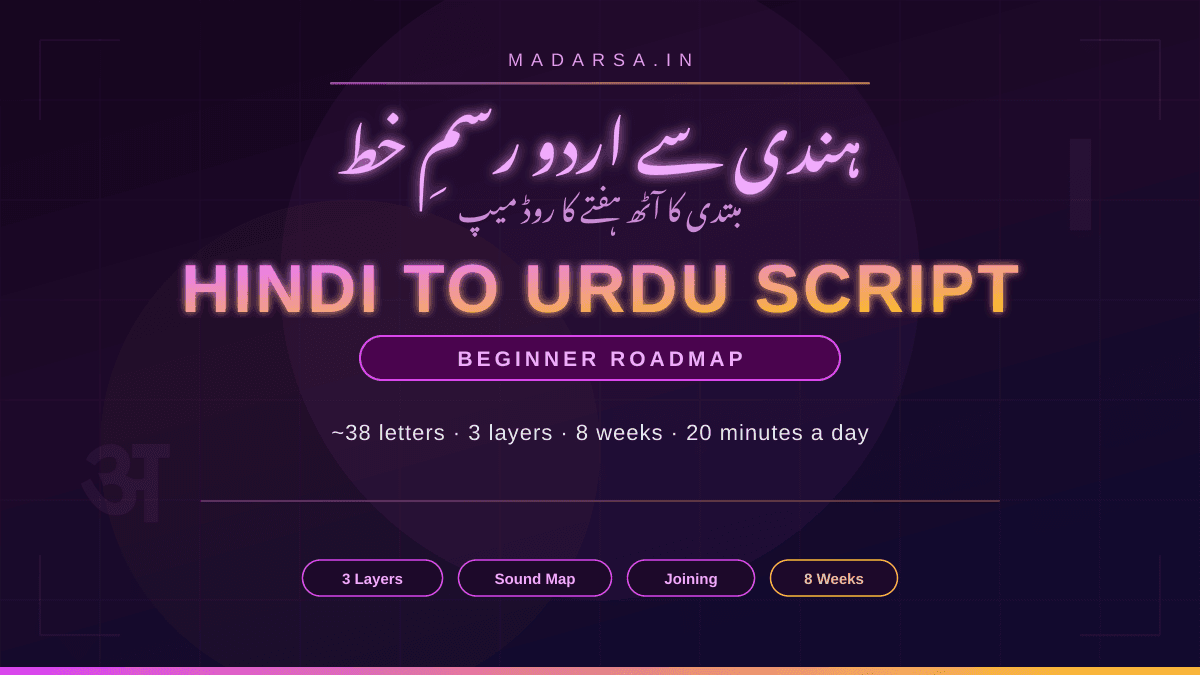
How Hindi Speakers Can Learn to Read and Write Urdu: A Beginner Roadmap
ہندی بولنے والے اردو پڑھنا اور لکھنا کیسے سیکھیں: مبتدی کا روڈ میپ

Imranul Haque Noor
An Engineer, an all time Learner and a Learning enabler.
🔤 How Hindi Speakers Can Learn to Read and Write Urdu: A Beginner Roadmap
If you speak Hindi, you already speak Urdu. What stands between you and a ghazal, a newspaper or your grandmother's letters is not a language — it is about 38 letters, a new direction, and one habit of reading without written vowels. This is the map: the alphabet in three layers, a Devanagari-to-Urdu sound table, how letters join, an eight-week plan, free tools, the mistakes that stall most learners, and a shortcut for anyone who already reads the Qur'an.
اردو ترجمہ — Urdu Translation
اگر آپ ہندی بولتے ہیں تو آپ اردو بھی بولتے ہیں۔ آپ اور کسی غزل، اخبار یا دادی کے خط کے بیچ کوئی زبان نہیں کھڑی — بس تقریباً 38 حرف، لکھنے کی نئی سمت، اور بغیر لکھی ہوئی حرکتوں کے پڑھنے کی ایک عادت۔ یہ مضمون وہی نقشہ (Map) ہے: تین تہوں میں حروفِ تہجی، دیوناگری (Devanagari) سے اردو تک آوازوں کا جدول، حرف کیسے جڑتے ہیں، آٹھ ہفتے کا منصوبہ، مفت اوزار، وہ غلطیاں جو اکثر سیکھنے والوں کو روک دیتی ہیں، اور ان کے لیے ایک شارٹ کٹ (Shortcut) جو پہلے سے قرآن پڑھ لیتے ہیں۔ مضمون کے آخر میں مکمل اردو متن بھی موجود ہے — کسی ایسے دوست یا رشتہ دار کے لیے جو ہندی پڑھنے والے کو یہ راستہ سمجھانا چاہے۔
🧭 The good news first: you are learning a script, not a language
Rohit, a Hindi-medium commerce graduate, can sing along to every line of a Jagjit Singh ghazal. He knows what dil, shaam, intezaar and khwaab mean — they are his words too. Then a friend sends the same ghazal as an Urdu-script image, and he cannot read a single line. Nothing in the poem is foreign to him except the shapes on the page. That gap — knowing every word by ear and none by eye — is exactly the gap this roadmap closes.
Linguists describe Hindi and Urdu as two standardised registers of one spoken language, often called Hindustani. Everyday Hindi and everyday Urdu share the same grammar — the verbs, the postpositions (ne, ko, se, mein), the word order — and most of the vocabulary people actually use at home, in the market and on the phone. They part ways in two places: the script, and the learned vocabulary at the formal end, where Hindi reaches for Sanskrit and Urdu reaches for Persian and Arabic.
For a Hindi reader this changes the whole project. You do not need grammar lessons, verb tables or vocabulary lists to start. You need to learn to decode a new writing system for a language you already own — the same task a Hindi child faces in Class 1, with one enormous advantage: you already know what the words are supposed to say.
اردو ترجمہ — Urdu Translation
ایک جانا پہچانا منظر، بھوپال میں: روہت، ہندی میڈیم (Hindi Medium) کا کامرس گریجویٹ، جگجیت سنگھ کی ہر غزل ساتھ ساتھ گا لیتا ہے۔ دل، شام، انتظار، خواب — سب اس کے اپنے لفظ ہیں۔ پھر ایک دوست وہی غزل اردو رسمِ خط کی تصویر میں بھیجتا ہے اور وہ ایک سطر بھی نہیں پڑھ پاتا۔ نظم میں کچھ بھی اس کے لیے اجنبی نہیں، سوائے صفحے پر بنی شکلوں کے۔ ہر لفظ کان سے جاننا اور آنکھ سے ایک بھی نہ پہچاننا — یہی وہ خلا ہے جو یہ روڈ میپ (Roadmap) بھرتا ہے۔
ماہرینِ لسانیات ہندی اور اردو کو ایک ہی بولی جانے والی زبان — جسے اکثر ہندوستانی کہا جاتا ہے — کی دو معیاری صورتیں مانتے ہیں۔ روزمرہ کی ہندی اور روزمرہ کی اردو کی گرامر (Grammar) ایک ہے: فعل، حروفِ ربط (نے، کو، سے، میں)، جملے کی ترتیب — اور وہ زیادہ تر الفاظ بھی جو گھر، بازار اور فون پر برتے جاتے ہیں۔ فرق دو جگہ ہے: رسمِ خط (Script)، اور رسمی سطح کے علمی الفاظ، جہاں ہندی سنسکرت کی طرف جاتی ہے اور اردو فارسی و عربی کی طرف۔
ہندی پڑھنے والے کے لیے یہ بات پورے منصوبے کو بدل دیتی ہے۔ شروع کرنے کے لیے آپ کو نہ گرامر کے سبق چاہیے، نہ افعال کی گردانیں، نہ الفاظ کی فہرستیں۔ آپ کو بس اُس زبان کے لیے، جو پہلے سے آپ کی اپنی ہے، ایک نیا تحریری نظام کھولنا (Decode) سیکھنا ہے — وہی کام جو پہلی جماعت کا بچہ کرتا ہے، مگر ایک بڑی سبقت کے ساتھ: آپ پہلے سے جانتے ہیں کہ لفظ کہنا کیا چاہتا ہے۔
🧱 The alphabet in three layers
Beginners usually see the Urdu alphabet as one long chart of unfamiliar hooks. It is far less frightening as three layers laid on top of each other. The bottom layer is the 28-letter Arabic alphabet. On top of it Persian added four letters for sounds Arabic does not have — p, ch, zh, g. On top of that, Urdu added a handful of its own for the Indian sounds neither Arabic nor Persian has: the retroflex ṭ, ḍ, ṛ (the hard त/ट, द/ड, ड़ distinction you already make in Hindi), a nasal marker, a final e/ai vowel letter, and the aspiration marker that turns b into bh.
🟢 Layer 1 — the Arabic core (28)
ا ب ت ث ج ح خ د ذ ر ز س ش ص ض ط ظ ع غ ف ق ک ل م ن و ہ ی. If you ever learnt to read the Qur'an, even as a child, you already have this layer — jump to the shortcut section near the end.
🔵 Layer 2 — the Persian four
پ (p), چ (ch), ژ (zh — rare, as in television spelt Urdu-style), گ (g). Each is an Arabic letter with extra dots or a stroke: پ is ب with three dots, چ is ج with three dots, گ is ک with a second bar.
🟡 Layer 3 — Urdu's own six
ٹ ڈ ڑ carry a small mark (a tiny ṭoʾe) above ت د ر to make them retroflex — your Hindi ट, ड, ड़. ں (nun ghunna) is a dotless nun for the nasal sound at the end of main, hain, kahaan. ے (bari ye) writes the final e/ai in hai, mere, kaise. ھ (do-chashmi he) follows a consonant to aspirate it: بھ = bh, کھ = kh, تھ = th.
Learn by shape family, not alphabetical order
Most Urdu letters are a shared body plus a dot pattern. ب پ ت ٹ ث are one body; ج چ ح خ are one body; د ڈ ذ; ر ڑ ز ژ; س ش; ص ض; ط ظ; ع غ; ک گ; ن ں; ہ ھ; ی ے. Learn the fewer-than-twenty bodies first, then the dots. A Hindi reader who already distinguishes ट from त and ड़ from ड will find the dot logic natural within days.
اردو ترجمہ — Urdu Translation
مبتدی عام طور پر اردو حروفِ تہجی کو اجنبی ہُکوں (Hooks) کا ایک لمبا چارٹ (Chart) سمجھتے ہیں۔ تین تہوں کے طور پر دیکھیں تو یہ کہیں کم ڈراؤنا ہے۔ نچلی تہ عربی کے 28 حرف ہیں۔ اس پر فارسی نے چار حرف رکھے — پ، چ، ژ، گ — ان آوازوں کے لیے جو عربی میں نہیں۔ اس کے اوپر اردو نے اپنے چند حرف رکھے، ان ہندوستانی آوازوں کے لیے جو نہ عربی میں ہیں نہ فارسی میں: ٹ ڈ ڑ (ہندی کے ट، ड، ड़)، غنہ کی علامت ں، آخری ے، اور دو چشمی ھ جو ب کو بھ بنا دیتی ہے۔
- پہلی تہ — عربی بنیاد (28): ا ب ت ث ج ح خ د ذ ر ز س ش ص ض ط ظ ع غ ف ق ک ل م ن و ہ ی۔ اگر آپ نے کبھی قرآن پڑھنا سیکھا ہے، بچپن میں بھی، تو یہ تہ آپ کے پاس پہلے سے ہے — آخر کے شارٹ کٹ (Shortcut) والے حصے پر جائیے۔
- دوسری تہ — فارسی کے چار: پ، چ، ژ (کم استعمال)، گ۔ ہر ایک دراصل عربی حرف ہے جس پر زائد نقطے یا لکیر ہے: پ = ب تین نقطوں کے ساتھ، چ = ج تین نقطوں کے ساتھ، گ = ک دوسری لکیر کے ساتھ۔
- تیسری تہ — اردو کے اپنے چھ: ٹ ڈ ڑ پر چھوٹی طوئے کی علامت انہیں ہندی کے ट ड ड़ بناتی ہے۔ ں (نونِ غنہ) بے نقطہ نون ہے جو میں، ہیں، کہاں کے آخر کی ناک والی آواز لکھتا ہے۔ ے (بڑی یے) ہے، میرے، کیسے کی آخری آواز لکھتی ہے۔ ھ (دو چشمی ہے) حرف کے بعد آ کر اسے ہکار بناتی ہے: بھ، کھ، تھ۔
ترتیبِ تہجی سے نہیں، شکل کے خاندان سے سیکھیے: اردو کے اکثر حرف ایک مشترک جسم اور نقطوں کا نمونہ ہیں۔ ب پ ت ٹ ث ایک جسم؛ ج چ ح خ ایک جسم؛ د ڈ ذ؛ ر ڑ ز ژ؛ س ش؛ ص ض؛ ط ظ؛ ع غ؛ ک گ؛ ن ں؛ ہ ھ؛ ی ے۔ پہلے بیس سے کم جسم سیکھیے، پھر نقطے۔ جو ہندی پڑھنے والا پہلے سے ट اور त، ड़ اور ड میں فرق کرتا ہے، اسے نقطوں کی منطق چند دن میں فطری لگنے لگے گی۔
🪞 Your Devanagari-to-Urdu sound map
This is the Hindi reader's unfair advantage: every Urdu letter already has a sound in your mouth and a Devanagari letter in your memory. Build the bridge once and most letters stop being "new" at all. The table below covers the letters beginners trip on; the rest (म → م, ल → ل, न → ن, र → ر, ब → ب) map one-to-one and need no comment.
| Hindi | Urdu | What to notice |
|---|---|---|
| क · क़ | ک · ق | Plain k is ک. The deep q of qalam, qismat, waqt is ق — Hindi marks it with a nuqta (क़); Urdu has a separate letter. |
| ख · ख़ | کھ · خ | Aspirated kh (खाना) is ک + ھ. The throaty kh of khabar, khushi (ख़) is its own letter خ. |
| ग · ग़ | گ · غ | g is گ. The gh of ghalat, gham (ग़) is غ — not to be confused with aspirated گھ (घ). |
| ज · ज़ | ج · ز ذ ض ظ | j is ج. The z sound (ज़) can be any of four letters depending on the word's origin: زمین, ذکر, ضرور, ظالم. All are pronounced z in Urdu. |
| त · ट | ت (ط) · ٹ | Dental t is ت (Arabic words sometimes use ط: طاقت). Retroflex ट is ٹ with the small mark. |
| द · ड · ड़ | د · ڈ · ڑ | The same three-way split you make in Hindi, with the same small mark for the retroflex pair. |
| स · श | س ص ث · ش | s can be س (سال), ص (صبح) or ث (ثبوت) — all said s. sh is always ش. |
| ह | ہ (ح) | Ordinary h is ہ. Arabic words may use ح (حال, حساب). Do not confuse either with the aspiration marker ھ. |
| फ · फ़ | پھ · ف | Aspirated ph (फल) is پ + ھ. The f of fikr, saaf (फ़) is ف. |
| व | و | و is a consonant (v/w) and the long vowels o, u, au — context decides: وقت, دو, خوب, اور. |
| य · ए · ऐ | ی · ے | ی is y and the long i (کیا, تین). ے (bari ye) appears only at the end of a word for e/ai: ہے, کیسے, میرے. |
| ं (anusvara) · ँ | ں · ن | Word-final nasal (में, हैं) is ں. Inside a word the nasal is written with ordinary ن (बंद = بند). |
| अ इ उ (short) | َ ِ ُ (zabar, zer, pesh) | Your short vowels exist as small marks above/below the letter — and everyday Urdu leaves them out. More on this below. |
| आ ई ऊ ओ (long) | ا ی و و | Long vowels are full letters, like Devanagari's long matras: کام, تیر, دور, سو. Word-initial long vowels take an alif first: آم, ایک, اوپر. |
⚠️ One sound, several letters — and why
Hindi solves z, s, t, h with one letter each plus an optional nuqta. Urdu keeps the original Arabic spelling of borrowed words, so z may be ز ذ ض or ظ. There is no rule to compute it; you learn the spelling with the word, exactly as English learners learn right, write, rite. The good news: the handful of everyday words that use the rare letters (ذکر, ضرور, ظاہر, صبح, ثبوت, طاقت) is small, and you already know all of them by ear.
✅ Hindi's nuqta letters are your head start
If you already pronounce क़ ख़ ग़ ज़ फ़ differently from क ख ग ज फ — as careful Hindi speakers do — you have already separated ق خ غ ز ف from ک کھ گ ج پھ in your head. Most of the "hard" Urdu letters are simply those five sounds given their own shapes.
اردو ترجمہ — Urdu Translation
یہی ہندی پڑھنے والے کی سبقت ہے: ہر اردو حرف کی آواز پہلے سے آپ کے منہ میں ہے اور ایک دیوناگری حرف آپ کی یاد میں۔ ایک بار پل بنا لیجیے تو اکثر حرف “نئے” رہتے ہی نہیں۔ اہم نقشہ یہ ہے:
- क / क़ → ک / ق: سادہ ک کے لیے ک۔ قلم، قسمت، وقت کی گہری آواز ق — ہندی اسے نقطے (क़) سے دکھاتی ہے، اردو میں الگ حرف ہے۔
- ख / ख़ → کھ / خ: ہکار کھ (کھانا) = ک + ھ۔ خبر، خوشی کی حلقی آواز الگ حرف خ ہے۔
- ग / ग़ → گ / غ: گ کے لیے گ۔ غلط، غم کی آواز غ — اسے ہکار گھ (घ) سے الگ رکھیے۔
- ज / ज़ → ج / ز ذ ض ظ: ج کے لیے ج۔ ز کی آواز لفظ کے ماخذ کے مطابق چار حرفوں میں سے کوئی ایک ہو سکتی ہے: زمین، ذکر، ضرور، ظالم — سب اردو میں ز بولے جاتے ہیں۔
- त / ट → ت (ط) / ٹ: دندانی ت کے لیے ت (عربی الفاظ میں کبھی ط: طاقت)۔ ट کے لیے ٹ۔
- द / ड / ड़ → د / ڈ / ڑ: وہی تین طرفہ فرق جو آپ ہندی میں کرتے ہیں۔
- स / श → س ص ث / ش: س کی آواز س (سال)، ص (صبح) یا ث (ثبوت) ہو سکتی ہے — سب س بولے جاتے ہیں۔ ش ہمیشہ ش۔
- ह → ہ (ح): عام ہ کے لیے ہ؛ عربی الفاظ میں ح (حال، حساب)۔ دونوں کو ہکار کی علامت ھ سے الگ رکھیے۔
- फ / फ़ → پھ / ف: ہکار پھ (پھل) = پ + ھ۔ فکر، صاف کی آواز ف۔
- व → و: و حرفِ صحیح (و) بھی ہے اور او، اُو، اَو کی لمبی آوازیں بھی — سیاق فیصلہ کرتا ہے: وقت، دو، خوب، اور۔
- य / ए / ऐ → ی / ے: ی ی اور لمبی ای دونوں ہے (کیا، تین)۔ ے صرف لفظ کے آخر میں ے / اَے کے لیے: ہے، کیسے۔
- ं / ँ → ں / ن: لفظ کے آخر کا غنہ (میں، ہیں) ں؛ لفظ کے بیچ عام ن (بند)۔
- چھوٹی حرکتیں अ इ उ → زبر زیر پیش: حرف کے اوپر نیچے چھوٹی علامتیں — جنہیں روزمرہ اردو لکھتی ہی نہیں۔ آگے تفصیل ہے۔
- لمبی حرکتیں आ ई ऊ ओ → ا ی و و: لمبی حرکتیں پورے حرف ہیں، دیوناگری کی لمبی ماتراؤں کی طرح: کام، تیر، دور، سو۔ لفظ کے شروع میں پہلے الف آتا ہے: آم، ایک، اوپر۔
ایک آواز، کئی حرف — اور کیوں: ہندی ز، س، ت، ہ کو ایک ایک حرف اور ایک اختیاری نقطے سے نمٹاتی ہے۔ اردو مستعار الفاظ کا اصل عربی ہجا رکھتی ہے، اس لیے ز ز ذ ض یا ظ ہو سکتا ہے۔ اس کا کوئی قاعدہ نہیں؛ ہجا لفظ کے ساتھ یاد ہوتا ہے، بالکل جیسے انگریزی سیکھنے والے right, write, rite یاد کرتے ہیں۔ خوشخبری: روزمرہ کے وہ الفاظ جن میں کم استعمال حرف آتے ہیں (ذکر، ضرور، ظاہر، صبح، ثبوت، طاقت) گنتی کے ہیں، اور آپ انہیں کان سے پہلے ہی جانتے ہیں۔
ہندی کے نقطے والے حرف آپ کی سبقت ہیں: اگر آپ پہلے سے क़ ख़ ग़ ज़ फ़ کو क ख ग ज फ سے الگ بولتے ہیں — جیسے محتاط ہندی بولنے والے بولتے ہیں — تو آپ نے ذہن میں ق خ غ ز ف کو ک کھ گ ج پھ سے پہلے ہی الگ کر لیا ہے۔ اردو کے اکثر “مشکل” حرف بس یہی پانچ آوازیں ہیں جنہیں اپنی شکلیں مل گئی ہیں۔
✍️ How letters join — the part Devanagari never prepared you for
Devanagari letters mostly sit side by side under a headline. Urdu is cursive by design: letters inside a word join hands, and a letter changes shape depending on whether it stands alone, starts a word, sits in the middle or ends it. The letter ب, for example, is a full boat on its own (ب), shrinks to a tooth with a dot at the start (بـ) and in the middle (ـبـ), and regains its tail at the end (ـب). Once you see that the dots stay and only the body stretches, the "four shapes" stop feeling like four letters.
🔗 Four shapes, one logic
Isolated · initial · medial · final. For most letters the initial and medial forms are just the isolated form with its tail cut off so the next letter can attach. Practise by writing one word you know in each position: بس (b at start), سب (b at end), صبح (b in the middle).
✂️ Ten letters never join forward
ا د ڈ ذ ر ڑ ز ژ و ے (and hamza) accept a join from the letter before them but never connect to the letter after. That is why a word like darwaza (دروازہ) is written as six separate pieces — د ر و ا ز ہ — with no joins at all: every letter before the final ہ is a non-joiner. Learn these ten and most "why is there a gap here?" confusion disappears.
🔵 Count the dots, every time
ب (one below) پ (three below) ت (two above) ٹ (small mark above) ث (three above) share one body. Early on, read with your finger and say the dot count aloud. It feels childish for a week and then becomes automatic — exactly like matras did in Class 1.
👁️ Reading without written vowels
Everyday Urdu does not write the short vowels a, i, u. So کل can be kal (yesterday/tomorrow) or kul (total); context tells you which — and because you already know the language, context is on your side. Children's primers, the Qur'an and most poetry books do print the marks (zabar, zer, pesh). Start with vowelled text, then take the training wheels off.
Naskh first, Nastaliq second
Urdu is traditionally printed in Nastaliq, a flowing calligraphic style in which words slope down from right to left and letters stack. It is beautiful and, for a beginner, hard — the shapes compress and dots drift. Many phones and websites, unless an Urdu font is set, show Urdu in Naskh, the upright Arabic-style print you also see in the Qur'an (iPhones and some apps default to Nastaliq instead). Learn to read in Naskh for the first month (any Arabic-style font), then deliberately move to Nastaliq — newspapers, poetry sites, signboards — in weeks 7 and 8. Trying Nastaliq in week 1 is the single most common reason people give up.
اردو ترجمہ — Urdu Translation
دیوناگری حرف زیادہ تر ایک اوپری لکیر کے نیچے پہلو بہ پہلو بیٹھتے ہیں۔ اردو ساختی طور پر مسلسل (Cursive) ہے: لفظ کے اندر حرف ہاتھ جوڑتے ہیں، اور حرف کی شکل بدلتی ہے — تنہا، لفظ کے شروع، بیچ یا آخر میں۔ مثلاً ب تنہا پوری کشتی ہے (ب)، شروع اور بیچ میں ایک نقطے والا دندانہ بن جاتی ہے (بـ، ـبـ)، اور آخر میں دم واپس پا لیتی ہے (ـب)۔ جب یہ دکھ جائے کہ نقطے وہی رہتے ہیں، صرف جسم کھنچتا ہے، تو “چار شکلیں” چار حرف لگنا بند ہو جاتی ہیں۔
- چار شکلیں، ایک منطق: تنہا، ابتدائی، درمیانی، آخری۔ اکثر حرفوں کی ابتدائی اور درمیانی شکل بس تنہا شکل ہے جس کی دم کاٹ دی گئی تاکہ اگلا حرف جڑ سکے۔ ہر مقام پر ایک جانا پہچانا لفظ لکھ کر مشق کیجیے: بس، سب، صبح۔
- دس حرف آگے کبھی نہیں جڑتے: ا د ڈ ذ ر ڑ ز ژ و ے (اور ہمزہ) پچھلے حرف سے جڑتے ہیں مگر اگلے حرف سے کبھی نہیں۔ اسی لیے دروازہ چھ الگ الگ ٹکڑوں میں لکھا جاتا ہے — د ر و ا ز ہ — کوئی جوڑ نہیں، کیونکہ آخری ہ سے پہلے کا ہر حرف نہ جڑنے والا ہے۔ یہ دس سیکھ لیجیے تو “یہاں خلا کیوں ہے؟” کی اکثر الجھن ختم ہو جاتی ہے۔
- ہر بار نقطے گنیے: ب (ایک نیچے) پ (تین نیچے) ت (دو اوپر) ٹ (چھوٹی علامت اوپر) ث (تین اوپر) ایک ہی جسم ہیں۔ شروع میں انگلی رکھ کر پڑھیے اور نقطوں کی گنتی بلند آواز میں کہیے۔ ایک ہفتہ بچکانہ لگے گا، پھر خودکار ہو جائے گا — جیسے پہلی جماعت میں ماترائیں۔
- بغیر لکھی حرکتوں کے پڑھنا: روزمرہ اردو چھوٹی حرکتیں اَ، اِ، اُ نہیں لکھتی۔ تو کل کَل بھی ہو سکتا ہے اور کُل بھی؛ سیاق بتاتا ہے — اور چونکہ زبان آپ کی اپنی ہے، سیاق آپ کے ساتھ ہے۔ بچوں کے قاعدے، قرآن اور اکثر شاعری کی کتابیں حرکتیں (زبر، زیر، پیش) لکھتی ہیں۔ حرکتوں والے متن سے شروع کیجیے، پھر سہارا ہٹا دیجیے۔
پہلے نسخ، پھر نستعلیق: اردو روایتی طور پر نستعلیق میں چھپتی ہے — ایک بہتا خطاطی کا انداز جس میں لفظ دائیں سے بائیں ڈھلتے ہیں اور حرف ایک دوسرے پر چڑھتے ہیں۔ یہ خوبصورت ہے اور مبتدی کے لیے مشکل — شکلیں سکڑتی ہیں، نقطے سرکتے ہیں۔ بہت سے فون اور ویب سائٹس (Websites)، اگر اردو فونٹ (Font) نہ ہو، اردو کو نسخ میں دکھاتی ہیں — سیدھا عربی انداز جو قرآن میں بھی نظر آتا ہے (آئی فون (iPhone) اور کچھ ایپس (Apps) اس کے بجائے نستعلیق دکھاتی ہیں)۔ پہلے مہینے نسخ میں پڑھنا سیکھیے، پھر ساتویں اور آٹھویں ہفتے جان بوجھ کر نستعلیق کی طرف جائیے — اخبار، شاعری کی سائٹس، سائن بورڈ۔ پہلے ہفتے نستعلیق آزمانا لوگوں کے چھوڑ دینے کی سب سے عام وجہ ہے۔
📅 The eight-week roadmap
Assume twenty minutes a day, six days a week, with a pen and a notebook — not just a screen. Hand-writing a letter twenty times fixes its shape in a way that tapping never does. The pace below is a plan, not a promise: some readers move faster, people juggling work and family may take twelve weeks, and that is fine. What matters is that each week has one job.
Week 1 — letters by shape family
Learn the fewer-than-twenty base bodies and their dot patterns. For every letter write its Devanagari partner beside it (ک = क, ق = क़, خ = ख़). Write each letter twenty times. Say the sound aloud as you write; do not learn names you cannot yet read.
Week 2 — joining and the ten non-joiners
Practise the four positions for the joining letters and memorise ا د ڈ ذ ر ڑ ز ژ و ے as the letters that break the chain. Copy ten words a day that you already know by ear — پانی, کتاب, دل, گھر, اسکول — and mark where each word breaks.
Week 3 — long vowels, bari ye, wao and nun ghunna
Read and write your own name, your family's names, your city and ten shop signs you pass daily. Pay special attention to و (consonant or vowel?), ی versus ے, and ں at the end of words.
Week 4 — take the vowels off
Read a vowelled children's primer or any poetry with marks for three days, then the same text without marks. Notice how rarely you actually needed them. This is the week slow reading begins.
Week 5 — read what you already know
Open a ghazal or poem on Rekhta.org, read it in Urdu script, and flip the script toggle to Devanagari to check yourself line by line. Twenty minutes of this a day does more than any chart.
Week 6 — write and type
Write five sentences a day by transliterating from Hindi — a WhatsApp message, a shopping list, a diary line. Add the Urdu keyboard to your phone and type the same sentences; most keyboards let you type in Roman letters and pick the Urdu spelling.
Weeks 7–8 — Nastaliq and the vocabulary layer
Now move to Nastaliq on purpose: newspaper headlines, poetry books, BBC Urdu. Alongside, start the Perso-Arabic vocabulary layer — ten literary words a day you half-know from songs (tasawwur, inteqaam, mukammal) — and read your first short story or news article start to finish.
The honest caveat: eight weeks gets most consistent learners to slow but independent reading of everyday Urdu and to writing simple sentences. Reading a literary novel comfortably, or a Nastaliq newspaper at speed, is a six-to-twelve-month habit — the same way a Hindi reader's speed grew across years of school. Script in two months; fluency with the months that follow.
اردو ترجمہ — Urdu Translation
مان لیجیے روز بیس منٹ، ہفتے میں چھ دن، قلم اور کاپی کے ساتھ — صرف اسکرین (Screen) نہیں۔ ہاتھ سے حرف بیس بار لکھنا اس کی شکل ایسے بٹھاتا ہے جیسے انگلی سے چھونا کبھی نہیں بٹھاتا۔ نیچے کی رفتار منصوبہ ہے، وعدہ نہیں: کچھ لوگ تیز چلتے ہیں، نوکری اور گھر سنبھالنے والوں کو بارہ ہفتے لگ سکتے ہیں، اور یہ بالکل ٹھیک ہے۔ اہم یہ ہے کہ ہر ہفتے کا ایک کام ہو۔
- پہلا ہفتہ — شکل کے خاندان کے مطابق حرف: بیس سے کم بنیادی جسم اور ان کے نقطوں کے نمونے سیکھیے۔ ہر حرف کے ساتھ اس کا دیوناگری ساتھی لکھیے (ک = क، ق = क़، خ = ख़)۔ ہر حرف بیس بار لکھیے، لکھتے ہوئے آواز بلند کہیے۔
- دوسرا ہفتہ — جوڑ اور دس نہ جڑنے والے: جڑنے والے حرفوں کی چار حالتوں کی مشق کیجیے اور ا د ڈ ذ ر ڑ ز ژ و ے کو “زنجیر توڑنے والے” حرف کے طور پر یاد کیجیے۔ روز دس ایسے لفظ نقل کیجیے جو کان سے پہلے سے جانتے ہیں — پانی، کتاب، دل، گھر، اسکول — اور نشان لگائیے کہ لفظ کہاں ٹوٹتا ہے۔
- تیسرا ہفتہ — لمبی حرکتیں، بڑی یے، واو اور نونِ غنہ: اپنا نام، گھر والوں کے نام، اپنا شہر اور روز گزرنے والی دس دکانوں کے بورڈ پڑھیے اور لکھیے۔ و (حرف یا حرکت؟)، ی اور ے کا فرق، اور آخر میں ں پر خاص توجہ دیجیے۔
- چوتھا ہفتہ — حرکتیں ہٹائیے: تین دن حرکتوں والا بچوں کا قاعدہ یا کوئی شاعری پڑھیے، پھر وہی متن بغیر حرکتوں کے۔ دیکھیے کہ درحقیقت کتنی کم بار ان کی ضرورت پڑی۔ یہی ہفتہ ہے جب آہستہ پڑھنا شروع ہوتا ہے۔
- پانچواں ہفتہ — جو جانتے ہیں وہی پڑھیے: ریختہ (Rekhta.org) پر کوئی غزل کھولیے، اردو رسمِ خط میں پڑھیے، اور رسمِ خط کا بٹن دیوناگری پر کر کے سطر بہ سطر خود کو جانچیے۔ روز بیس منٹ کا یہ کام کسی بھی چارٹ سے زیادہ کرتا ہے۔
- چھٹا ہفتہ — لکھیے اور ٹائپ کیجیے: روز پانچ جملے ہندی سے نقلِ حرفی (Transliteration) کر کے لکھیے — ایک واٹس ایپ (WhatsApp) پیغام، خریداری کی فہرست، ڈائری کی ایک سطر۔ فون میں اردو کی بورڈ (Keyboard) لگائیے اور وہی جملے ٹائپ کیجیے؛ اکثر کی بورڈ رومن حرفوں میں لکھنے اور اردو ہجا چننے کی سہولت دیتے ہیں۔
- ساتواں اور آٹھواں ہفتہ — نستعلیق اور الفاظ کی تہ: اب جان بوجھ کر نستعلیق کی طرف جائیے: اخبار کی سرخیاں، شاعری کی کتابیں، بی بی سی اردو۔ ساتھ ساتھ فارسی‑عربی الفاظ کی تہ شروع کیجیے — روز دس ادبی لفظ جو گانوں سے آدھے جانتے ہیں (تصور، انتقام، مکمل) — اور اپنی پہلی کہانی یا خبر شروع سے آخر تک پڑھیے۔
کھری بات: آٹھ ہفتے اکثر باقاعدہ سیکھنے والوں کو روزمرہ اردو کے آہستہ مگر خود مختار پڑھنے اور سادہ جملے لکھنے تک لے آتے ہیں۔ ادبی ناول آرام سے پڑھنا، یا نستعلیق اخبار تیزی سے، چھ سے بارہ مہینے کی عادت ہے — جیسے ہندی پڑھنے والے کی رفتار اسکول کے برسوں میں بڑھی تھی۔ دو مہینے میں رسمِ خط؛ روانی اس کے بعد کے مہینوں میں۔
📱 Free tools and places to practise
You do not need to buy anything. The tools below are the ones Hindi readers actually find useful, with the honest limits of each.
📖 Rekhta.org — the script toggle
One of the largest online archives of Urdu poetry shows every poem in Urdu, Devanagari and Roman script with one click. Read in Urdu, check in Hindi, line by line. Because you already know the words of the famous ghazals, this is self-correcting practice with no teacher needed.
🔤 Aamozish — Rekhta's learn-Urdu site
Rekhta Foundation's companion site (aamozish.com) teaches the alphabet and reading step by step for exactly this audience — people who know the language and not the script. Use it for weeks 1–4; use Rekhta itself from week 5.
⌨️ Your phone's Urdu keyboard
Add Urdu in your keyboard settings (Gboard and most others support it). Most offer transliteration: type kitab in Roman letters and choose کتاب from the suggestions. Seeing the right spelling appear under your own typing is a powerful daily drill.
🖋️ Noto Nastaliq Urdu — a free font
Google's free Nastaliq font. When you are ready for Nastaliq (week 7), install it on your laptop so Urdu text renders the way books do. Until then, if your device shows Urdu in an Arabic-style font, leave it — that is the Naskh practice.
📰 BBC Urdu and BBC Hindi, side by side
The same big news stories usually appear on both services. Read the Hindi version first, then the Urdu one. You will know the content, so your attention stays on the script — and you will meet the formal Perso-Arabic vocabulary layer in context.
🏛️ NCPUL — Government of India's Urdu council
The National Council for Promotion of Urdu Language (urducouncil.nic.in) runs distance-mode Urdu-learning courses, including a diploma in Urdu language, that are open to adults. Check the current session and fees on the site before planning around it.
🧒 A children's Urdu qaida
Any Urdu bookshop, and most online sellers, stock a children's Urdu ka Qaida for the price of a cup of chai. It is vowelled, uses familiar words and large Naskh-style print. Do not be embarrassed — it is the fastest first-month tool there is.
A cheap spelling check, not a teacher: paste a Hindi sentence into Google Translate set to Urdu. For shared everyday words you will mostly get the same word back in Urdu script, which lets you check your own transliteration. It is a machine translation, so it will sometimes swap in a different word or get a rare spelling wrong — use it to check, never to learn.
اردو ترجمہ — Urdu Translation
آپ کو کچھ خریدنے کی ضرورت نہیں۔ نیچے وہ اوزار ہیں جو ہندی پڑھنے والوں کو واقعی کام آتے ہیں، ہر ایک کی کھری حد کے ساتھ:
- ریختہ (Rekhta.org) — رسمِ خط کا بٹن: اردو شاعری کے سب سے بڑے آن لائن ذخیروں میں سے ایک، ہر نظم ایک کلک پر اردو، دیوناگری اور رومن میں دکھاتا ہے۔ اردو میں پڑھیے، ہندی میں جانچیے، سطر بہ سطر۔ مشہور غزلوں کے الفاظ آپ پہلے سے جانتے ہیں، اس لیے یہ خود اصلاح کرنے والی مشق ہے — استاد کی ضرورت نہیں۔
- آموزش (Aamozish) — ریختہ کی اردو سیکھنے کی سائٹ: ریختہ فاؤنڈیشن کی ساتھی سائٹ (aamozish.com) بالکل اسی سامع کے لیے — جو زبان جانتے ہیں، رسمِ خط نہیں — حروف اور پڑھائی قدم بہ قدم سکھاتی ہے۔ پہلے سے چوتھے ہفتے یہ؛ پانچویں سے ریختہ۔
- فون کا اردو کی بورڈ: کی بورڈ کی سیٹنگز (Settings) میں اردو شامل کیجیے (Gboard اور اکثر دوسرے اسے سپورٹ کرتے ہیں)۔ اکثر میں نقلِ حرفی ہے: رومن میں kitab لکھیے اور تجاویز سے کتاب چنیے۔ اپنی ٹائپنگ کے نیچے درست ہجا اُبھرتے دیکھنا طاقتور روزانہ مشق ہے۔
- نوٹو نستعلیق اردو (Noto Nastaliq Urdu) — مفت فونٹ: گوگل (Google) کا مفت نستعلیق فونٹ۔ جب نستعلیق کے لیے تیار ہوں (ساتواں ہفتہ) تو لیپ ٹاپ (Laptop) پر لگائیے تاکہ اردو کتابوں جیسی نظر آئے۔ اس سے پہلے، اگر آپ کا فون اردو عربی انداز کے فونٹ میں دکھاتا ہے تو اسے یوں ہی رہنے دیجیے — یہی نسخ کی مشق ہے۔
- بی بی سی اردو اور بی بی سی ہندی، ساتھ ساتھ: بڑی خبریں عام طور پر دونوں پر آتی ہیں۔ پہلے ہندی پڑھیے، پھر اردو۔ مضمون آپ جان چکے ہوں گے، تو توجہ رسمِ خط پر رہے گی — اور رسمی فارسی‑عربی الفاظ کی تہ سیاق میں ملے گی۔
- قومی کونسل برائے فروغِ اردو زبان (NCPUL): حکومتِ ہند کی کونسل (urducouncil.nic.in) اردو سیکھنے کے فاصلاتی کورس — جن میں اردو زبان کا ڈپلومہ شامل ہے — چلاتی ہے جو بالغوں کے لیے کھلے ہیں۔ منصوبہ بنانے سے پہلے موجودہ سیشن اور فیس سائٹ پر دیکھ لیجیے۔
- بچوں کا اردو قاعدہ: کوئی بھی اردو کتب خانہ، اور اکثر آن لائن دکانیں، ایک کپ چائے کی قیمت میں بچوں کا اردو کا قاعدہ رکھتی ہیں۔ حرکتوں والا، جانے پہچانے الفاظ، بڑا نسخ انداز کا چھاپا۔ شرمائیے نہیں — پہلے مہینے کا تیز ترین اوزار یہی ہے۔
سستی ہجا کی جانچ، استاد نہیں: گوگل ٹرانسلیٹ (Google Translate) میں اردو منتخب کر کے کوئی ہندی جملہ چسپاں کیجیے۔ مشترک روزمرہ الفاظ کے لیے زیادہ تر وہی لفظ اردو رسمِ خط میں واپس ملے گا، جس سے اپنی نقلِ حرفی جانچ سکتے ہیں۔ یہ مشینی ترجمہ ہے، کبھی دوسرا لفظ رکھ دے گا یا کم استعمال ہجا غلط کر دے گا — جانچنے کے لیے برتیے، سیکھنے کے لیے کبھی نہیں۔
⚠️ The mistakes that stall most learners
🔴 Learning the alphabet in order, as a chant
Alif-be-pe-te… feels like progress and teaches almost nothing about reading, because the letters that share a body are scattered across the chant. Learn by shape family and you learn five letters for the price of one.
🔴 Leaning on Roman Urdu for too long
Song lyrics and WhatsApp in Roman letters are a comfortable crutch. Use them in week 1 only. From week 2, every word you look up should be read in Urdu script, even slowly — otherwise your eye never learns to do the work.
🟠 Starting with Nastaliq calligraphy
Covered above, but worth repeating: the stacked, sloping style is for month two. If a page looks like a tangle, switch to a Naskh (Arabic-style) font or a children's primer and come back later.
🟠 Waiting for the vowels
If you keep hoping the zabar and zer will appear, you will stall. Everyday Urdu is written without them, and you can read it because you know the words. Trust the context — it is the same skill you use when reading a Hindi SMS with dropped matras.
🟠 Reading without writing
Recognition without production is fragile. People who only read on a phone can still not tell ہ from ھ after months. Ten minutes of hand-writing a day locks shapes in.
🟣 The four classic look-alikes
ہ vs ھ (an h sound versus the aspiration marker), ی vs ے (y/long-i versus final e/ai), ن vs ں (full n versus nasal), and و doing three jobs (v, o, u). Keep a half-page in your notebook titled "pairs I confuse" and add a real word each time one trips you.
اردو ترجمہ — Urdu Translation
- حروفِ تہجی کو ترتیب سے رٹنا: الف بے پے تے… ترقی جیسا لگتا ہے مگر پڑھنے کے بارے میں تقریباً کچھ نہیں سکھاتا، کیونکہ ایک جسم کے حرف اس ترتیب میں بکھرے ہوئے ہیں۔ شکل کے خاندان سے سیکھیے تو ایک کی قیمت میں پانچ حرف ملتے ہیں۔
- رومن اردو پر زیادہ دیر ٹیک لگانا: رومن حرفوں میں گانوں کے بول اور واٹس ایپ آرام دہ سہارا ہیں۔ صرف پہلے ہفتے برتیے۔ دوسرے ہفتے سے جو لفظ بھی دیکھیں اردو رسمِ خط میں پڑھیے، چاہے آہستہ — ورنہ آنکھ کبھی کام کرنا نہیں سیکھے گی۔
- نستعلیق خطاطی سے شروع کرنا: اوپر کہا جا چکا، مگر دہرانے کے لائق ہے: چڑھا ہوا ڈھلوان انداز دوسرے مہینے کے لیے ہے۔ صفحہ الجھا لگے تو نسخ (عربی انداز) فونٹ یا بچوں کے قاعدے پر آ جائیے اور بعد میں لوٹیے۔
- حرکتوں کا انتظار: اگر آپ زبر زیر کے نمودار ہونے کی امید رکھتے رہے تو رک جائیں گے۔ روزمرہ اردو ان کے بغیر لکھی جاتی ہے، اور آپ اسے پڑھ سکتے ہیں کیونکہ لفظ جانتے ہیں۔ سیاق پر بھروسا کیجیے — یہی مہارت آپ ماتراؤں کے بغیر لکھا ہندی ایس ایم ایس (SMS) پڑھتے ہوئے برتتے ہیں۔
- لکھے بغیر پڑھنا: پہچان بغیر لکھنے کے کمزور رہتی ہے۔ صرف فون پر پڑھنے والے مہینوں بعد بھی ہ اور ھ میں فرق نہیں کر پاتے۔ روز دس منٹ ہاتھ سے لکھنا شکلیں بٹھا دیتا ہے۔
- چار مشہور ہم شکل جوڑے: ہ اور ھ (ہ کی آواز بمقابلہ ہکار کی علامت)، ی اور ے (ی / لمبی ای بمقابلہ آخری ے)، ن اور ں (پورا نون بمقابلہ غنہ)، اور و کے تین کام (و، او، اُو)۔ کاپی میں آدھا صفحہ “جو جوڑے مجھے الجھاتے ہیں” کے عنوان سے رکھیے اور جب بھی کوئی پھسلائے، ایک اصل لفظ لکھ لیجیے۔
🕌 Already read the Qur'an? Your shortcut — and one trap
Many Hindi-speaking Muslims learnt to read Qur'anic Arabic as children through a Noorani Qaida, even if they never studied Urdu. If that is you, you already hold Layer 1 — all 28 Arabic letters, the four-shape joining logic, the non-joiners, and the vowel marks. Your whole task shrinks to the ten Layer 2 and Layer 3 additions (پ چ ژ گ ٹ ڈ ڑ ں ے ھ), reading without the marks, and getting used to Nastaliq, since the Qur'an you know is printed in Naskh. Many people in this position find they can read simple Urdu within a few weeks — a rough estimate, not a promise.
The trap: Arabic sounds in Urdu words
Qur'an readers are taught to pronounce ث as a soft th, ذ as a soft dh, ض and ظ with their Arabic values. In Urdu, ث ص س are all plain s, and ذ ز ض ظ are all plain z. Keep your tajwid for the Qur'an; in Urdu, read sabit, not thabit. The letters tell you the word's origin, not how an Urdu speaker says it.
There is a quiet bonus for everyone on this roadmap, Qur'an reader or not. The Urdu alphabet contains the entire Arabic alphabet and the entire Persian one, so a Hindi reader who learns Urdu script has also learnt to sound out Arabic and Persian text — a shop sign in Dubai, a line of Hafiz, a verse in a mosque. Understanding is a separate journey; but the door to three literatures opens with one key.
Want a guided version of this roadmap?
Madarsa's Urdu Ustaad Level 1: The Code-Breaker teaches the script through shape patterns — the same family-first method this article uses — with bilingual lessons and short quizzes after each letter group. It is built for exactly this learner: someone who speaks the language and wants to read it.
اردو ترجمہ — Urdu Translation
بہت سے ہندی بولنے والے مسلمانوں نے بچپن میں نورانی قاعدہ سے قرآنی عربی پڑھنا سیکھا، چاہے اردو کبھی نہ پڑھی ہو۔ اگر یہ آپ ہیں تو پہلی تہ آپ کے پاس پہلے سے ہے — عربی کے پورے 28 حرف، چار شکلوں کا جوڑ، نہ جڑنے والے حرف، اور حرکتوں کی علامتیں۔ آپ کا پورا کام سمٹ کر دوسری اور تیسری تہ کے دس اضافوں تک رہ جاتا ہے (پ چ ژ گ ٹ ڈ ڑ ں ے ھ)، حرکتوں کے بغیر پڑھنے تک، اور نستعلیق کی عادت تک — کیونکہ جو قرآن آپ جانتے ہیں وہ نسخ میں چھپا ہے۔ اس مقام پر بہت سے لوگ چند ہفتوں میں سادہ اردو پڑھنے لگتے ہیں — یہ موٹا اندازہ ہے، وعدہ نہیں۔
جال: اردو لفظوں میں عربی آوازیں۔ قرآن پڑھنے والوں کو ث نرم th، ذ نرم dh، اور ض ظ ان کی عربی آوازوں سے سکھائے جاتے ہیں۔ اردو میں ث ص س سب سادہ س ہیں، اور ذ ز ض ظ سب سادہ ز۔ تجوید قرآن کے لیے رکھیے؛ اردو میں ثابت کو “سابت” پڑھیے، “ثابت” عربی لہجے میں نہیں۔ حرف لفظ کا ماخذ بتاتے ہیں، اردو بولنے والے کا تلفظ نہیں۔
اس روڈ میپ پر چلنے والے ہر شخص کے لیے ایک خاموش فائدہ ہے، قرآن پڑھتا ہو یا نہ۔ اردو حروفِ تہجی میں پورا عربی اور پورا فارسی حروفِ تہجی شامل ہے، اس لیے جو ہندی پڑھنے والا اردو رسمِ خط سیکھتا ہے وہ عربی اور فارسی متن کو ہجے کر کے بولنا بھی سیکھ لیتا ہے — دبئی کی دکان کا بورڈ، حافظ کی ایک سطر، مسجد کی ایک آیت۔ سمجھنا الگ سفر ہے؛ مگر تین ادبوں کا دروازہ ایک کنجی سے کھلتا ہے۔
اس روڈ میپ کا رہنمائی والا روپ چاہیے؟ مدرسہ (Madarsa) کا اردو استاد لیول 1: کوڈ بریکر رسمِ خط کو شکلوں کے نمونوں سے سکھاتا ہے — وہی خاندان‑اول طریقہ جو اس مضمون میں ہے — دو زبانی اسباق اور ہر حرفی گروہ کے بعد چھوٹے کوئز (Quiz) کے ساتھ۔ یہ بالکل اسی سیکھنے والے کے لیے بنا ہے: جو زبان بولتا ہے اور اسے پڑھنا چاہتا ہے۔
✅ Your first seven days
- Day 1 — Write the ب family (ب پ ت ٹ ث) twenty times each; beside each, its Devanagari letter. Say the dot count aloud.
- Day 2 — The ج family (ج چ ح خ) and the د family (د ڈ ذ). Find each letter in your own name or a family name.
- Day 3 — The ر family (ر ڑ ز ژ), س ش, ص ض, ط ظ. Note which of these is just "s" and which is just "z" in Urdu.
- Day 4 — ع غ ف ق ک گ ل م. Write qalam, khabar, ghalat and hear how Hindi's nuqta letters become their own shapes.
- Day 5 — ن ں و ہ ھ ی ے and alif. Write ten words you know: پانی, کتاب, دل, گھر, ہے, میں, کیا, اور, نہیں, اچھا.
- Day 6 — The ten non-joiners. Copy دروازہ, زندگی, آواز, روز and draw a line where each word breaks.
- Day 7 — Open one short ghazal you know on Rekhta in Urdu script. Read the first two lines with your finger, then flip to Devanagari and check. Add the Urdu keyboard to your phone.
The script is not a mountain; it is 38 shapes you can already pronounce. Bismillah — write the first five today, and let tomorrow's five be the only plan.
اردو ترجمہ — Urdu Translation
- پہلا دن — ب کا خاندان (ب پ ت ٹ ث) ہر ایک بیس بار لکھیے؛ ہر ایک کے ساتھ اس کا دیوناگری حرف۔ نقطوں کی گنتی بلند آواز میں کہیے۔
- دوسرا دن — ج کا خاندان (ج چ ح خ) اور د کا خاندان (د ڈ ذ)۔ ہر حرف اپنے نام یا گھر والوں کے کسی نام میں ڈھونڈیے۔
- تیسرا دن — ر کا خاندان (ر ڑ ز ژ)، س ش، ص ض، ط ظ۔ نوٹ کیجیے کہ اردو میں ان میں کون صرف “س” ہے اور کون صرف “ز”۔
- چوتھا دن — ع غ ف ق ک گ ل م۔ قلم، خبر، غلط لکھیے اور سنیے کہ ہندی کے نقطے والے حرف اپنی شکلیں کیسے پاتے ہیں۔
- پانچواں دن — ن ں و ہ ھ ی ے اور الف۔ دس جانے پہچانے لفظ لکھیے: پانی، کتاب، دل، گھر، ہے، میں، کیا، اور، نہیں، اچھا۔
- چھٹا دن — دس نہ جڑنے والے حرف۔ دروازہ، زندگی، آواز، روز نقل کیجیے اور جہاں لفظ ٹوٹتا ہے وہاں لکیر کھینچیے۔
- ساتواں دن — ریختہ پر کوئی چھوٹی جانی پہچانی غزل اردو رسمِ خط میں کھولیے۔ پہلی دو سطریں انگلی رکھ کر پڑھیے، پھر دیوناگری پر کر کے جانچیے۔ فون میں اردو کی بورڈ شامل کیجیے۔
رسمِ خط پہاڑ نہیں؛ 38 شکلیں ہیں جن کی آواز آپ پہلے سے نکال سکتے ہیں۔ بسم اللہ — آج پہلی پانچ لکھیے، اور کل کی پانچ ہی واحد منصوبہ ہو۔
📎 Sources and notes
- Letter inventory, joining behaviour, non-connecting letters, vowel marks and the Perso-Arabic additions follow standard reference descriptions of the Urdu alphabet (for example the Urdu alphabet and Nastaliq entries on Wikipedia and the alphabet charts used in NCPUL primers). The total is given as "about 38" because references count hamza and the aspiration marker differently.
- The Hindi–Urdu relationship as two standardised registers of Hindustani is the mainstream account in descriptive linguistics; the article does not take a position on language-identity debates.
- Rekhta (rekhta.org) and Aamozish (aamozish.com) are projects of the Rekhta Foundation. NCPUL is the National Council for Promotion of Urdu Language, Ministry of Education, Government of India (urducouncil.nic.in); course availability and fees change — verify on the site.
- BBC Urdu and BBC Hindi are the BBC World Service's language services. Noto Nastaliq Urdu is published by Google under an open font licence.
- The eight-week pace and "a few weeks" for Qur'an readers are planning estimates based on common teaching experience, not measured outcomes. The opening scene is a composite, not a report about a real person.
اردو ترجمہ — Urdu Translation
- حروف کی تعداد، جوڑ، نہ جڑنے والے حرف، حرکتوں کی علامتیں اور فارسی‑عربی اضافے اردو حروفِ تہجی کی معیاری حوالہ جاتی تفصیل کے مطابق ہیں (مثلاً ویکیپیڈیا کے اردو حروفِ تہجی اور نستعلیق کے مضامین اور قومی کونسل کے قاعدوں کے چارٹ)۔ کل تعداد “تقریباً 38” لکھی گئی کیونکہ حوالے ہمزہ اور ہکار کی علامت کو مختلف طرح گنتے ہیں۔
- ہندی اور اردو کا ہندوستانی کی دو معیاری صورتوں کے طور پر رشتہ لسانیات کا عام بیان ہے؛ مضمون زبان کی شناخت کی بحثوں میں کوئی موقف نہیں لیتا۔
- ریختہ اور آموزش ریختہ فاؤنڈیشن کے منصوبے ہیں۔ قومی کونسل برائے فروغِ اردو زبان وزارتِ تعلیم، حکومتِ ہند کا ادارہ ہے؛ کورس اور فیس بدلتی رہتی ہیں — سائٹ پر تصدیق کیجیے۔
- بی بی سی اردو اور بی بی سی ہندی بی بی سی ورلڈ سروس کی زبانوں کی خدمات ہیں۔ نوٹو نستعلیق اردو گوگل کا کھلے لائسنس والا فونٹ ہے۔
- آٹھ ہفتے کی رفتار اور قرآن پڑھنے والوں کے لیے “چند ہفتے” عام تدریسی تجربے پر مبنی منصوبہ بندی کے اندازے ہیں، ناپے گئے نتائج نہیں۔ آغاز کا منظر ایک مرکب مثال ہے، کسی حقیقی شخص کی رپورٹ نہیں۔
Enjoyed this article?
Subscribe to our newsletter for more articles, tutorials, and insights delivered straight to your inbox.
Related Posts
NIOS Open Schooling: How to Complete 10th and 12th From Home
NIOS is the Government of India's open school board — no daily attendance, no upper age limit, five subjects to pass and five years to do it in. This bilingual guide covers eligibility, the subject scheme, admission blocks, fees, the study-centre system, and what it all means for madrasa students.
Imranul Haque Noor
Nov 13, 2026