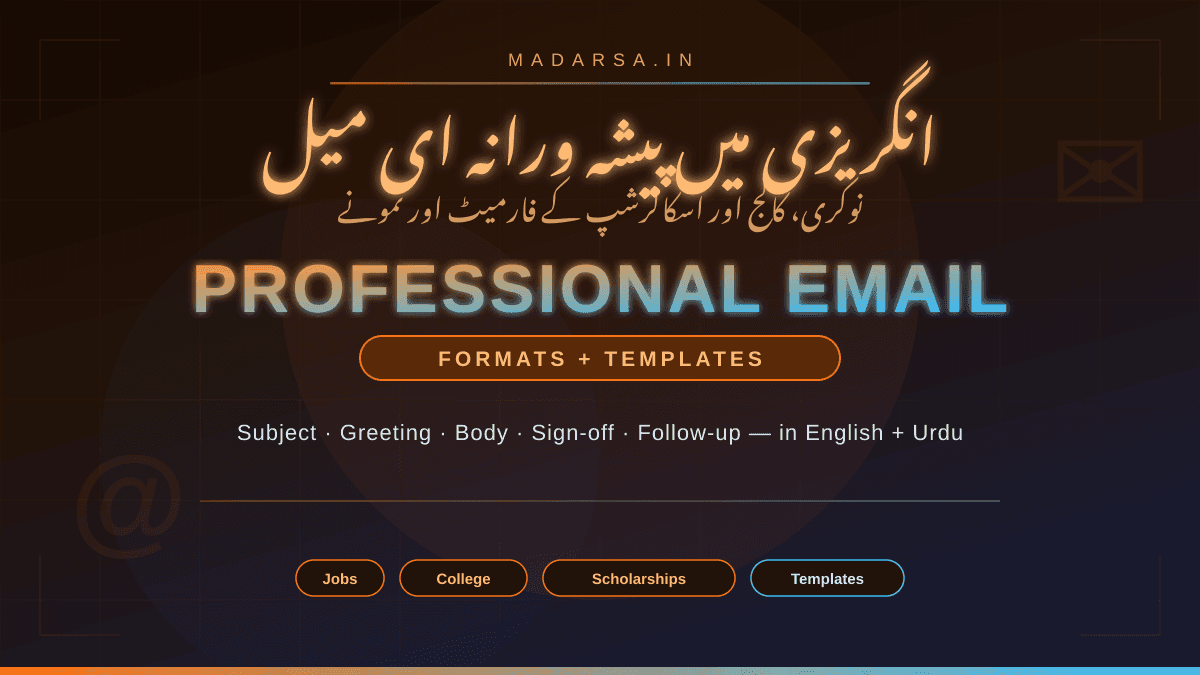
How to Write a Professional Email in English: Formats and Templates
انگریزی میں پیشہ ورانہ ای میل کیسے لکھیں: نوکری، کالج اور اسکالرشپ کے نمونے

Imranul Haque Noor
An Engineer, an all time Learner and a Learning enabler.
📧 How to Write a Professional Email in English: Formats and Templates for Jobs, College and Scholarships
The five parts of every professional email, the three-paragraph body formula, the phrases to keep and the phrases to drop, four copy-and-adapt templates, and a follow-up timeline — in English and Urdu.
اردو ترجمہ — Urdu Translation
یہ مضمون بالکل شروع سے سمجھاتا ہے کہ انگریزی میں پیشہ ورانہ ای میل (Professional Email) کیسے لکھی جاتی ہے — ہر ای میل کے پانچ حصے، تین پیراگراف والا آسان فارمولا، کون سے جملے رکھنے ہیں اور کون سے چھوڑنے ہیں، نوکری، کالج اور اسکالرشپ کے لیے چار تیار نمونے (Templates)، اور یہ کہ جواب نہ آئے تو دوبارہ کب اور کیسے لکھیں۔ ہر انگریزی حصے کے نیچے اردو ترجمہ موجود ہے، اور مضمون کے آخر میں مکمل اردو ورژن بھی ہے۔
💡 A familiar moment
Zainab had the marks, the documents and a real chance at a college scholarship. She opened Gmail on her phone and typed: no subject, "Sir plz tell me scholarship form last date urgent", sent from an address she had made in Class 9 — cutezainab_143. The office never replied. A cousin who works in an HR department rewrote it with her: a clear subject line, a proper greeting, three short paragraphs and her full name at the bottom, sent from a new address with her real name. The reply came in two days, with the exact deadline and a checklist. Same girl, same question. The only thing that changed was the email.
If that feels familiar — the fear of the blank "Compose" screen, the message you sent and never heard back from — this guide is for you. A professional email is not about big English words. It is a fixed structure that busy people recognise in two seconds, plus a handful of polite, plain phrases. Learn the structure once and you can write to a college, a scholarship office or an employer with the same confidence.
اردو ترجمہ — Urdu Translation
سہارنپور کی زینب کے پاس نمبر بھی تھے، دستاویزات بھی، اور کالج اسکالرشپ کا حقیقی موقع بھی۔ اس نے فون پر جی میل (Gmail) کھولا اور لکھا: نہ کوئی موضوع (Subject)، بس "Sir plz tell me scholarship form last date urgent" — اور وہ بھی نویں جماعت میں بنائے گئے ایڈریس cutezainab_143 سے۔ دفتر نے کبھی جواب نہیں دیا۔ ایک کزن جو ایچ آر (HR) میں کام کرتی ہے، اس نے ساتھ بیٹھ کر وہی ای میل دوبارہ لکھی: صاف موضوع، مناسب سلام، تین چھوٹے پیراگراف، نیچے پورا نام — اور اصلی نام والے نئے ایڈریس سے۔ دو دن میں جواب آ گیا، آخری تاریخ اور دستاویزات کی فہرست کے ساتھ۔ وہی لڑکی، وہی سوال — بس ای میل بدلی تھی۔
پیشہ ورانہ ای میل بڑے بڑے انگریزی الفاظ کا نام نہیں۔ یہ ایک طے شدہ ڈھانچہ ہے جسے مصروف لوگ دو سیکنڈ میں پہچان لیتے ہیں، اور ساتھ چند مؤدبانہ، سادہ جملے۔ ڈھانچہ ایک بار سیکھ لیں تو کالج، اسکالرشپ دفتر یا کسی ادارے کو ایک ہی اعتماد سے لکھ سکتے ہیں۔
🧩 The five parts of every professional email
Whether you are writing to a principal in Aligarh or a recruiter in Dubai, a professional email has the same five parts in the same order. Offices read hundreds of emails a week; this shape is what lets them find your point quickly — and answer it.
The shape matters more than the vocabulary. An email with simple words in the right five-part structure reads as professional. A long email full of impressive words in no structure reads as confusing. Structure first — always.
اردو ترجمہ — Urdu Translation
چاہے آپ علی گڑھ کے کسی پرنسپل کو لکھ رہے ہوں یا دبئی کے کسی ریکروٹر (Recruiter) کو، پیشہ ورانہ ای میل کے پانچ حصے ایک ہی ترتیب میں ہوتے ہیں: (۱) وصول کنندہ کا صحیح ایڈریس، (۲) موضوع کی ایک سطر جس میں پوری بات اور آپ کا نام ہو، (۳) سلام — Dear کے ساتھ نام یا عہدہ، (۴) تین چھوٹے پیراگراف — آپ کون ہیں، کیوں لکھ رہے ہیں، کیا چاہتے ہیں، اور (۵) اختتام مع دستخط — Kind regards، پورا نام، فون اور منسلک فائل۔ دفاتر ہفتے میں سینکڑوں ای میلیں پڑھتے ہیں؛ یہی شکل انہیں آپ کی بات جلدی ڈھونڈنے اور جواب دینے دیتی ہے۔
یاد رکھیں: ذخیرۂ الفاظ سے زیادہ ڈھانچہ اہم ہے۔ سادہ الفاظ صحیح پانچ حصوں میں ہوں تو ای میل پیشہ ورانہ لگتی ہے؛ بھاری الفاظ بغیر ترتیب کے الجھن پیدا کرتے ہیں۔ جی میل میں منسلک فائل کی حد ۲۵ ایم بی (25 MB) ہے، اور اپنے اصلی نام والا صاف ای میل ایڈریس بنانا بالکل مفت ہے۔
🏷️ The subject line — one line that decides whether you get read
The subject line is the first thing an office sees, and often the only thing they see before deciding whether to open your email now or "later" (which sometimes means never). A good subject line has two ingredients: the exact topic and your name or reference number.
✅ Good subject lines
"Application for Office Assistant — Zainab Ansari" · "Enquiry: B.A. admission 2026-27 for a madrasa graduate" · "Follow-up: Scholarship application no. 48213" · "Request for extension — Assignment 2, B.A. 1st year"
❌ Subject lines that get ignored
(no subject) · "Urgent" · "Hello sir" · "Query" · "Plz help" · "IMPORTANT!!!" — none of these tell the reader what the email is about or who it is from.
🔁 Replying? Keep the thread
When you follow up, press Reply on your own earlier email so the subject keeps the "Re:" and the office sees the history. Do not start a fresh email with a new subject — it looks like a new stranger.
📏 Length
Aim for 6–10 words. Phones cut off long subjects, so put the most important words first: the topic, then your name.
اردو ترجمہ — Urdu Translation
موضوع کی سطر (Subject Line) وہ پہلی چیز ہے جو دفتر دیکھتا ہے — اور اکثر وہی طے کرتی ہے کہ آپ کی ای میل ابھی کھلے گی یا "بعد میں" (جس کا مطلب کبھی کبھار "کبھی نہیں" ہوتا ہے)۔ اچھے موضوع کے دو اجزا ہیں: بالکل صحیح مدعا اور آپ کا نام یا ریفرنس نمبر۔ مثلاً "Application for Office Assistant — Zainab Ansari" یا "Follow-up: Scholarship application no. 48213"۔ خالی موضوع، "Urgent"، "Hello sir" یا "Plz help" — یہ سب نظر انداز ہو جاتے ہیں کیونکہ ان سے نہ بات پتا چلتی ہے نہ لکھنے والا۔
دو اور اصول: جب دوبارہ لکھیں تو اپنی پرانی ای میل پر ری پلائی (Reply) دبائیں تاکہ "Re:" کے ساتھ پوری تاریخ سامنے رہے — نئی ای میل نیا اجنبی لگتی ہے۔ اور موضوع چھ سے دس الفاظ کا رکھیں، اہم الفاظ پہلے، کیونکہ فون پر لمبے موضوع کٹ جاتے ہیں۔
🤝 Greeting and sign-off — how to address someone you have never met
This is where many Urdu-speaking writers feel unsure, because respect in Urdu works differently from respect in English. In English, respect comes from correct form and brevity, not from piling up honorifics. Here is the standard that works everywhere:
| Situation | Greeting | Sign-off |
|---|---|---|
| You know the person’s name | Dear Mr. Sharma, / Dear Ms. Fatima, / Dear Dr. Khan, | Kind regards, / Yours sincerely, |
| You know the role but not the name | Dear Hiring Manager, / Dear Admissions Team, / Dear Scholarship Committee, | Kind regards, |
| You know nothing about the reader | Dear Sir or Madam, | Yours faithfully, |
| A professor or teacher who knows you | Dear Professor Ahmed, / Dear Sir, / Dear Ma’am, | Best regards, / Thank you, |
| A follow-up in an existing thread | Dear Ms. Fatima, (same as before) | Kind regards, (same as before) |
🇮🇳 "Respected Sir" — is it wrong?
In India, "Respected Sir/Madam" is widely used and understood, especially in colleges and government offices. It is not wrong there. But "Dear" is the international standard and is never wrong anywhere — so if you want one habit that works for a Delhi college and a Dubai company alike, use "Dear".
👩 Ms., not Miss or Mrs.
When writing to a woman, use "Ms." — it does not guess whether she is married. Use "Dr." for anyone with a doctorate, and "Professor" for a professor. If you are unsure of a title, use the full name: "Dear Ayesha Siddiqui,".
✍️ The sign-off pair
British-style convention: "Yours sincerely" when you used the person’s name, "Yours faithfully" when you wrote "Dear Sir or Madam". If that feels fussy, "Kind regards" is safe in every case.
🪪 Your signature block
Under the sign-off: your full name, then one line of context (B.A. 2nd year, Jamia Millia Islamia · or · Applicant, Office Assistant), then your phone number. Three lines, no quotes, no colourful fonts.
اردو ترجمہ — Urdu Translation
یہاں اردو بولنے والے اکثر الجھتے ہیں، کیونکہ اردو میں احترام کا انداز انگریزی سے مختلف ہے۔ انگریزی میں احترام صحیح شکل اور اختصار سے ظاہر ہوتا ہے، القاب کے ڈھیر سے نہیں۔ معیار یہ ہے: نام معلوم ہو تو "Dear Mr. Sharma," یا "Dear Dr. Khan," اور آخر میں "Kind regards," یا "Yours sincerely,"؛ عہدہ معلوم ہو مگر نام نہیں تو "Dear Hiring Manager," یا "Dear Admissions Team,"؛ کچھ بھی معلوم نہ ہو تو "Dear Sir or Madam," اور آخر میں "Yours faithfully,"۔
"Respected Sir" ہندوستان کے کالجوں اور سرکاری دفاتر میں عام اور قابلِ قبول ہے — وہاں غلط نہیں۔ مگر "Dear" بین الاقوامی معیار ہے اور کہیں بھی غلط نہیں، اس لیے ایک ہی عادت چاہیے تو "Dear" اپنائیں۔ خاتون کو لکھتے وقت "Ms." استعمال کریں — یہ شادی شدہ ہونے یا نہ ہونے کا اندازہ نہیں لگاتا۔ دستخط (Signature) میں تین سطریں: پورا نام، ایک سطر تعارف (مثلاً B.A. 2nd year, Jamia Millia Islamia)، اور فون نمبر۔ نہ کوئی شعر، نہ رنگین فونٹ۔
📝 The body — three short paragraphs, in this order
Every professional email body, for any purpose, follows one formula: who I am → why I am writing → what I am asking. Here is how to build it, step by step:
Open with one line of context, not an apology
"My name is Zainab Ansari and I am a final-year B.A. student at [college]." Not "Sorry to disturb you" — you are not disturbing anyone by writing a clear email. If you have met before, remind them: "We spoke at the admissions desk on Monday."
State the purpose in the first sentence of paragraph two
"I am writing to apply for…" / "I am writing to ask whether…" / "I am writing to follow up on…". The reader should know your purpose before the fourth line of the email.
Give only the facts they need to act
Dates, application numbers, the exact document, the exact position. Two or three sentences. Long stories about your circumstances belong in a meeting, not in the email.
Make the ask specific and numbered if there is more than one
"Could you please confirm (1) whether an equivalence certificate is required and (2) the last date to apply?" Numbered questions get numbered answers. One vague "kindly guide me" gets a vague reply or none.
Mention the attachment and name it properly
"I have attached my CV and marksheet as PDF files." Name the files Zainab-Ansari-CV.pdf, not final2 (1).pdf. Always attach before you write the sentence — the classic mistake is the sentence without the file.
Close with thanks and a soft next step
"Thank you for your time. I look forward to hearing from you." Then the sign-off and your signature block. No "please revert back ASAP" — a deadline, if real, goes politely: "as the last date is 10 October, I would be grateful for a reply before then."
Read it once out loud, then send
Read it aloud, on the phone or laptop. Check the recipient address, the subject, the attachment, and the spelling of the person’s name. Then send — do not sit on it for three days.
The whole email, in under 120 words
Most emails to a college, a scholarship office or an employer should fit on one phone screen without scrolling. If yours is longer, it is usually paragraph three trying to tell your life story — cut it to the facts and the ask.
اردو ترجمہ — Urdu Translation
ہر پیشہ ورانہ ای میل کا متن ایک ہی فارمولے پر چلتا ہے: میں کون ہوں ← کیوں لکھ رہا ہوں ← کیا چاہتا ہوں۔ (۱) پہلی سطر میں اپنا تعارف — "My name is Zainab Ansari and I am a final-year B.A. student at…" — معذرت سے نہیں؛ صاف ای میل لکھ کر آپ کسی کو تنگ نہیں کر رہے۔ (۲) دوسرے پیراگراف کے پہلے جملے میں مقصد — "I am writing to apply for…" یا "I am writing to ask whether…"۔ (۳) صرف وہ حقائق جن پر عمل ہو سکے: تاریخیں، درخواست نمبر، دستاویز کا نام، عہدے کا نام — دو تین جملے۔ (۴) درخواست واضح ہو، اور ایک سے زیادہ سوال ہوں تو نمبر لگا کر — نمبر والے سوالوں کے نمبر والے جواب ملتے ہیں۔ (۵) منسلک فائل کا ذکر کریں اور فائل کا نام صحیح رکھیں: Zainab-Ansari-CV.pdf، نہ کہ final2 (1).pdf — اور جملہ لکھنے سے پہلے فائل لگا لیں۔ (۶) شکریے اور نرم اگلے قدم پر ختم کریں — "Thank you for your time. I look forward to hearing from you." (۷) ایک بار بلند آواز میں پڑھیں، ایڈریس، موضوع، فائل اور نام کے ہجے جانچیں، پھر بھیج دیں۔
پوری ای میل ۱۲۰ الفاظ سے کم — فون کی ایک اسکرین پر بغیر اسکرول کے۔ لمبی ہو رہی ہے تو عموماً تیسرا پیراگراف زندگی کی کہانی سنا رہا ہے؛ اسے حقائق اور درخواست تک محدود کریں۔
🔄 Phrases to drop, phrases to keep
Some phrases are common in Indian offices and WhatsApp but read as careless or old-fashioned in a professional English email — especially to international readers. None of these will get you rejected on their own, but replacing them makes you sound instantly more confident:
| Instead of… | Write… | Why |
|---|---|---|
| plz / pls / u / thx | please / you / thank you | Chat spellings signal a chat, not a request |
| Myself Zainab | My name is Zainab Ansari | "Myself" is not used for introductions in standard English |
| Kindly do the needful | Could you please process my application? | Say the actual action you need |
| Please revert back ASAP | I would be grateful for a reply by Friday, if possible | "Revert" means "go back"; "ASAP" sounds like an order |
| Sorry for disturbing you | Thank you for your time | Start with confidence, not apology |
| I want to know… | I would like to know… / Could you tell me… | Softer, more polite request form |
| Urgent!!! / IMPORTANT | As the deadline is 10 October, … | Give the reason; let them judge the urgency |
| Hey / Hi there / Hello sir | Dear Mr. Sharma, / Dear Admissions Team, | "Dear" is the professional opening |
| Waiting for your positive reply | I look forward to hearing from you | Do not pre-decide their answer |
Do not over-correct into stiffness. "I humbly beseech your esteemed office" is worse than "Could you please confirm the deadline?" Plain, polite, short — that is the professional register in English.
اردو ترجمہ — Urdu Translation
کچھ جملے ہندوستانی دفاتر اور واٹس ایپ میں عام ہیں مگر پیشہ ورانہ انگریزی ای میل میں لاپروا یا پرانے لگتے ہیں — خاص طور پر بین الاقوامی قاری کو۔ "plz / u / thx" کی جگہ پورے الفاظ لکھیں؛ "Myself Zainab" کی جگہ "My name is Zainab Ansari"؛ "Kindly do the needful" کی جگہ اصل کام کا نام — "Could you please process my application?"؛ "Please revert back ASAP" کی جگہ "I would be grateful for a reply by Friday, if possible" (revert کا مطلب "واپس جانا" ہے، اور ASAP حکم جیسا لگتا ہے)؛ "Sorry for disturbing you" کی جگہ "Thank you for your time"؛ "I want to know" کی جگہ "I would like to know"؛ "Urgent!!!" کی جگہ وجہ بتائیں — "As the deadline is 10 October…"؛ اور "Waiting for your positive reply" کی جگہ "I look forward to hearing from you"۔
مگر الٹی طرف بھی نہ جائیں: "I humbly beseech your esteemed office" جیسے بھاری جملے "Could you please confirm the deadline?" سے بدتر ہیں۔ سادہ، مؤدب، مختصر — یہی انگریزی کا پیشہ ورانہ انداز ہے۔
📋 Four templates you can copy and adapt
Replace everything in [square brackets]. Keep the structure. Each of these fits on one phone screen.
1 · Applying for a job
Subject: Application for [Job Title] — [Your Full Name]
Dear [Mr./Ms. Surname] / Dear Hiring Manager,
My name is [Full Name] and I am writing to apply for the [Job Title] position advertised on [website/newspaper] on [date].
I have completed my [qualification] from [institution] and hold a [relevant certificate, e.g. NIELIT CCC]. My typing speed is [X] words per minute in English and I am comfortable with [MS Word / Excel / Google Sheets]. [One sentence on any relevant experience, even informal.]
I have attached my CV and certificates as PDF files. I would be glad to complete a short test or attend an interview at your convenience.
Thank you for your time and consideration.
Kind regards,
[Full Name]
[Phone number] · [City]
2 · Asking a college about admission
Subject: Enquiry about [Programme] admission [year] — [Your Full Name]
Dear Admissions Team,
My name is [Full Name]. I have completed [qualification, e.g. Fazilat / Alimiyat] from [madrasa / board] in [year] and I would like to apply for the [Programme, e.g. B.A. (Hons) Arabic] at [College] for [academic year].
Could you please confirm:
1. whether my qualification is accepted for this programme, and if an equivalence certificate is required;
2. the last date to apply and the application fee;
3. whether the entrance test is held online or on campus.
I have attached my final marksheet for reference.
Thank you for your help.
Kind regards,
[Full Name]
[Phone number] · [City]
3 · Following up on a scholarship application
Subject: Follow-up: [Scholarship name] application no. [number] — [Your Full Name]
Dear Scholarship Committee,
I submitted my application for the [Scholarship name] on [date] (application number [number]). I have not yet received a confirmation, so I am writing to check whether any document or step is pending from my side.
I would be grateful for any update, and I am happy to provide additional documents if needed.
Thank you for your time.
Kind regards,
[Full Name]
[Phone number] · [Institution]
4 · Thanking someone after an interview or a meeting
Subject: Thank you — interview for [Job Title], [date]
Dear [Ms./Mr. Surname],
Thank you for taking the time to interview me [today / on Tuesday] for the [Job Title] role. I enjoyed learning about the team and the daily work, especially [one specific thing they mentioned].
Our conversation made me more confident that I can contribute, particularly with [one skill relevant to what they described].
Please let me know if you need anything further from me.
Kind regards,
[Full Name]
[Phone number]
Bonus — asking a teacher for an extension: Subject: Request for extension — [Assignment], [Course]. Body: who you are, the honest reason in one line, the new date you propose, and thanks. Teachers say yes far more often to a clear, early request than to silence followed by excuses.
اردو ترجمہ — Urdu Translation
چار نمونے (Templates) اوپر انگریزی میں دیے گئے ہیں — [مربع بریکٹ] والی ہر چیز اپنی معلومات سے بدلیں اور ڈھانچہ ویسا ہی رکھیں۔ (۱) نوکری کی درخواست: موضوع میں عہدہ اور اپنا نام؛ پہلے پیراگراف میں تعارف اور یہ کہ اشتہار کہاں دیکھا؛ دوسرے میں قابلیت، سرٹیفکیٹ، ٹائپنگ کی رفتار اور سافٹ ویئر؛ تیسرے میں منسلک سی وی (CV) کا ذکر اور انٹرویو یا ٹیسٹ کے لیے آمادگی۔ (۲) کالج داخلے کا استفسار: اپنی سند (مثلاً فضیلت) اور مطلوبہ پروگرام بتائیں، پھر نمبر لگا کر تین سوال — سند قبول ہے یا نہیں اور مساوات کا سرٹیفکیٹ (Equivalence Certificate) درکار ہے یا نہیں، آخری تاریخ اور فیس، اور داخلہ ٹیسٹ آن لائن ہے یا کیمپس پر۔ (۳) اسکالرشپ فالو اپ: درخواست کی تاریخ اور نمبر لکھیں، بتائیں کہ تصدیق نہیں ملی، اور پوچھیں کہ آپ کی طرف سے کوئی دستاویز باقی تو نہیں۔ (۴) انٹرویو کے بعد شکریہ: وقت دینے کا شکریہ، گفتگو کی ایک مخصوص بات، اور ایک جملہ کہ آپ کس ہنر سے کام آ سکتے ہیں۔
اضافی: استاد سے مہلت مانگنی ہو تو موضوع میں اسائنمنٹ اور کورس کا نام، متن میں تعارف، ایک سطر میں سچی وجہ، نئی تجویز کردہ تاریخ، اور شکریہ۔ صاف اور بروقت درخواست پر اساتذہ خاموشی اور بعد کے بہانوں سے کہیں زیادہ ہاں کہتے ہیں۔
⚠️ Seven mistakes that quietly cost people replies
📛 The Class-9 email address
cutezainab_143, rockstar_arif, or an address with your birth year. Make a free Gmail address in your real name — zainab.ansari.sre@gmail.com style — and use it for everything official. It takes five minutes.
📎 "Please find attached" — with nothing attached
The single most common mistake. Attach first, write the sentence second. Gmail warns you if it sees the word "attached" and no file — but do not rely on it.
🔠 ALL CAPS, !!!, and emoji
Capitals read as shouting. Multiple exclamation marks read as panic. Emoji belong in WhatsApp. One full stop at the end of a calm sentence is more persuasive than any of them.
📄 Sending .docx when they asked for PDF
A PDF looks the same on every device; a .docx can open with broken formatting. Unless a form specifically asks for Word, export to PDF (File → Save As → choose PDF in Word, or File → Download → PDF in Google Docs).
👥 Reply All to a hundred people
If an office emailed a list of applicants, reply only to the sender. "Reply All" sends your marksheet to every stranger on the list.
🧾 Wrong name, wrong college, wrong job
Copy-pasting a template and forgetting to change "Dear Ms. Fatima" when writing to Mr. Sharma — or the college name from your last email. Read every bracket before sending.
⏰ Sending at 2 a.m., then three reminders by noon
Send during working hours if you can, wait a week, then one polite follow-up. Impatience is the fastest way to be remembered for the wrong reason.
Never share what an email does not need
Do not paste your Aadhaar number, bank details or passwords into an email body — and be suspicious of any "scholarship" or "job" email that asks for them, or for a fee, before anything else. Genuine offices ask for documents through their own portals or in person.
اردو ترجمہ — Urdu Translation
سات غلطیاں جو خاموشی سے جواب چھین لیتی ہیں: (۱) نویں جماعت والا ای میل ایڈریس — اپنے اصلی نام سے مفت جی میل بنائیں اور ہر سرکاری کام کے لیے وہی استعمال کریں؛ (۲) "Please find attached" لکھا مگر فائل نہیں لگائی — پہلے فائل، پھر جملہ؛ (۳) بڑے حروف (ALL CAPS)، تین تین علامتِ استعجاب اور ایموجی — یہ چیخنے، گھبراہٹ اور واٹس ایپ کا انداز ہے؛ (۴) پی ڈی ایف (PDF) مانگا اور ڈاٹ ڈاکس (.docx) بھیج دی — پی ڈی ایف ہر آلے پر ایک جیسی کھلتی ہے؛ (۵) سو لوگوں کو ری پلائی آل (Reply All) — صرف بھیجنے والے کو جواب دیں ورنہ آپ کی مارک شیٹ ہر اجنبی تک پہنچ جائے گی؛ (۶) نمونہ کاپی کر کے نام یا کالج بدلنا بھول جانا — بھیجنے سے پہلے ہر بریکٹ پڑھیں؛ (۷) رات دو بجے بھیجنا اور دوپہر تک تین یاد دہانیاں — کام کے اوقات میں بھیجیں، ہفتہ انتظار کریں، پھر ایک مؤدبانہ فالو اپ۔
خبردار: آدھار نمبر، بینک کی تفصیل یا پاس ورڈ کبھی ای میل میں نہ لکھیں — اور جو "اسکالرشپ" یا "نوکری" کی ای میل سب سے پہلے یہ چیزیں یا فیس مانگے، اس پر شک کریں۔ اصلی ادارے دستاویزات اپنے پورٹل پر یا روبرو لیتے ہیں۔
⏳ No reply? The follow-up timeline
Silence after a good email is normal — offices are busy, and your email may be sitting in a queue, not a bin. The professional response to silence is one patient nudge, not five anxious ones.
The three-line follow-up (reply in the same thread)
Dear Admissions Team,
I am writing to follow up on my email below regarding [topic], sent on [date]. I understand this is a busy period; I would be grateful for any update when convenient.
Thank you for your time.
Kind regards,
[Full Name]
If there is a real deadline, say so in the follow-up once, calmly: "As the application window closes on 10 October, I would appreciate a reply before then." That is information, not pressure. After a second unanswered follow-up, a phone call or a visit to the office is more effective than a third email.
اردو ترجمہ — Urdu Translation
اچھی ای میل کے بعد خاموشی معمول کی بات ہے — دفاتر مصروف ہوتے ہیں اور آپ کی ای میل قطار میں ہو سکتی ہے، ردی میں نہیں۔ خاموشی کا پیشہ ورانہ جواب ایک صبر والی یاد دہانی ہے، پانچ بے چین ای میلیں نہیں۔ ترتیب: صفر دن — بھیجیں؛ ایک سے چار دن — خاموشی سے انتظار؛ پانچ سے سات دن — اسی تھریڈ (Thread) میں ری پلائی کر کے تین سطروں کا مؤدبانہ فالو اپ (Follow-up)، بغیر شکایت کے؛ تقریباً چودہ دن — آخری فالو اپ، یا فون یا دفتر کا چکر، پھر وقار سے آگے بڑھ جائیں۔ کبھی نہیں: ایک ہفتے میں تین ای میلیں، بڑے حروف، یا "why no reply??"۔
فالو اپ کا نمونہ اوپر انگریزی میں ہے: نیچے والی ای میل کا حوالہ، تاریخ، یہ کہ آپ سمجھتے ہیں کہ یہ مصروف وقت ہے، اور شکریہ۔ اگر اصلی آخری تاریخ ہے تو ایک بار سکون سے بتا دیں — یہ معلومات ہے، دباؤ نہیں۔ دوسرے فالو اپ کے بعد فون یا روبرو ملاقات تیسری ای میل سے زیادہ کارگر ہے۔
🌙 For Urdu speakers: three habits to unlearn, three to keep
Writing English email from an Urdu-speaking background is not a disadvantage — Urdu letter-writing already trains you in respect and structure. A few habits simply need adjusting:
🔻 Unlearn: the long respectful preamble
In Urdu, we may begin with several lines of courtesy before the point. In English email, courtesy is shown by getting to the point quickly. One "Dear", one "I hope you are well" at most, then the purpose.
🔻 Unlearn: translating Urdu word-for-word
"Aap se guzarish hai" becomes "Could you please…", not "It is my request to you that…". "Meharbani hogi" becomes "I would be grateful". Learn the English phrase, not the translation.
🔻 Unlearn: waiting until your English is "perfect"
Offices reply to clear emails, not perfect ones. A short email with two small grammar slips and a clear ask beats a perfect email that was never sent.
🔺 Keep: respect for the reader’s time
The instinct to not waste an elder’s time is exactly right — in English it shows up as a short email with a clear subject line.
🔺 Keep: your full, real name
Sign as you are — Zainab Ansari, Mohammad Arif Khan. Do not shorten or anglicise your name for an email; write it clearly and consistently everywhere, matching your documents.
🔺 Keep: the thank-you
Ending with sincere thanks is natural in Urdu culture and reads well in English too — one line, no flourish: "Thank you for your time."
اردو ترجمہ — Urdu Translation
اردو پس منظر سے انگریزی ای میل لکھنا کوئی کمزوری نہیں — اردو خط نویسی پہلے ہی احترام اور ترتیب سکھاتی ہے۔ بس چند عادتیں بدلنی ہیں۔ چھوڑنی ہیں: (۱) لمبی مؤدبانہ تمہید — انگریزی ای میل میں ادب یہی ہے کہ جلدی مطلب پر آئیں، بس ایک "Dear" اور زیادہ سے زیادہ ایک "I hope you are well"؛ (۲) لفظ بہ لفظ ترجمہ — "آپ سے گزارش ہے" انگریزی میں "Could you please…" ہے، "It is my request to you that…" نہیں، اور "مہربانی ہوگی" کا انگریزی جملہ "I would be grateful" ہے؛ (۳) انگریزی "مکمل" ہونے تک انتظار — دفاتر صاف ای میل کا جواب دیتے ہیں، بے عیب ای میل کا نہیں۔ رکھنی ہیں: (۱) قاری کے وقت کا احترام — انگریزی میں یہ چھوٹی ای میل اور صاف موضوع کی شکل میں ظاہر ہوتا ہے؛ (۲) اپنا پورا اصلی نام — دستاویزات سے ملتا ہوا، ہر جگہ ایک جیسا؛ (۳) شکریہ — ایک سطر، بغیر مبالغے کے۔
🗓️ Practise it in 7 days — ten minutes a day
- Day 1: Make (or clean up) a Gmail address in your real name. Add your full name in the account settings so it appears in the "From" line. Set up a three-line signature.
- Day 2: Write the college enquiry template with your own details. Do not send it — just save it as a draft.
- Day 3: Rewrite the draft in under 100 words. Cut every sentence that is not who / why / ask.
- Day 4: Find an old email or WhatsApp message you actually sent to an office. Rewrite it using the five parts. Notice the difference.
- Day 5: Practise attachments: export any document as PDF, name it
Your-Name-Document.pdf, email it to yourself, open it on your phone. - Day 6: Write the job-application template for a real posting you have seen — with the exact job title and where you saw it.
- Day 7: Send one real email you have been putting off — an enquiry, an application, a thank-you. Note the date so you know when to follow up.
Bismillah — Day 1 is a five-minute job. The address you create today is the one that will carry every application for the next ten years.
اردو ترجمہ — Urdu Translation
سات دن، روزانہ دس منٹ: پہلے دن اپنے اصلی نام سے جی میل بنائیں یا موجودہ کو درست کریں، اکاؤنٹ کی ترتیبات میں پورا نام لکھیں تاکہ "From" میں نظر آئے، اور تین سطروں کا دستخط (Signature) لگائیں۔ دوسرے دن کالج استفسار والا نمونہ اپنی تفصیل سے لکھیں — بھیجیں نہیں، ڈرافٹ (Draft) محفوظ کریں۔ تیسرے دن اسی ڈرافٹ کو سو الفاظ سے کم کریں — جو جملہ کون / کیوں / کیا میں نہ آئے، کاٹ دیں۔ چوتھے دن کوئی پرانی ای میل یا واٹس ایپ پیغام لیں جو آپ نے واقعی کسی دفتر کو بھیجا تھا، اور اسے پانچ حصوں میں دوبارہ لکھیں۔ پانچویں دن منسلک فائل کی مشق: کوئی دستاویز پی ڈی ایف بنائیں، Your-Name-Document.pdf نام رکھیں، خود کو ای میل کریں، فون پر کھولیں۔ چھٹے دن کسی اصلی اشتہار کے لیے نوکری کی درخواست کا نمونہ لکھیں۔ ساتویں دن وہ ایک اصلی ای میل بھیج دیں جسے آپ ٹالتے آ رہے ہیں — اور تاریخ نوٹ کر لیں تاکہ فالو اپ کا وقت معلوم رہے۔ بسم اللہ — پہلا دن صرف پانچ منٹ کا کام ہے۔
🎓 Build the English underneath the email
Templates carry you a long way, but the moment an office replies with a question, you need to write a sentence of your own. Our bilingual course English Mastery — Level 2: The Sentence Builder teaches exactly that — building clear, correct English sentences with Urdu explanations — so the next email you write from scratch sounds like the templates above. If this guide felt useful, that is the natural next step.
اردو ترجمہ — Urdu Translation
نمونے آپ کو دور تک لے جاتے ہیں، مگر جیسے ہی دفتر جواب میں کوئی سوال کرے، آپ کو اپنا جملہ خود لکھنا ہوگا۔ ہمارا دو لسانی کورس انگلش ماسٹری — لیول ۲: دی سینٹینس بلڈر (English Mastery — Level 2: The Sentence Builder) یہی سکھاتا ہے — اردو وضاحت کے ساتھ صاف اور درست انگریزی جملے بنانا — تاکہ اگلی ای میل جو آپ خود لکھیں، اوپر کے نمونوں جیسی لگے۔
Sources & further learning: Purdue OWL — Email Etiquette · Write & Improve by Cambridge — free English writing practice with feedback · Gmail Help Centre · Gmail — attachment size limits · Gmail — create an email signature. Conventions vary slightly between countries and organisations — when an office gives you its own format, follow theirs.
Enjoyed this article?
Subscribe to our newsletter for more articles, tutorials, and insights delivered straight to your inbox.
Related Posts
Job Interview Preparation for Freshers in India: Common Questions & Answers
Your first interview is preparable: the same 7 questions appear almost every time. A bilingual fresher's guide to the Indian hiring process, sample answers, the STAR method, etiquette do's and don'ts, and a 7-day preparation plan — with a special section for Urdu-first speakers and madrasa graduates.
Imranul Haque Noor
Nov 13, 2026