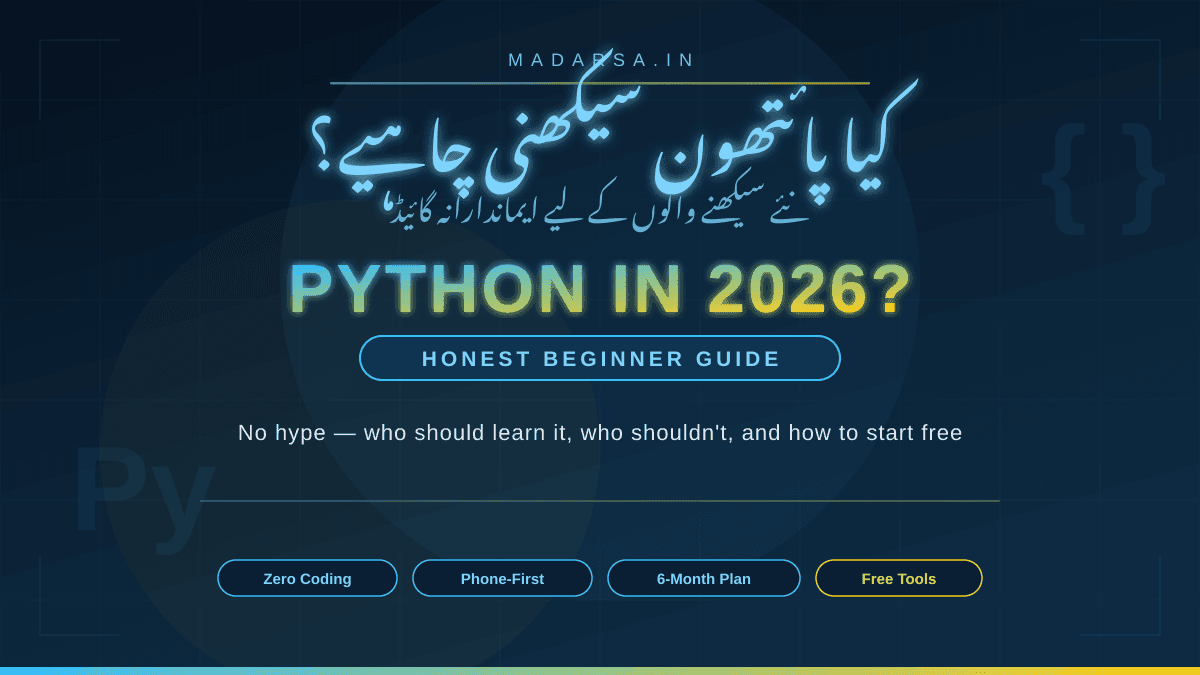
Should You Learn Python in 2026? An Honest Guide for Complete Beginners
کیا 2026 میں پائتھون سیکھنی چاہیے؟ ایماندارانہ گائیڈ

Imranul Haque Noor
An Engineer, an all time Learner and a Learning enabler.
🐍 Should You Learn Python in 2026? An Honest Guide for Complete Beginners
No hype, no "become a coder in 30 days" promises — just an honest look at what Python is, who should learn it, who shouldn't, and exactly how to start for free.
اردو ترجمہ — Urdu Translation
انٹرنیٹ پر ہر طرف ایک ہی مشورہ ملتا ہے: "پائتھون (Python) سیکھو، لاکھوں کماؤ!" لیکن کیا یہ واقعی سچ ہے؟ اس مضمون میں ہم بغیر کسی مبالغے کے، ایمانداری سے بتائیں گے کہ پائتھون کیا ہے، کسے سیکھنی چاہیے، کسے نہیں، اور اگر آپ شروع کرنا چاہیں تو بالکل مفت کیسے شروع کریں۔ یہ مضمون اردو اور انگریزی دونوں میں ہے — ہر انگریزی حصے کے نیچے اردو ترجمہ موجود ہے، اور آخر میں مکمل اردو مضمون بھی۔
📖 First, a story you might recognise
Arsalan finished his schooling, helps at his father's shop in the evening, and keeps seeing YouTube thumbnails shouting "Python = ₹20 lakh package!" He borrowed a cousin's laptop twice, watched a 4-hour tutorial, understood maybe half of it, and quietly gave up — convinced coding was for "English-medium IIT people." Six months later he still wonders: was the problem Python, or the way he started? This guide is written for Arsalan — and for you, if his story feels familiar.
Here is what nobody told Arsalan: watching tutorials is not learning to code, a phone with a browser is enough to start, and the honest timeline is measured in months, not weekends. Once you know those three things, Python stops being scary.
اردو ترجمہ — Urdu Translation
ارسلان مراد آباد میں رہتا ہے۔ اسکول کے بعد شام کو والد کی دکان پر ہاتھ بٹاتا ہے۔ یوٹیوب پر بار بار دیکھتا ہے: "پائتھون سیکھو، بیس لاکھ کا پیکج پاؤ!" اس نے کزن کا لیپ ٹاپ لے کر چار گھنٹے کا ٹیوٹوریل دیکھا، آدھا سمجھ آیا، اور خاموشی سے چھوڑ دیا — یہ سوچ کر کہ کوڈنگ (Coding) صرف انگلش میڈیم اور آئی آئی ٹی والوں کے لیے ہے۔
ارسلان کو کسی نے تین باتیں نہیں بتائیں: ٹیوٹوریل دیکھنا کوڈنگ سیکھنا نہیں ہے، شروعات کے لیے صرف ایک فون اور براؤزر کافی ہے، اور ایمانداری کی بات یہ ہے کہ اس میں ہفتے نہیں، مہینے لگتے ہیں۔ یہ تین باتیں سمجھ لیں تو پائتھون ڈراؤنی نہیں رہتی۔
⚖️ The short, honest answer
Should you learn Python in 2026? It depends on what you want. Here is the answer with no marketing attached:
✅ Learn Python if…
You want to work with data, AI tools, or automation; you enjoy solving small puzzles; you can give it 30–60 minutes a day for several months; and you're building a career direction, not chasing quick cash.
⏸️ Wait on Python if…
You need income within weeks — typing, data entry, or spreadsheet skills pay sooner. Learn those first, earn, and come back to Python later. That's a strategy, not a failure.
✅ Learn Python if…
You already use Excel or Google Sheets at work and keep hitting their limits. Python is the natural next step for anyone who loves organising information.
❌ Skip Python if…
You tried logical puzzles, gave them honest effort, and genuinely disliked every minute. There are excellent digital careers — design, content writing, marketing — that don't need code at all.
The one-line summary: Python is still one of the best first languages in 2026 — but it rewards patience, and it punishes people looking for a shortcut.
اردو ترجمہ — Urdu Translation
مختصر اور ایماندار جواب: یہ اس پر منحصر ہے کہ آپ چاہتے کیا ہیں۔
- پائتھون سیکھیں اگر: آپ ڈیٹا (Data)، اے آئی (AI) یا آٹومیشن (Automation) میں کام کرنا چاہتے ہیں، چھوٹی چھوٹی گتھیاں سلجھانے میں مزہ آتا ہے، اور روزانہ 30 سے 60 منٹ کئی مہینوں تک دے سکتے ہیں۔
- ابھی رکیں اگر: آپ کو چند ہفتوں میں آمدنی چاہیے — ٹائپنگ، ڈیٹا انٹری یا ایکسل (Excel) جلدی پیسہ دیتے ہیں۔ پہلے وہ سیکھیں، کمائیں، پھر پائتھون پر واپس آئیں۔ یہ حکمتِ عملی ہے، ناکامی نہیں۔
- چھوڑ دیں اگر: آپ نے منطقی پزل ایمانداری سے آزمائے اور ہر لمحہ ناپسند آیا — ڈیزائن، مضمون نویسی، مارکیٹنگ جیسے بہترین ڈیجیٹل کیریئر بغیر کوڈ کے بھی موجود ہیں۔
ایک سطر میں: پائتھون 2026 میں بھی پہلی زبان کے طور پر بہترین انتخاب ہے — لیکن یہ صبر کرنے والوں کو انعام دیتی ہے اور شارٹ کٹ ڈھونڈنے والوں کو مایوس کرتی ہے۔
🐍 What Python actually is (in plain words)
Python is a programming language — a way of writing instructions a computer can follow. It was created by Guido van Rossum and first released in 1991, which makes it about 35 years old in 2026. That age is a feature, not a flaw: it means mountains of free tutorials, answered questions, and ready-made libraries exist for almost anything you want to do.
What makes Python special for beginners is that it reads almost like English. Here is a complete, working Python program:
name = "Ayesha"
print("Assalam o Alaikum, " + name)
Output: Assalam o Alaikum, Ayesha
Two lines, and you can guess what it does even if you've never coded. Compare that with older languages that need five lines of setup before printing a single word — this readability is the main reason schools, universities, and companies keep choosing Python as the first language.
And it's not a "toy" language: Instagram built its backend on Django (a Python framework), Netflix and Spotify use it for data work, and NASA uses it in scientific computing. The same language a beginner writes on day one runs inside some of the biggest systems on earth.
اردو ترجمہ — Urdu Translation
پائتھون ایک پروگرامنگ زبان (Programming Language) ہے — یعنی کمپیوٹر کو ہدایات دینے کا ایک طریقہ۔ اسے گیڈو وان روسم (Guido van Rossum) نے بنایا اور 1991 میں پہلی بار جاری کیا — یعنی 2026 میں یہ تقریباً 35 سال پرانی ہے۔ یہ پرانا ہونا خامی نہیں، خوبی ہے: اس کا مطلب ہے کہ مفت ٹیوٹوریلز، حل شدہ سوالات اور تیار شدہ لائبریریوں (Libraries) کے پہاڑ موجود ہیں۔
نئے سیکھنے والوں کے لیے پائتھون کی سب سے بڑی خوبی یہ ہے کہ یہ تقریباً انگریزی جیسی پڑھی جاتی ہے۔ صرف دو سطروں کا مکمل پروگرام دیکھیں — نام رکھیں اور سلام پرنٹ کریں — بغیر کوڈنگ جانے بھی اندازہ ہو جاتا ہے کہ یہ کیا کرے گا۔
اور یہ کوئی کھلونا زبان نہیں: انسٹاگرام (Instagram) کا بیک اینڈ جینگو (Django) پر بنا، نیٹ فلکس (Netflix) اور اسپاٹیفائی (Spotify) ڈیٹا کے کام میں اسے استعمال کرتے ہیں، اور ناسا (NASA) سائنسی حساب کتاب میں۔ جو زبان آپ پہلے دن لکھیں گے، وہی دنیا کے سب سے بڑے نظاموں کے اندر چل رہی ہے۔
📈 Why Python is still a good bet in 2026
Rankings change slowly, but they tell a consistent story. Python has held the top spot on the TIOBE index — a long-running measure of programming-language popularity — for years now. In its Octoverse 2024 report, GitHub (the world's largest code-hosting platform) reported that Python overtook JavaScript to become the most used language on GitHub, driven largely by the boom in AI and data science.
That last part matters most for 2026. Almost every AI tool you've heard of — the systems behind ChatGPT-style assistants, image generators, recommendation engines — is built and operated with Python somewhere in the stack. Libraries like PyTorch and TensorFlow, and data tools like pandas and NumPy, are all Python-first. When you learn Python, you're learning the working language of the AI era — not a language the AI era is replacing.
What about jobs in India?
Job portals list Python across many roles — data analyst, automation tester, backend developer, and AI/ML support roles. Fresher salaries vary widely by city, company, and skill depth; the commonly quoted range for entry-level tech roles is around ₹3–6 LPA, but treat any specific number as a starting point for your own research on Naukri or LinkedIn, not a promise. What is consistently true: Python appears in more job descriptions every year, usually paired with SQL, Excel, or a domain skill.
اردو ترجمہ — Urdu Translation
درجہ بندیاں آہستہ بدلتی ہیں، لیکن ان کی کہانی ایک جیسی ہے۔ پائتھون کئی سالوں سے ٹیوبے انڈیکس (TIOBE Index) میں پہلے نمبر پر ہے۔ گٹ ہب (GitHub) — دنیا کا سب سے بڑا کوڈ پلیٹ فارم — نے اپنی اوکٹوورس 2024 (Octoverse 2024) رپورٹ میں بتایا کہ پائتھون نے جاوا اسکرپٹ (JavaScript) کو پیچھے چھوڑ کر گٹ ہب کی سب سے زیادہ استعمال ہونے والی زبان کا مقام حاصل کر لیا — اور اس کی بڑی وجہ اے آئی اور ڈیٹا سائنس کا عروج ہے۔
2026 کے لیے یہی بات سب سے اہم ہے: تقریباً ہر اے آئی ٹول کے پیچھے کہیں نہ کہیں پائتھون ہے — پائی ٹارچ (PyTorch)، ٹینسرفلو (TensorFlow)، پانڈاز (pandas)، نم پائی (NumPy) سب پائتھون کی لائبریریاں ہیں۔ پائتھون سیکھ کر آپ اے آئی دور کی کام کرنے والی زبان سیکھ رہے ہیں — وہ زبان نہیں جسے اے آئی ختم کر رہا ہے۔
رہی بات ہندوستان میں نوکریوں کی: جاب پورٹلز پر پائتھون بہت سے کرداروں میں نظر آتی ہے — ڈیٹا اینالسٹ، آٹومیشن ٹیسٹر، بیک اینڈ ڈیولپر۔ فریشر تنخواہیں شہر اور مہارت کے حساب سے بہت مختلف ہوتی ہیں؛ عام طور پر ₹3 سے ₹6 لاکھ سالانہ کی حد بتائی جاتی ہے، لیکن کسی بھی عدد کو وعدہ نہ سمجھیں — نوکری (Naukri) یا لنکڈ اِن (LinkedIn) پر خود تحقیق کریں۔
😐 The hard truths (read this section twice)
This is the part most "learn Python!" articles skip. Read it before you spend a single hour on tutorials.
1️⃣ Python alone is not a job
Nobody is hired for "knowing Python" — they're hired for what they do with it. Python + data analysis is a job. Python + automation is a job. Python + a domain you already know (accounts, shop inventory, teaching) is a job. Plan the pairing from day one.
2️⃣ The first month feels slow and unglamorous
You will print text, add numbers, and write loops while YouTube shows people "building AI in 10 minutes." This gap is normal. Every professional went through the same boring month. The people who quit here are the majority — which is exactly why persisting puts you ahead.
3️⃣ Entry-level tech hiring is genuinely competitive
Many people learned to code in recent years, and companies now expect freshers to show small real projects, not just certificates. This is why our roadmap below ends with projects on GitHub — proof beats paper.
4️⃣ Tutorials feel like progress; building is progress
Watching someone code activates the same satisfaction as coding — without the learning. The rule that fixes this: for every hour of watching, spend an hour typing code yourself, from memory, making your own mistakes.
5️⃣ You need reading-level English, not fluent English
Python's keywords (print, if, for, while) are simple English words, and error messages are short sentences. Thousands of non-native speakers code professionally. If you can read this paragraph with some effort, your English is enough to start.
6️⃣ AI assistants help you learn — they can't learn for you
ChatGPT and similar tools can explain errors and suggest code. Used well, they're the patient teacher Arsalan never had. Used lazily — copy, paste, move on — they leave you unable to write ten lines alone. Type first, ask AI second.
اردو ترجمہ — Urdu Translation
یہ وہ حصہ ہے جو "پائتھون سیکھو!" والے مضامین چھوڑ دیتے ہیں۔ ٹیوٹوریل پر ایک گھنٹہ لگانے سے پہلے یہ چھ کڑوے سچ پڑھ لیں:
- صرف پائتھون کوئی نوکری نہیں: نوکری اس کام کی ملتی ہے جو آپ پائتھون سے کرتے ہیں — پائتھون + ڈیٹا اینالسس، پائتھون + آٹومیشن، یا پائتھون + آپ کا موجودہ ہنر (حساب کتاب، دکان کا اسٹاک، تدریس)۔
- پہلا مہینہ سست اور بے رونق لگے گا: آپ ٹیکسٹ پرنٹ کر رہے ہوں گے جبکہ یوٹیوب پر لوگ "دس منٹ میں اے آئی" بنا رہے ہوں گے۔ یہ فرق بالکل نارمل ہے — ہر ماہر اسی بورنگ مہینے سے گزرا ہے۔
- فریشر بھرتی میں واقعی مقابلہ ہے: کمپنیاں اب سرٹیفکیٹ نہیں، چھوٹے حقیقی پروجیکٹ دیکھنا چاہتی ہیں۔ ثبوت کاغذ سے بہتر ہے۔
- ٹیوٹوریل دیکھنا ترقی محسوس ہوتی ہے، ترقی نہیں ہوتی: ہر ایک گھنٹہ دیکھنے کے بدلے ایک گھنٹہ خود ٹائپ کریں، اپنی غلطیاں خود کریں۔
- روانی والی انگریزی نہیں، پڑھنے والی انگریزی چاہیے: پائتھون کے الفاظ (print، if، for) آسان انگریزی ہیں۔ اگر آپ تھوڑی محنت سے یہ پیراگراف پڑھ سکتے ہیں تو آپ کی انگریزی کافی ہے۔
- اے آئی مدد کر سکتا ہے، آپ کی جگہ سیکھ نہیں سکتا: پہلے خود ٹائپ کریں، پھر اے آئی سے پوچھیں۔ کاپی پیسٹ کرنے والے دس سطریں بھی خود نہیں لکھ پاتے۔
🤖 "But won't AI replace programmers?"
The most common question of 2026, and it deserves a straight answer: AI tools now write a lot of code, and simple copy-paste coding work is shrinking. But three things remain stubbornly human:
First, someone must understand the code — to check it, fix it, and take responsibility when it touches real money or real people. Second, someone must describe the problem precisely — and that's a skill you only develop by learning to program. Third, the AI boom itself runs on Python — more AI means more Python work, not less: preparing data, testing models, connecting AI tools to real businesses.
Honest framing: AI raises the bar for what a beginner must know — it doesn't remove the ladder. The person who understands code and uses AI will outwork the person who can only do one of the two.
If you want to use AI tools while learning without cheating yourself, we wrote a full guide on exactly that: How to use AI for learning, not cheating.
اردو ترجمہ — Urdu Translation
2026 کا سب سے عام سوال: "کیا اے آئی پروگرامرز کی جگہ نہیں لے لے گا؟" سیدھا جواب: اے آئی اب کافی کوڈ لکھتا ہے اور سادہ کاپی پیسٹ والا کام واقعی کم ہو رہا ہے۔ لیکن تین چیزیں انسان کے پاس ہی ہیں:
- کوڈ کو سمجھنا — جانچنا، ٹھیک کرنا، اور ذمہ داری لینا جب معاملہ اصلی پیسے یا اصلی لوگوں کا ہو۔
- مسئلے کو درست الفاظ میں بیان کرنا — یہ ہنر پروگرامنگ سیکھے بغیر نہیں آتا۔
- خود اے آئی کا کاروبار پائتھون پر چلتا ہے — زیادہ اے آئی کا مطلب ہے زیادہ پائتھون کا کام، کم نہیں۔
ایمانداری کی بات: اے آئی نے سیکھنے والوں کے لیے معیار اونچا کیا ہے، سیڑھی نہیں ہٹائی۔ جو شخص کوڈ بھی سمجھتا ہو اور اے آئی بھی استعمال کرتا ہو، وہ دونوں میں سے صرف ایک جاننے والے سے آگے رہے گا۔
🔀 Python vs the alternatives — pick by goal, not by hype
Python is not the answer to every goal. Match the tool to what you actually want:
| Your real goal | Learn this first | Why |
|---|---|---|
| Income within weeks | Typing + data entry + Sheets | Pays sooner; Python can come later |
| Office job skills | Excel / Google Sheets | Every office runs on spreadsheets |
| Making websites look beautiful | HTML + CSS + JavaScript | Python doesn't control page design |
| Mobile apps | Kotlin / Flutter | Python is weak on mobile — honest gap |
| Data, AI, automation, a long-term tech career | Python | The strongest beginner-to-professional path |
| A child's first exposure (ages 6–12) | Scratch, then simple Python | Visual first, text later |
Notice the pattern: Python wins when the goal involves information — analysing it, moving it, automating it, teaching machines with it. It loses when the goal is visual design or mobile apps. Choosing correctly here saves you months.
اردو ترجمہ — Urdu Translation
پائتھون ہر مقصد کا جواب نہیں۔ اپنے اصل مقصد سے ملا کر انتخاب کریں:
- چند ہفتوں میں آمدنی: ٹائپنگ + ڈیٹا انٹری + شیٹس — یہ جلدی پیسہ دیتے ہیں، پائتھون بعد میں۔
- دفتری نوکری: ایکسل / گوگل شیٹس — ہر دفتر اسپریڈ شیٹ پر چلتا ہے۔
- خوبصورت ویب سائٹس: ایچ ٹی ایم ایل + سی ایس ایس + جاوا اسکرپٹ۔
- موبائل ایپس: کوٹلن (Kotlin) یا فلٹر (Flutter) — موبائل پائتھون کی کمزوری ہے، یہ ایماندار بات ہے۔
- ڈیٹا، اے آئی، آٹومیشن اور لمبا ٹیک کیریئر: پائتھون — یہاں یہ سب سے مضبوط راستہ ہے۔
- بچوں کی پہلی پہچان (6 تا 12 سال): پہلے اسکریچ (Scratch)، پھر آسان پائتھون۔
غور کریں: جہاں مقصد معلومات سے جڑا ہو — تجزیہ، منتقلی، آٹومیشن — وہاں پائتھون جیتتی ہے۔ جہاں مقصد بصری ڈیزائن یا موبائل ایپ ہو، وہاں ہار جاتی ہے۔ یہ انتخاب صحیح کر لینا مہینوں کی بچت ہے۔
🗺️ The honest roadmap — 6 months, 1 hour a day
Week 1: run your first line today
Open Google Colab in any browser — phone or laptop, no installation. Type print("Bismillah") and run it. You are now a person who has executed Python code. Momentum matters more than setup.
Month 1: the boring fundamentals
Variables, if/else decisions, loops, lists. Use one free course (below) and resist switching between five. Finishing one average course beats starting five great ones.
Month 2: solve, don't watch
Do 3–5 tiny problems daily: reverse a name, total a shopping list, check if a number is prime. When stuck for 20+ minutes, ask an AI to explain — then close it and retype the solution from memory.
Months 3–4: pick ONE track
Data (pandas + spreadsheet analysis), automation (organising files, processing Excel reports), or web (Flask basics). One track deep beats three tracks shallow — you can always add the others later.
Month 5: build things from YOUR life
A dua reminder app. A shop-inventory tracker for your father's store. A script that renames 200 photos. Madrasa fee records in pandas. Real problems teach more than any tutorial — and they become your portfolio.
Month 6: put proof online
Create a free GitHub account and upload your 2–3 projects with simple descriptions. When you apply for jobs, internships, or freelance work, this link does more talking than any certificate.
Beyond: pair Python with a direction
Now add the multiplier: SQL for data roles, more automation for operations roles, or AI libraries if that's your goal. This is where Python starts converting into income — steadily, not overnight.
اردو ترجمہ — Urdu Translation
ایماندار روڈ میپ — چھ مہینے، روزانہ ایک گھنٹہ:
- پہلا ہفتہ: کسی بھی براؤزر میں گوگل کولیب (Google Colab) کھولیں — فون پر بھی چلتا ہے، کچھ انسٹال نہیں کرنا۔
print("Bismillah")لکھ کر چلائیں۔ آج آپ نے پائتھون کوڈ چلا لیا۔ - پہلا مہینہ: ویری ایبلز، اگر/ورنہ (if/else)، لوپس، لسٹیں۔ ایک مفت کورس چنیں اور پانچ کورسز میں بھٹکنے سے بچیں۔
- دوسرا مہینہ: روزانہ 3 سے 5 چھوٹے مسئلے خود حل کریں۔ بیس منٹ اٹکنے پر اے آئی سے سمجھیں — پھر اسے بند کر کے حل یاد سے دوبارہ ٹائپ کریں۔
- تیسرا-چوتھا مہینہ: ایک راستہ چنیں — ڈیٹا، آٹومیشن یا ویب۔ ایک راستے میں گہرائی، تین میں سطحی علم سے بہتر ہے۔
- پانچواں مہینہ: اپنی زندگی کے مسئلے حل کریں — دعا یاد دہانی ایپ، والد کی دکان کے اسٹاک کا حساب، دو سو تصویروں کے نام بدلنے والی اسکرپٹ۔
- چھٹا مہینہ: مفت گٹ ہب (GitHub) اکاؤنٹ بنا کر اپنے پروجیکٹ اپ لوڈ کریں — نوکری کی درخواست میں یہ لنک ہر سرٹیفکیٹ سے زیادہ بولتا ہے۔
- آگے: پائتھون کے ساتھ سمت جوڑیں — ڈیٹا کے لیے ایس کیو ایل (SQL)، دفتری کاموں کے لیے آٹومیشن، یا اے آئی لائبریریاں۔ یہیں سے پائتھون آمدنی میں بدلنا شروع ہوتی ہے — آہستہ آہستہ، راتوں رات نہیں۔
🆓 Genuinely free places to learn
You do not need to pay anyone to learn Python basics. These are the resources we'd point a younger sibling to:
🎓 Harvard CS50P — Introduction to Programming with Python
Harvard's beginner Python course, free to watch and follow at cs50.harvard.edu/python. Excellent teaching, real exercises. English lectures with subtitles.
📗 The official Python tutorial
Straight from the source at python.org — the "Getting Started" page links beginner guides for people who have never programmed.
🧑💻 freeCodeCamp
Free, browser-based, certificate included, at freecodecamp.org. Their "Scientific Computing with Python" path is beginner-friendly and project-based.
📘 W3Schools Python
Short lessons with a try-it-yourself editor at w3schools.com/python — good for quick reference when you forget syntax.
📊 Kaggle Learn
Once basics are done, kaggle.com/learn offers short free courses on Python and data — plus free datasets to practise on.
Phone-only? Google Colab runs in your mobile browser, and the free Pydroid 3 app on Android runs Python offline. A laptop helps from month 3 onward, but the first two months genuinely work on a phone.
اردو ترجمہ — Urdu Translation
پائتھون کی بنیادیں سیکھنے کے لیے کسی کو پیسہ دینے کی ضرورت نہیں:
- ہارورڈ سی ایس 50 پی (Harvard CS50P): ہارورڈ یونیورسٹی کا مفت ابتدائی پائتھون کورس — بہترین تدریس، حقیقی مشقیں۔
- پائتھون کی سرکاری ویب سائٹ (python.org): بالکل نئے سیکھنے والوں کے لیے "گیٹنگ اسٹارٹڈ" گائیڈ۔
- فری کوڈ کیمپ (freeCodeCamp): مفت، براؤزر میں، سرٹیفکیٹ کے ساتھ، پروجیکٹ پر مبنی۔
- ڈبلیو تھری اسکولز (W3Schools): چھوٹے اسباق اور خود آزمانے والا ایڈیٹر — بھولی ہوئی چیز جلدی دیکھنے کے لیے بہترین۔
- کیگل لرن (Kaggle Learn): بنیادیں مکمل ہونے کے بعد ڈیٹا کے مختصر مفت کورس۔
صرف فون ہے؟ گوگل کولیب موبائل براؤزر میں چلتا ہے، اور اینڈرائیڈ پر مفت ایپ پائیڈرائیڈ 3 (Pydroid 3) آف لائن پائتھون چلاتی ہے۔ پہلے دو مہینے واقعی فون پر ہو سکتے ہیں؛ تیسرے مہینے سے لیپ ٹاپ مدد دیتا ہے۔
🕌 A note for madrasa graduates and Urdu-medium learners
If you've memorised the Qur'an or studied dars-e-nizami texts, you already have the two abilities that predict success in programming: disciplined daily practice and patience with texts that don't open on the first reading. Sarf and nahw are systems of rules applied to language — programming is a system of rules applied to instructions. The muscle is the same.
Your practical hurdles are different ones: English confidence and knowing where to start. Both are solvable — the English needed is limited and repetitive (you'll see print and for ten thousand times), and this article is the where-to-start. If English is the bigger blocker, our free-course roundup for Urdu speakers can run alongside month one.
اردو ترجمہ — Urdu Translation
اگر آپ نے قرآن حفظ کیا ہے یا درسِ نظامی کی کتابیں پڑھی ہیں تو آپ کے پاس پہلے سے وہ دو صلاحیتیں ہیں جو پروگرامنگ میں کامیابی کی پیش گوئی کرتی ہیں: روزانہ پابندی سے مشق، اور ایسے متن پر صبر جو پہلی بار پڑھنے پر نہ کھلے۔ صرف و نحو زبان پر قواعد کا نظام ہے — پروگرامنگ ہدایات پر قواعد کا نظام ہے۔ ذہن کی مشق ایک ہی ہے۔
آپ کی اصل رکاوٹیں دوسری ہیں: انگریزی کا اعتماد اور آغاز کا پتہ نہ ہونا۔ دونوں حل ہو سکتی ہیں — پائتھون میں درکار انگریزی محدود اور بار بار دہرائی جانے والی ہے، اور آغاز کا نقشہ یہی مضمون ہے۔ انگریزی بڑی رکاوٹ ہو تو ہمارا مضمون اردو بولنے والوں کے لیے مفت انگریزی کورسز پہلے مہینے کے ساتھ ساتھ چل سکتا ہے۔
📅 Your first 7 days — start smaller than you think
- Day 1: Open Google Colab, run
print("Bismillah"). Done. Seriously — that's the whole day. - Day 2: Variables: store your name, age, and city; print a sentence using all three.
- Day 3: Ask the user a question with
input()and reply to their answer. - Day 4: Write your first
if/else— e.g., pass/fail from a number score. - Day 5: Your first loop: print the 2-times table, then the 1-to-10 tables.
- Day 6: Combine everything: a tiny quiz that asks 3 questions and counts the score.
- Day 7: Rest, review, and show your quiz to one person. Teaching one line back is the strongest revision there is.
If you complete these 7 days, you'll know something real about yourself: whether this kind of thinking feels like a puzzle you enjoy or a chore you dread. Both answers are valuable — and both are honest.
اردو ترجمہ — Urdu Translation
پہلے سات دن — سوچ سے چھوٹا آغاز کریں:
- پہلا دن: گوگل کولیب کھولیں،
print("Bismillah")چلائیں۔ بس — آج اتنا ہی۔ - دوسرا دن: ویری ایبلز — نام، عمر اور شہر محفوظ کر کے ایک جملہ پرنٹ کریں۔
- تیسرا دن:
input()سے صارف سے سوال پوچھیں اور جواب پر جواب دیں۔ - چوتھا دن: پہلا if/else — نمبروں سے پاس/فیل بتانے والا پروگرام۔
- پانچواں دن: پہلا لوپ — دو کا پہاڑہ، پھر ایک سے دس تک کے پہاڑے۔
- چھٹا دن: سب ملا کر تین سوالوں کا چھوٹا کوئز بنائیں جو اسکور گنے۔
- ساتواں دن: آرام، دہرائی، اور اپنا کوئز کسی ایک کو دکھائیں — سکھانا سب سے مضبوط دہرائی ہے۔
یہ سات دن مکمل کر لیے تو آپ اپنے بارے میں ایک حقیقی بات جان لیں گے: یہ سوچ آپ کو پزل جیسا مزہ دیتی ہے یا بوجھ لگتی ہے۔ دونوں جواب قیمتی ہیں — اور دونوں ایماندار۔
🚀 The honest closing
So — should you learn Python in 2026? If you want a career built around information, automation, or AI, and you can give it patient months rather than excited weekends: yes, and it's one of the best beginner decisions available. If you need income in weeks or your heart is in design: choose the tool that fits, with no guilt.
If you do choose Python and want a structured path in this style — bilingual, beginner-first, project-based — our course Python Foundation for AI takes you from zero through real data work, and younger learners (ages 6–10) can start free with Python for Young Thinkers. Either way, the first step is the same and it costs nothing: open Colab, type one line, and press run. Bismillah — start today.
اردو ترجمہ — Urdu Translation
تو — کیا آپ کو 2026 میں پائتھون سیکھنی چاہیے؟ اگر آپ معلومات، آٹومیشن یا اے آئی سے جڑا کیریئر چاہتے ہیں اور جوش والے ویک اینڈ کے بجائے صبر والے مہینے دے سکتے ہیں: جی ہاں — یہ نئے سیکھنے والوں کے بہترین فیصلوں میں سے ہے۔ اگر ہفتوں میں آمدنی چاہیے یا دل ڈیزائن میں ہے: بغیر کسی ندامت کے وہ راستہ چنیں جو آپ کے مقصد سے میل کھائے۔
اگر پائتھون چنیں اور اسی انداز کا منظم راستہ چاہیں — دو زبانی، مبتدی دوست، پروجیکٹ پر مبنی — تو ہمارا کورس پائتھون فاؤنڈیشن فار اے آئی (Python Foundation for AI) آپ کو صفر سے حقیقی ڈیٹا کے کام تک لے جاتا ہے، اور چھوٹے بچے (6 تا 10 سال) پائتھون فار ینگ تھنکرز (Python for Young Thinkers) سے مفت آغاز کر سکتے ہیں۔ بہرحال پہلا قدم ایک ہی ہے اور مفت ہے: کولیب کھولیں، ایک سطر لکھیں، اور چلا دیں۔ بسم اللہ — آج ہی شروع کریں۔
Sources: TIOBE Index (language popularity ranking) · GitHub Octoverse 2024 (Python as most used language on GitHub) · Python.org — About (history and uses) · Harvard CS50P · freeCodeCamp · Google Colab. Salary ranges vary widely — always verify current figures on job portals before making decisions.
Enjoyed this article?
Subscribe to our newsletter for more articles, tutorials, and insights delivered straight to your inbox.
Related Posts
Cybersecurity Basics: Protect Your Phone, UPI and Email from Fraud
You do not need to be technical to stay safe online — you need a few habits, four phone settings and one helpline number. A practical bilingual guide to the five-link chain every scam follows, the one UPI rule that stops most fraud, how to secure your email, the six scams doing the rounds in India, and exactly what to do in the first hour if money has already gone.
Imranul Haque Noor
Nov 13, 2026